
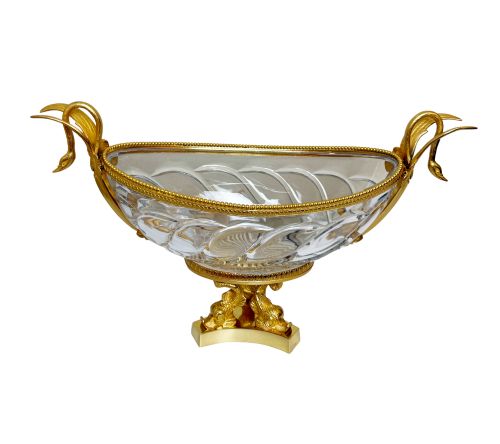
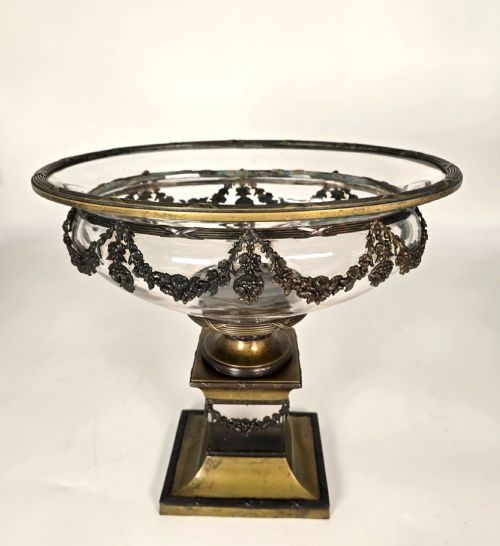
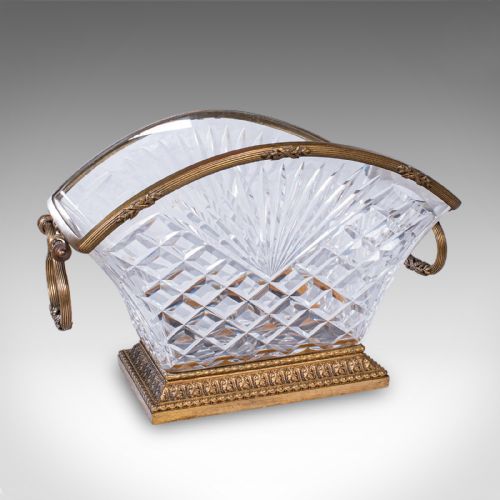
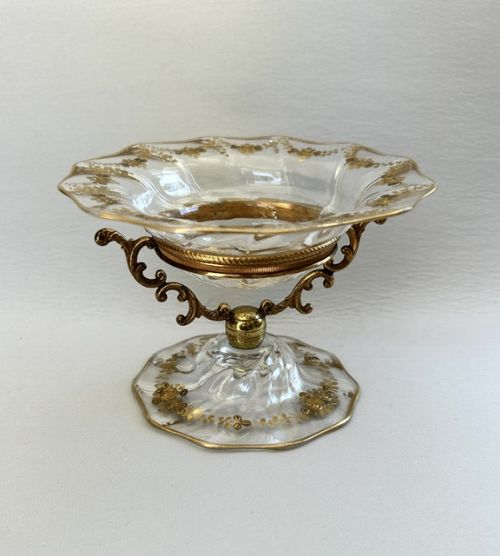




Ormolu Mounted Centrepiece Bowl
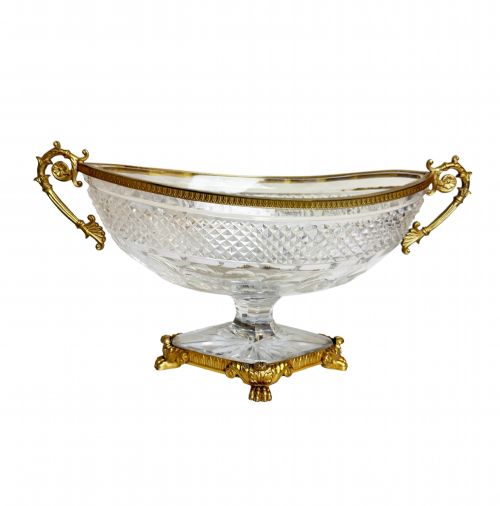
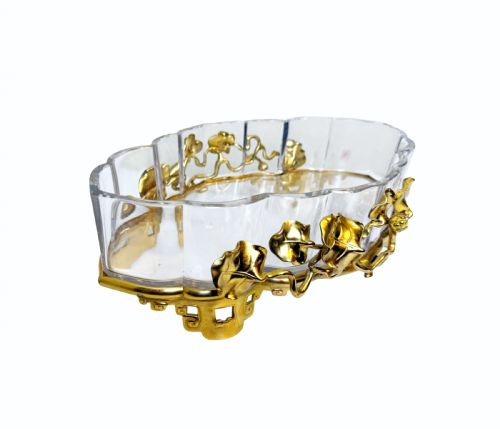
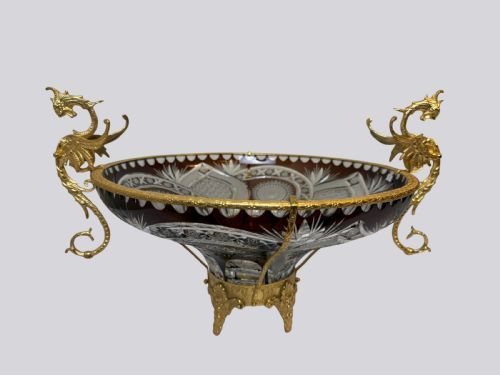
An ormolu mounted centrepiece bowl brings heavy gilt mounts and glass, porcelain or enamel together for the middle of a dining table.
Ormolu Mounted Centrepiece Bowl
An ormolu mounted centrepiece bowl is a substantial table vessel designed to anchor a formal interior scheme, drawing the eye with its central placement. These pieces take the form of open bowls, comports, jardinieres and serving dishes raised on stands or pedestals.
The pieces appearing here span the nineteenth century and the early decades of the twentieth century, with a strong focus on French manufacture and design. Buyers frequently encounter objects styled in the French Rococo Revival, Empire and Second Empire manners.
The bowls themselves function as decorative containers rather than working tableware, serving to hold fruit or simply to display craftsmanship. Their origins lie in the grand dining rooms and salons of nineteenth-century Europe, where gilt metalwork signalled wealth and taste.
What varies in quality
Quality rests in the crispness of the bronze chasing and the weight of the ormolu gilding, where sharp detail separates superior castings from soft, muddy surfaces. The depth and clarity of the cut glass or the hand-painted execution of the porcelain panels also dictate the grade of the piece.
The integration between the metal mount and the vessel body reveals the maker's skill, requiring precise fitting without excess adhesive or awkward gaps. Heavier, thicker metal frames and substantial crystal bowls denote a more ambitious production than lighter, simpler assemblies.
Some nineteenth-century dining bowls doubled as miniature indoor gardens, saving hosts the trouble of arranging dead fruit.
The Ormolu Mounted Centrepiece Bowl Glossary
- Ormolu
- Gilt bronze produced by applying a finely ground mercury and gold amalgam to bronze and heating it to drive off the mercury. This historic technique leaves a durable, rich golden surface finish.
- Comport
- A shallow dish or bowl raised on a high foot or pedestal, used historically for serving fruit or sweetmeats. Comports sit taller than standard serving bowls to create varied levels on a dining table.
- Champlevé
- An enamelling technique where troughs or cells are hollowed out of a metal surface and filled with vitreous enamel powder before firing. The metal partitions remain visible between the coloured enamel areas.
- Jardiniere
- An ornamental pot or stand designed to hold living plants or floral arrangements. In these listings, jardinieres share similar gilt bronze mounting and ceramic or glass bodies with centrepiece bowls.
- Garniture
- A set of three or more matching decorative objects, typically comprising a central vase or bowl flanked by matching smaller pieces. They were made to display on mantelpieces, consoles or large sideboards.
Ormolu Mounted Centrepiece Bowl: Frequently Asked Questions
What is an ormolu mounted centrepiece bowl?
An ormolu mounted centrepiece bowl is a decorative vessel featuring a glass, crystal or porcelain body held within cast and gilded bronze mounts. They were designed as focal points for large dining tables or formal reception rooms.
These pieces combine functional containers with ornate metalwork, reflecting the revival styles of the nineteenth century. They served primarily as decorative showpieces rather than everyday tableware.
How were these bowls used historically?
In nineteenth-century dining rooms, these bowls sat in the middle of the table, often filled with fruit, flowers or confectionery. They acted as conversation pieces and symbols of hospitality during formal dinner parties.
Outside of dining hours, they decorated sideboards, consoles and salon tables. Their grand scale and rich materials suited the opulent interior decoration of the Victorian and Edwardian eras.
How do I style a centrepiece bowl today?
These bowls work well placed in the middle of a large dining table, a heavy wooden sideboard or a wide entrance hall console. Their strong gilt mounts and coloured glass or porcelain demand a surface with sufficient depth to support them.
They can be left empty to showcase the craftsmanship of the mounts and the clarity of the glass or porcelain. Alternatively, fill them simply with seasonal fruit or dried botanicals to echo their original domestic purpose.
How do I tell Empire style from Rococo Revival?
Empire style pieces draw inspiration from classical antiquity, featuring restrained symmetry, military motifs, urn shapes and architectural lines. The ormolu mounts on these items tend to be structured and orderly.
Rococo Revival pieces embrace asymmetry, flowing scrolls, naturalistic foliage and C-scroll curves derived from eighteenth-century French design. The overall movement of the metalwork feels much more organic and exuberant.