
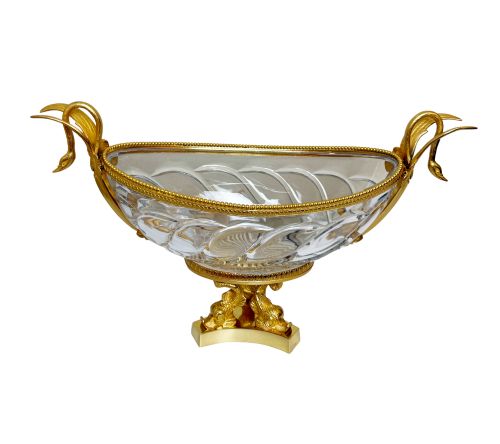
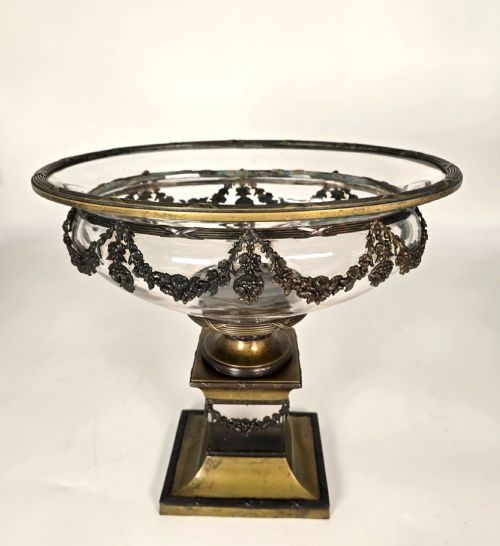
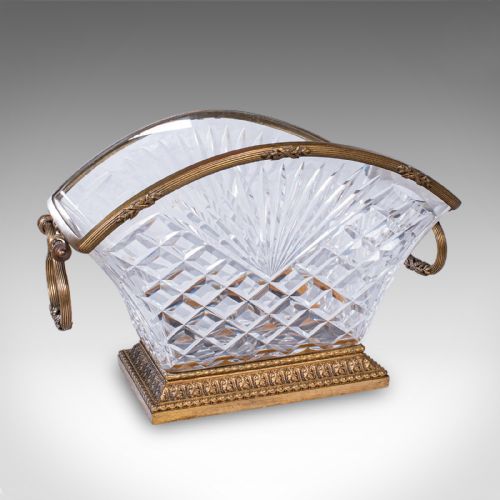
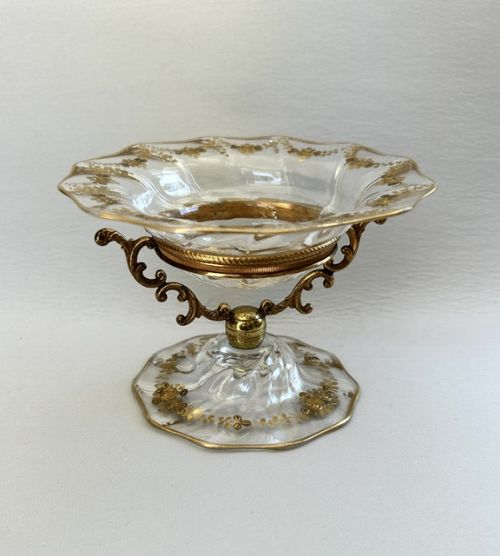
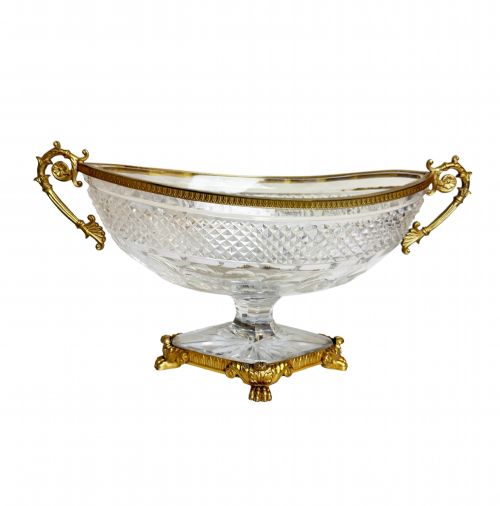
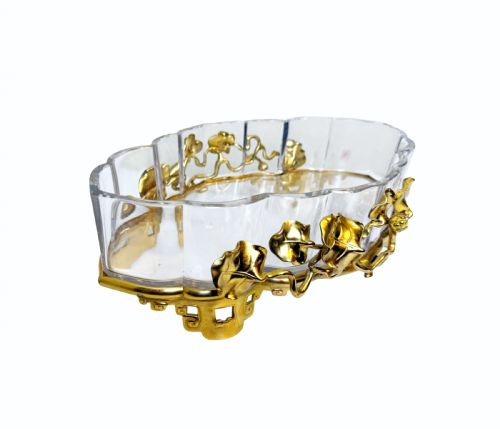


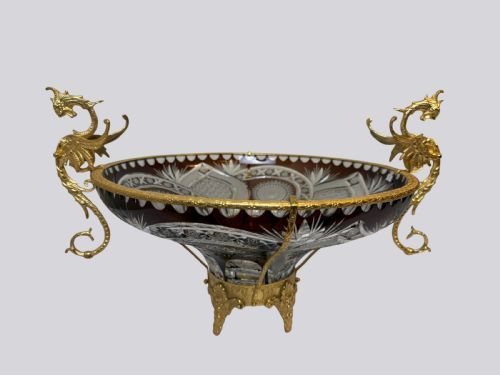


Ormolu Mounted Bowl
An ormolu mounted bowl brings heavy French display and gilt metal mounts directly to the table or sideboard.
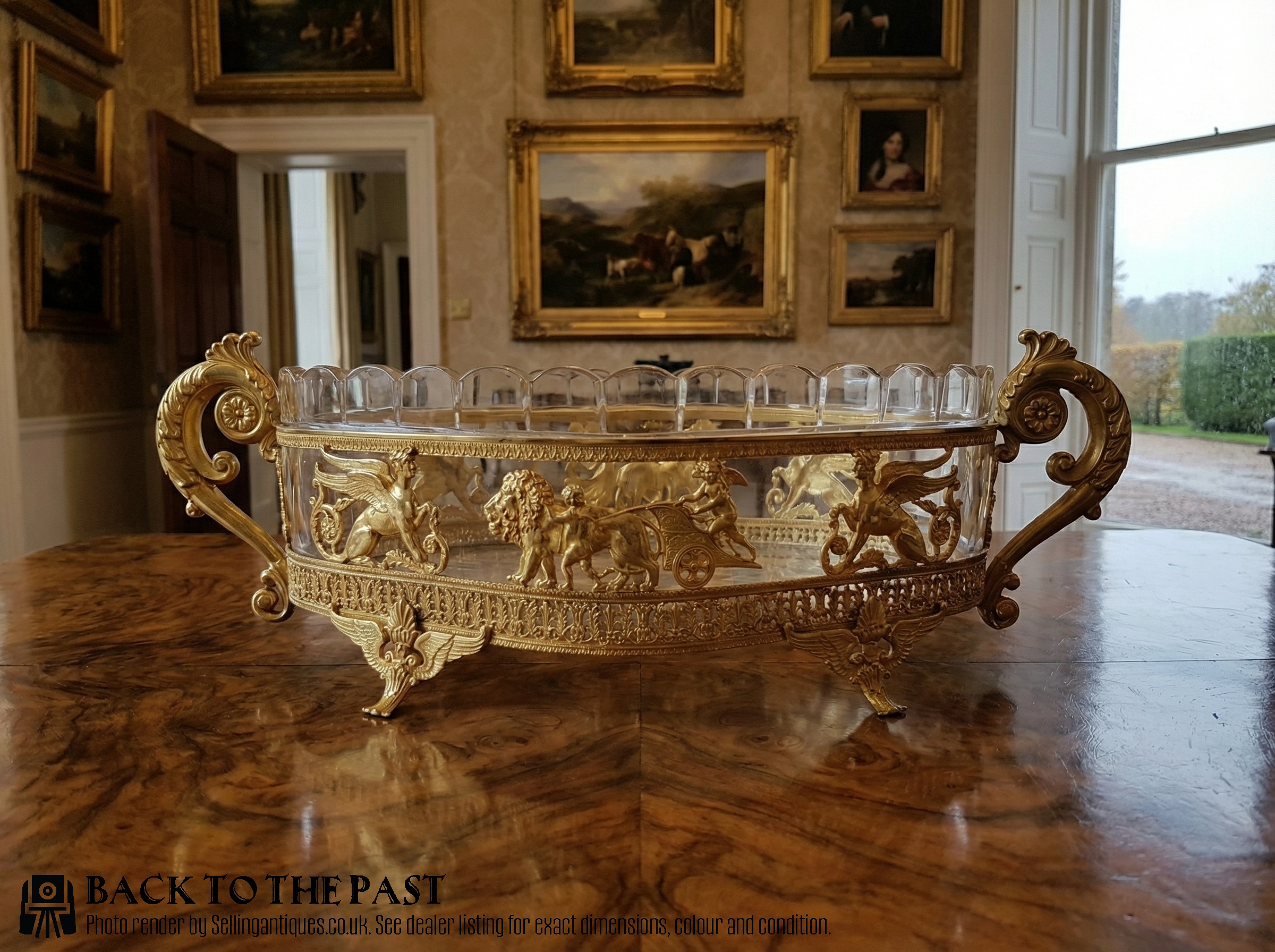
Ormolu Mounted Bowl
When you search for an ormolu mounted bowl, you are looking at substantial decorative vessels designed for French period interiors. These pieces typically combine a central body of cut glass, crystal, porcelain, or green onyx with cast and gilded bronze mounts.
The versions you are most likely to meet on this page hail from the nineteenth century, ranging through Victorian and Edwardian periods. They manifest in forms such as centrepiece bowls, comports, jardinieres, and tazzas, often echoing French Rococo Revival, Empire, or Chinoiserie styles.
How they were made
The manufacture relies on the union of fired ceramics, blown glass, or carved hardstone with intricately cast metalwork. Artisans shaped bodies from porcelain, cut crystal, or onyx before applying hand-chased gilt bronze mounts, which were secured with pins or screws.
Gilding the bronze involved mercury fire-gilding in earlier pieces or later electroplating to achieve the characteristic rich golden surface. Enamelling techniques such as champlevé and cloisonné frequently supplement the metal mounts with coloured glass pastes.
Some nineteenth century bowls cheerfully mix French bronze mounts with imported Cantonese or Japanese ceramic bodies.
What varies in quality
Quality rests heavily on the crispness of the bronze casting and the depth of the subsequent hand-chasing. Superior mounts exhibit sharp relief, clean edges, and meticulous detailing, whereas lesser examples appear soft and blurred.
The material of the bowl itself dictates the tier of the piece, with hand-blown cut crystal, fine Sevres style porcelain, or heavy green onyx standing well above ordinary pressed glass. The integration between the vessel and its metal mount must feel deliberate and secure.
Louis Pierre Malpass·Samson
The Ormolu Mounted Bowl Glossary
- Ormolu
- Gilded bronze, traditionally produced using a mercury amalgamation process on cast bronze. The technique yields a warm, deep golden lustre that distinguishes period mounts from later brass alternatives.
- Comport
- A raised serving dish or pedestal bowl intended for fruit or confectionery on a formal dining table. These vessels sit on a fixed foot or a dedicated metal stand.
- Champlevé
- An enamelling technique where troughs are dug into the surface of the bronze and filled with coloured vitreous paste before firing. This adds vibrant decorative bands around the bowl rim or base.
- Jardiniere
- A large ornamental pot or bowl designed to hold plants or floral arrangements. They frequently incorporate watertight metal liners within decorated ceramic or glass bodies.
- Garniture
- A set of matching ornamental vases, urns, or bowls designed to be displayed together on a mantelpiece or sideboard. They typically comprise a central larger vessel flanked by two smaller matching pieces.
Ormolu Mounted Bowl: Frequently Asked Questions
What is an ormolu mounted bowl?
An ormolu mounted bowl is a decorative vessel featuring a body of glass, crystal, or porcelain fitted with gilded bronze mounts. These pieces were created primarily in the nineteenth century for display on dining tables and cabinets.
They draw on historical design movements such as the French Empire and Rococo Revival styles. The metalwork provides structural handles, feet, or rims that elevate the central bowl.
How were these bowls used historically?
These bowls functioned mainly as centrepieces for formal dining tables, holding fruit, flowers, or sweetmeats during gatherings. In grand drawing rooms, they served purely as ornamental objects to catch the light and display wealth.
Larger jardinieres held living plants, while covered vessels accommodated delicate items. Their primary purpose remained visual spectacle within interior decoration.
How do I style an ormolu mounted bowl today?
Place an ormolu mounted bowl in the centre of a large dining table, a sideboard, or an entryway console where its gilt surfaces can catch natural light. It stands effectively on its own as a focal point without needing additional contents.
If you choose to fill it, keep arrangements low and simple to avoid obscuring the rim mounts and the material of the bowl. Pair the piece with wooden or polished stone furniture to contrast against the metallic finish.
How do I tell nineteenth century pieces apart from later ones?
Nineteenth century pieces generally display heavier, hand-chased bronze mounts with deep patination and distinct casting marks on the reverse. The glass or porcelain components often show the minor irregularities typical of period manufacturing methods.
Later reproductions tend to feature lighter brass rather than true gilt bronze, with repetitive machine-stamped details rather than hand-finished chasing. Examining the fastening screws and pins inside the bowl often reveals older threaded fixings.