
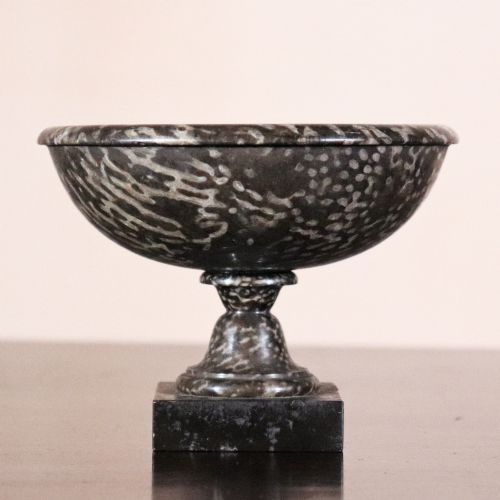


Antique Stone Tazza
An antique stone tazza is a low-pedestal ornamental vessel carved from marble, alabaster or mineral, bought to bring classical proportion to a room.
Antique Stone Tazza
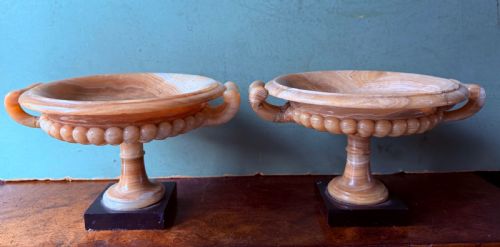
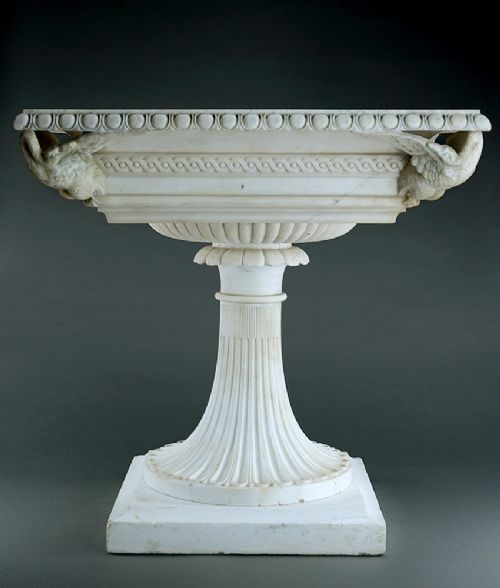
An antique stone tazza takes the form of a shallow circular dish raised on a slender central column and a stepped base, echoing classical Roman shapes. These ceremonial fruit dishes and serving vessels were reimagined in miniature for European homes during the eighteenth and nineteenth centuries.
The pieces seen here span the nineteenth century and the eighteenth century, encompassing Neoclassical, Victorian, French nineteenth century, and Continental Rococo styles. Many emerge from the Grand Tour tradition as souvenir pieces purchased by travellers in Italy, often drawing on excavated ancient models.
Forms range from smaller scale pedestal bowls and ornamental dishes to monumental urns and matched pairs. Beyond standard tazzas, related decorative vessels include labrum bowls, garnitures, fonts, and centrepiece bowls mounted with gilt bronze or champlevé enamel.
How they were made
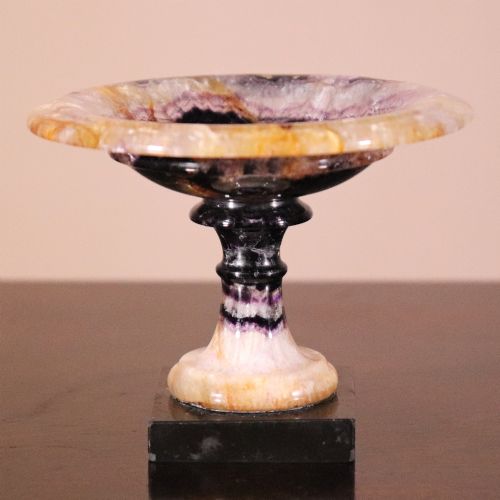
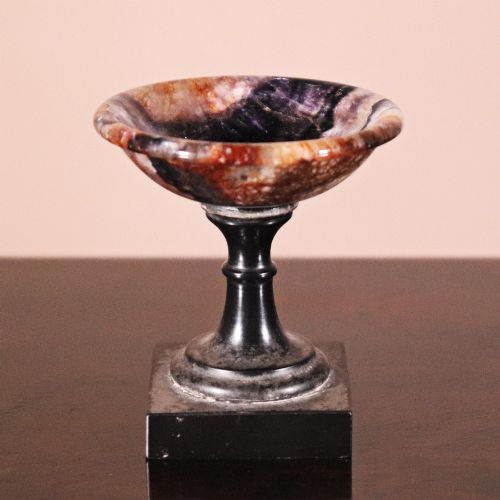
Carving hard minerals and marbles requires immense patience, turning blocks on lathes and finishing surfaces by hand with abrasive stones. Workshops utilised distinct local deposits, sourcing deep purple and yellow Sienna marble, banded fluorite known as Blue John, and richly figured alabaster.
Metal mounts in brass, bronze, and gilt ormolu frequently secure the stone components, sometimes enhanced by inlay work like pietra dura. Bases are often contrasted, pairing brightly coloured bowls with solid black marble plinths.
Listings feature black marble, Sienna marble, alabaster, white marble, Blue John, fluorite, and brass across nineteenth-century items.
What varies in quality
Quality rests in the choice of mineral and the ambition of the carving. A superior tazza uses highly figured stones with vivid natural banding, such as malachite, banded agate, or Ashford coral marble, rather than plain uniform stone.
The crispness of the turned profile and the weight of the base separate ordinary examples from exceptional ones. Finer pieces incorporate crisp cast brass or ormolu mounts and meticulous miniature stonemasonry that mirrors ancient architectural fragments.
The Antique Stone Tazza Glossary
- Tazza
- A shallow bowl mounted on a pedestal foot, used historically for display or serving. The form derives from ancient drinking vessels.
- Grand Tour
- A cultural journey undertaken by wealthy young Europeans through France and Italy during the eighteenth and nineteenth centuries. Travellers collected antiquities and architectural models as souvenirs.
- Pietra dura
- An artistic technique using cut and fitted polished coloured stones to create geometric or figurative designs. It appears inlaid into stone surfaces.
- Labrum
- A large classical stone basin or tub, often supported on a pedestal. Nineteenth-century versions replicated excavated archaeological finds.
Antique Stone Tazza: Frequently Asked Questions
Where did Grand Tour tazzas come from?
These decorative objects were principally produced in Italian workshops during the nineteenth century to satisfy wealthy travellers touring classical sites. Craftsmen copied ancient Roman forms discovered during excavations.
Tourists bought them as portable reminders of classical antiquity to display in British and European drawing rooms.
What is Blue John stone?
Blue John is a semi-precious fluorite mineral featuring distinctive purple, blue, and yellow bands. It originates from specific limestone caverns in Derbyshire.
Its striking natural patterns made it a prized material for small nineteenth-century decorative bowls and tazze.
How were marble tazzas used?
Antique tazze served primarily as decorative centrepieces on tables, mantelpieces, or sideboards. They were designed to display classical taste rather than hold food.
Some larger examples functioned as fruit bowls or ceremonial garniture pieces alongside matching urns and clocks.
What is pietra dura?
Pietra dura is a meticulous technique of inlaying cut marble and semi-precious stones into a solid stone base. Artisans shaped individual coloured pieces to form intricate floral or geometric motifs.
This decorative stonework frequently embellishes nineteenth-century Italian comports and tabletop dishes.