
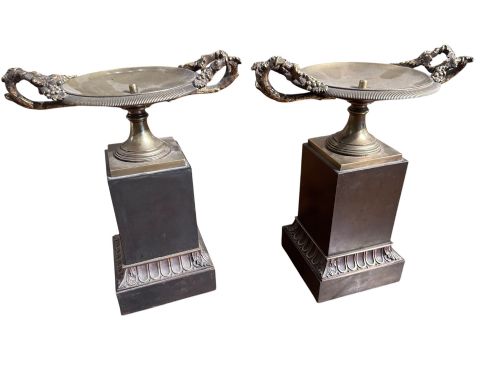

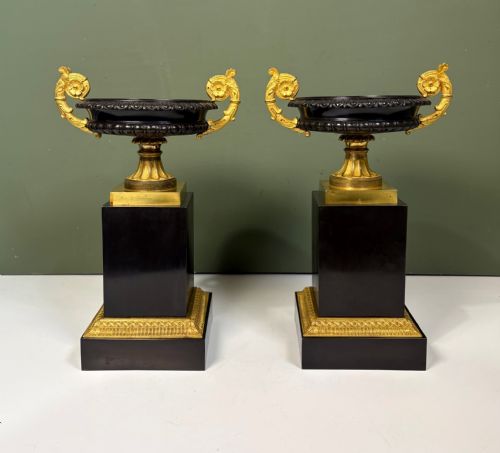

Antique French Compote
An antique french compote brings elevated display to fruit and flowers, combining classical weight with decorative metalwork.
Antique French Compote
When someone searches for an antique french compote, they look at footed vessels, tazzas, centrepieces, and pedestal bowls designed for formal display throughout the nineteenth century.
The pieces represented span the Regency, Victorian, and later nineteenth-century periods, capturing diverse aesthetic movements from French Empire to Rococo Revival.
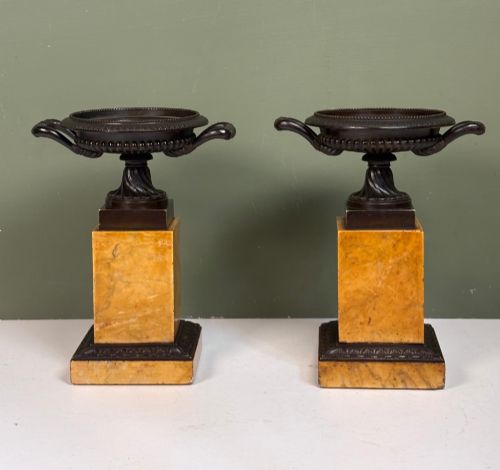
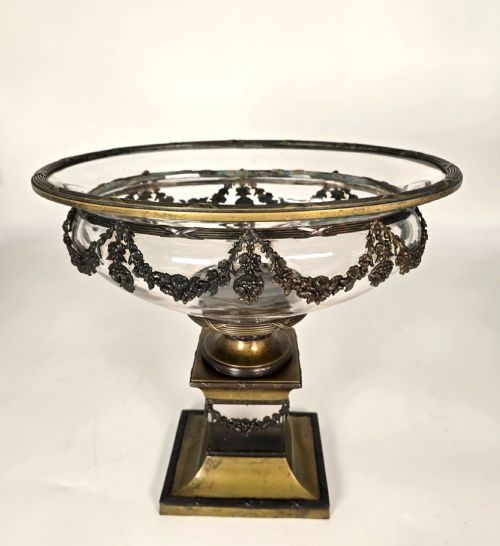
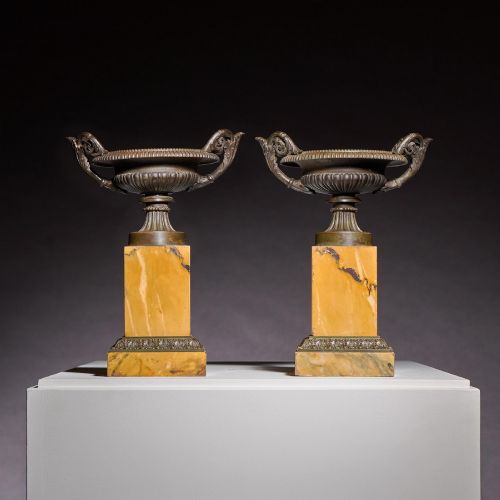
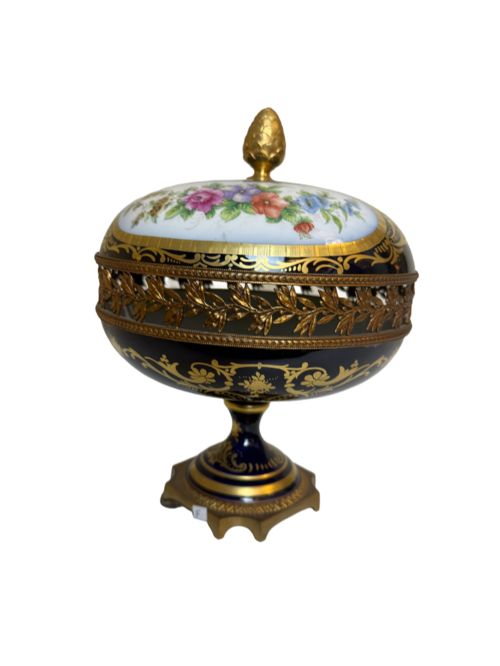
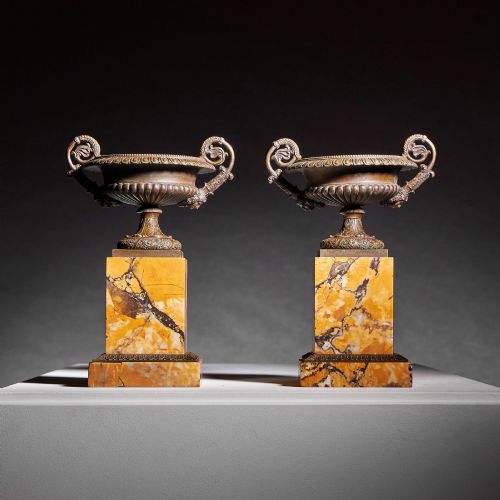
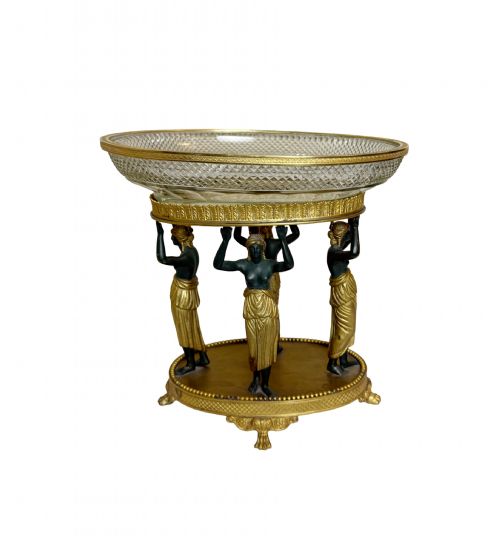
Buyers most frequently encounter bronze and marble combinations, porcelain dishes on stands, and gilt metal mounts supporting glass or crystal bowls.
Materials and construction
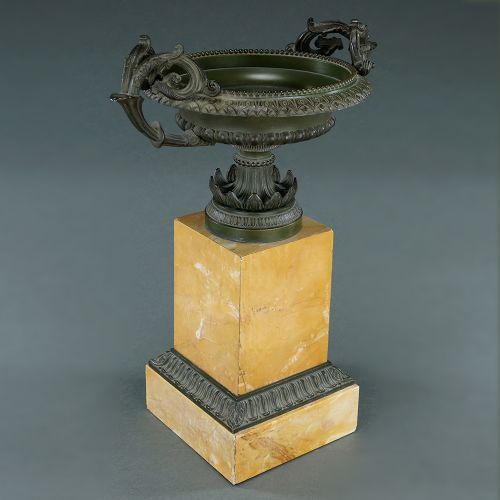
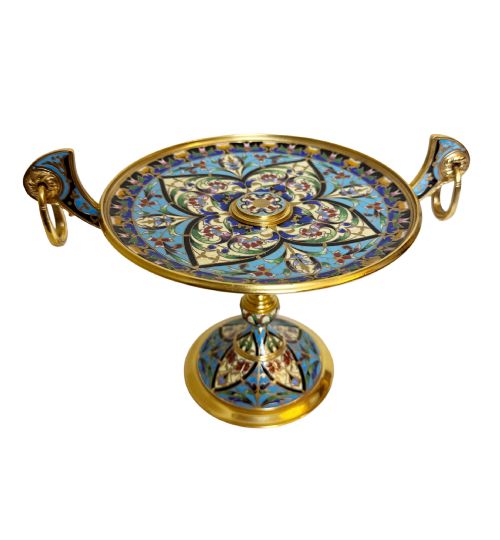
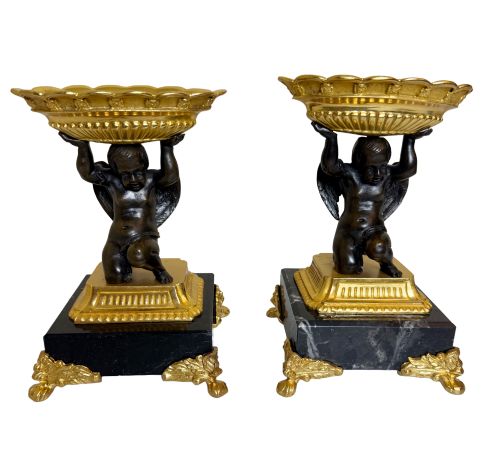
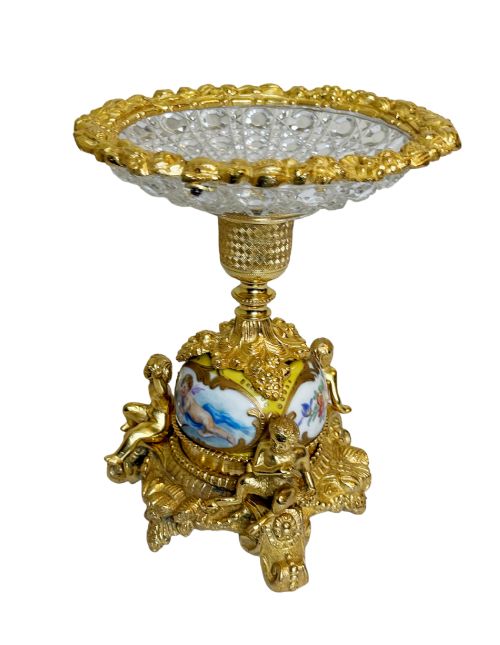
Metalwork relies on cast bronze, ormolu, and gilt bronze, often finished with champlevé enamel or patinated surfaces to accent sculptural details like cherubs and mermen.
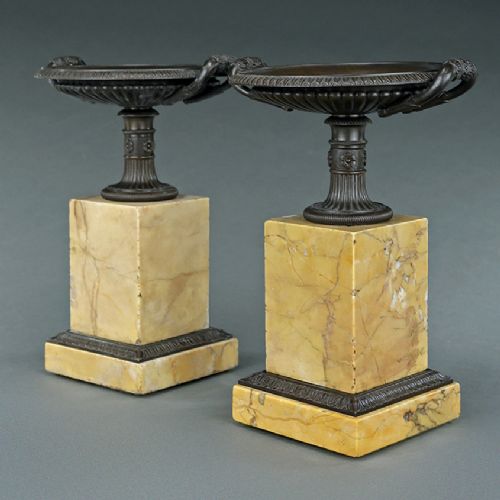
Structural bodies combine heavy stones such as Siena marble, green onyx, and malachite with glass, cut crystal, and mother-of-pearl dishes.
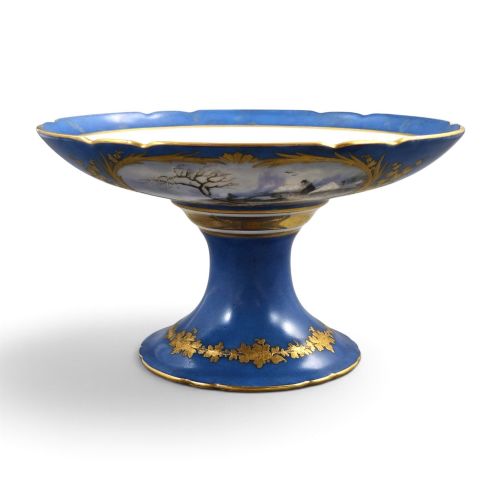
Ceramic elements utilise Sèvres, Limoges, and Paris porcelain, frequently painted and mounted into metal bases.
Materials recur across multiple categories, pairing gilt bronze and ormolu with marble, onyx, crystal, and hand-painted Sèvres style porcelain.
Assessment of standard
The refinement of the casting separates standard production from exceptional examples, seen in the crispness of chased details on gilt bronze mounts.
Material selection dictates overall presence, with dense decorative stones and hand-painted porcelain bodies holding higher visual weight than plain glass.
Coherence of design, such as matched pairs and integrated figural supports, defines the distinction between ordinary vessels and important centrepieces.
Sèvres·Christofle·Christofle et Cie·Samson·Limoges
The Antique French Compote Glossary
- Compote
- A raised vessel with a stem and foot, used for serving fruit or sweets on a dining table. These pieces often double as decorative centrepieces.
- Tazza
- A shallow saucer-like dish mounted on a stem and foot, originating from classical forms. It serves as a primary shape for decorative display.
- Ormolu
- Finely ground high-carat gold applied to bronze through a mercury amalgamation process, or simply gilt bronze. This finish protects the metal and provides a rich yellow lustre.
- Champlevé
- An enamel technique where troughs are dug into a metal surface and filled with vitreous paste before firing. It creates colourful geometric or floral patterns.
- Garniture
- A set of three or more matching decorative objects, typically comprising a central vase or compote flanked by matching vessels.
Antique French Compote: Frequently Asked Questions
What is an antique french compote used for?
These elevated vessels served primarily for presenting fruit, sweetmeats, or flowers during formal dining in the nineteenth century. Today, they function chiefly as decorative centrepieces on tables, sideboards, and mantelpieces.
Their substantial height and decorative bowls draw the eye upwards, making them effective focal points in traditional and eclectic interiors alike.
How do I identify a Regency compote?
Regency pieces often incorporate classical Neoclassical motifs, drawing heavily on Greek, Roman, and sometimes abolitionist themes popular in early nineteenth-century design.
Look for combinations of dark patinated bronze, bright ormolu, and heavy marble bases that reflect the austere yet luxurious taste of the period.
What is the difference between a tazza and a centrepiece?
A tazza specifically denotes a shallow, footed dish modeled after classical drinking vessels, whereas a centrepiece is a broader term for any large decorative object placed in the middle of a table.
Centrepieces frequently incorporate more complex figural elements, such as cherubs or mermen, supporting larger crystal or porcelain bowls.
How should I clean gilt bronze mounts?
Gilt bronze requires gentle dusting with a soft, dry brush to prevent the accumulation of dirt in recessed chased areas. Avoid chemical polishes, which strip the thin layer of gold leaf or mercury gilt from the underlying bronze.
If necessary, a slightly damp cloth may remove surface grime, followed immediately by drying with a soft lint-free towel.
Are these pieces usually sold as pairs?
Many nineteenth-century compotes and tazzas survive as matched pairs, originally intended to balance either end of a long dining table or sideboard.
Single examples also appear frequently, often representing larger garnitures or individual centrepieces designed to stand alone.