


Enamel Bronze Bowl
These enamel bronze bowl pieces bring together heavy metalwork and fused glass colour, offering both Chinese cloisonné and French gilt mounts.
Enamel Bronze Bowl
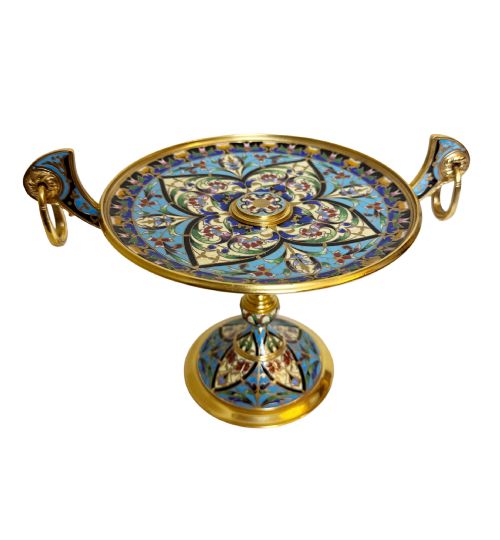
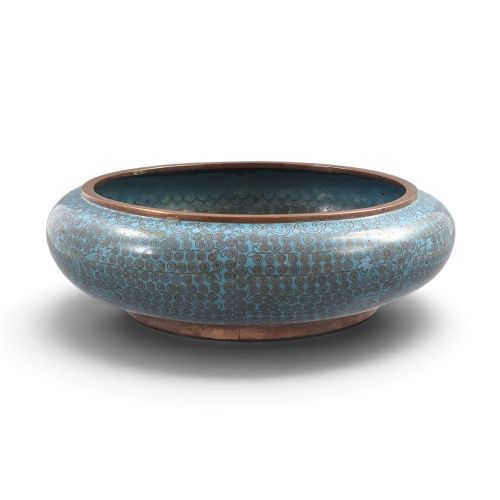
When you search for an enamel bronze bowl, you are looking at heavy metal vessels fused with coloured glass paste, ranging from Chinese cloisonné jardinières to French gilt bronze centrepieces. The pieces on this page span the nineteenth century, taking forms such as tazzas, footed bowls, chargers, and lidded pedestal vessels.
You will frequently meet nineteenth century French items featuring champlevé enamel alongside green onyx or Sevres porcelain, as well as Asian works from the Qing Dynasty, Meiji period, and Edo period. These items served as centrepieces, planters, and decorative chargers in grand interiors.
How they were made
Artisans constructed these objects using bronze, copper, and copper alloy as the primary structural foundations for the vessels and mounts. They then applied surface decoration using enamel techniques, specifically cloisonné and champlevé, which involve soldering wire compartments or carving troughs into the metal before filling them with vitreous paste.
Makers finished many of the European pieces with gilt bronze or ormolu mounts, combining the metalwork with porcelain or onyx elements. Japanese and Chinese workshops focused on intricate wirework cells to hold the multi-coloured enamel fields across large chargers and jardinières.
Materials appearing across these items include gilt bronze, copper alloy, green onyx, Sevres porcelain, and ormolu.
What varies in quality
The distinction between ordinary and superior examples lies in the precision of the metalwork and the clarity of the fused glass paste. Finer pieces display crisp, even wire boundaries in cloisonné work or deeply carved recesses in champlevé, with minimal pitting in the vitreous infill.
Weight and substantial mountings also indicate a higher standard, particularly in French ormolu and gilt bronze centrepieces where the cast metal elements fit flush against onyx, porcelain, or enamel plaques.
Louis Pierre Malpass
The Enamel Bronze Bowl Glossary
- Cloisonne Enamel
- A technique where thin metal wires are soldered to a metal base to create cells, which are then filled with enamel paste and fired. This method produces intricate, stained-glass-like patterns across the surface of bowls and vases.
- Champleve Enamel
- A method where troughs or cells are hollowed out directly into the thick bronze or copper surface and filled with enamel before firing. It results in bold, robust colour fields bounded by thick metal lines.
- Ormolu
- A gilded bronze finish applied to decorative mounts and stands during the eighteenth and nineteenth centuries. It gives the brassy metal a rich, golden sheen that complements porcelain and enamel plaques.
- Tazza
- A shallow bowl or cup mounted on a stem and foot, designed for display or serving. These elevated vessels often feature elaborate enamel interiors and gilt bronze rims.
- Jardiniere
- A large ornamental pot or planter designed to hold growing plants. In these listings, they appear in heavy bronze and cloisonné enamel for indoor display.
Enamel Bronze Bowl: Frequently Asked Questions
What is an enamel bronze bowl used for?
These vessels were created primarily for decorative display as centrepieces on tables, serving trays, or as jardinières for plants.
Their substantial weight and intricate coloured surfaces made them prominent focal points in nineteenth-century drawing rooms and studies.
How do I tell French and Asian pieces apart?
French examples often incorporate gilt bronze mounts, ormolu, green onyx, or Sevres porcelain alongside champlevé enamel.
Asian pieces from China and Japan typically rely on all-over cloisonné wirework with intricate floral, dragon, or geometric motifs integrated directly into the bronze body.
What is the difference between cloisonne and champleve?
Cloisonné involves soldering thin metal wires onto the surface of the bronze to form small cells for the enamel paste.
Champlevé involves carving or gouging the design straight into the thick metal base to create recessed channels for the coloured glass.
How should I care for an antique bowl?
Keep these objects away from direct moisture and harsh chemical cleaners to protect the delicate vitreous enamel and the aged bronze or gilt surface.
Dust them gently with a dry, soft cloth to preserve the metal patina and the coloured glass infill.