
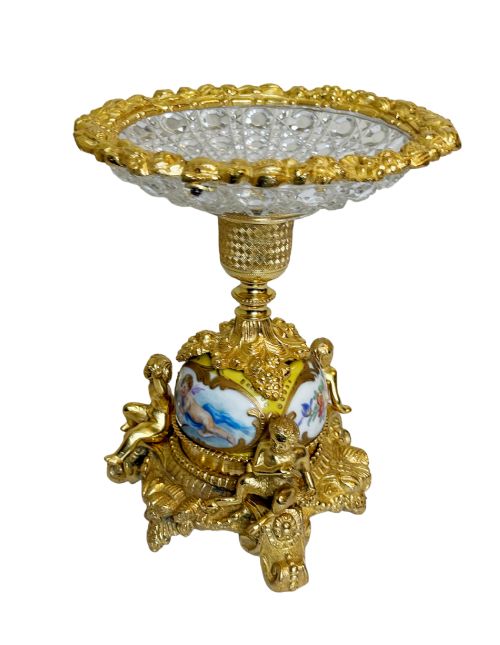
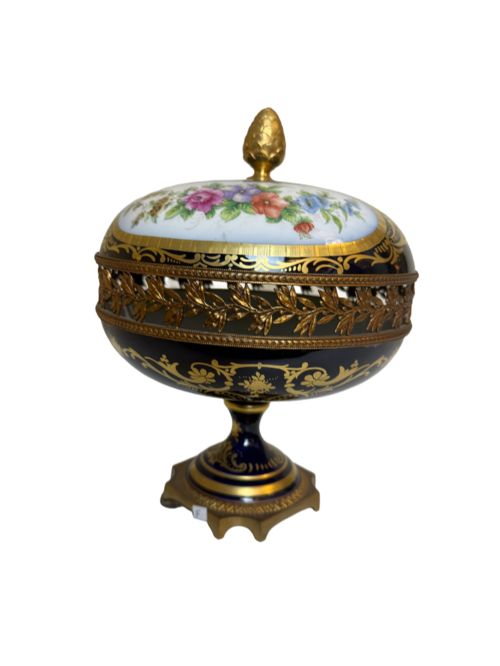


French Bronze Porcelain Bowl
These french bronze porcelain bowl examples combine gilt metal mounts with ceramic bodies, offering striking centrepieces for formal tables.
French Bronze Porcelain Bowl
Buyers seeking a french bronze porcelain bowl encounter ornate nineteenth-century table vessels combining ceramic bodies with metal mounts. The selection centres heavily upon centrepieces, comports, and garniture sets originating from French workshops during the eighteen-eighties and nineties.
Most items on show channel historic aesthetic movements, notably Rococo Revival, Chinoiserie, and Japonisme. Forms range from lidded dishes on stands to large compotes supported by cherubs or detailed ormolu frameworks.
Materials and construction
Manufacture relies on the combination of fired ceramic and cast metal. Porcelain components, including decorated Sevres style bodies and Paris porcelain, are fitted with gilt bronze, ormolu, or champlevé enamel mounts.
Makers utilised cut crystal alongside porcelain in certain centrepieces, pairing glazed surfaces with detailed metal casting and enamel work to achieve decorative visual contrast.
Materials documented across the inventory include porcelain, gilt bronze, ormolu, enamel, cut crystal, and gilt metal.
Assessing quality in decorative vessels
Excellence in these objects rests upon the crispness of the bronze casting and the artistic execution of the porcelain painting. Finer examples display deeply chased metal mounts and delicately applied enamel or hand-painted ceramic decoration.
The integration between the ceramic body and its metal armature dictates the overall success of the piece. Superior items demonstrate secure fitting and harmonious proportion between the heavy bronze mounts and the fragile porcelain bowl.
Louis Pierre Malpass·Samson·Limoges
The French Bronze Porcelain Bowl Glossary
- Ormolu
- Gilt bronze mounted on decorative objects. This technique involves applying a finely ground gold-mercury amalgam to a bronze object.
- Comport
- A large bowl raised on a stem, utilised as a centrepiece for fruit or dessert. These vessels dominate nineteenth-century dining table decoration.
- Champlevé enamel
- An enamelling technique where troughs are carved into the metal surface and filled with vitreous paste before firing. This method appears on mounts alongside porcelain bodies.
- Garniture set
- A matched set of three or more decorative objects designed for display on a mantelpiece or sideboard. They typically include a central bowl or urn flanked by matching pieces.
French Bronze Porcelain Bowl: Frequently Asked Questions
What is a french bronze porcelain bowl used for?
These vessels functioned primarily as decorative centrepieces or compotes on formal nineteenth-century dining tables. They were also displayed upon sideboards and mantelpieces as part of garniture sets.
Today, they serve as striking decorative objects for interior display rather than functional tableware. Their scale and ornamentation make them natural focal points in reception rooms.
How do I date a french bronze porcelain bowl?
Dating relies on examining the style of the metal mounts, the ceramic body, and manufacturing marks. Most examples date from the late nineteenth century, reflecting Revivalist tastes of the period.
Stylistic cues such as Japonisme or Rococo Revival motifs help narrow the decade of production. Comparative analysis with known factory styles further clarifies the timeline.
What styles influence these decorative bowls?
The pieces draw heavily from historical French design movements, notably Louis XV Revival and Rococo ornamentation. Other influences include Chinoiserie and Japonisme.
These varied aesthetic currents result in objects featuring asymmetric scrolling mounts alongside Asian-inspired ceramic decoration. The mixture of styles defines late nineteenth-century salon taste.