
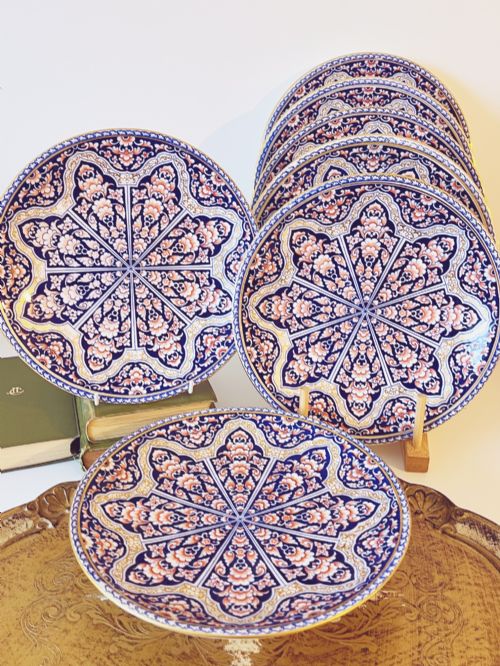


Victorian Porcelain Comport
A Victorian porcelain comport brings raised display and formal elegance to a table, combining pedestal form with painted or gilded decoration.
Victorian Porcelain Comport
When you search for a victorian porcelain comport, you are looking at elevated serving vessels designed for fruit, dessert, or floral arrangements during the nineteenth century. These pedestal pieces often form part of larger dessert services or stand alone as striking centrepieces on the dining table.
The versions you are most likely to meet on this page range from English bone china and ironstone to continental porcelain influenced by Sevres and German manufactories. They span styles from Rococo Revival and Victorian Imari to the Aesthetic Movement, reflecting diverse tastes across the nineteenth century.
Many examples feature pedestal bases supporting shallow bowls, dishes, or tazzas, sometimes enriched with ormolu or gilt bronze mounts. Their forms serve both ornamental and practical functions, frequently appearing alongside matching plates in assembled dessert services.
How they were made
Potters shaped these vessels using fine porcelain, bone china, or ironstone, often forming the pedestal and bowl in separate sections before joining them securely. Moulding allowed for elaborate Rococo Revival scrolls and sculptural elements, such as cherubs or applied flowers, which required skilled hand assembly.
Decoration relied heavily on hand painting, enamel work, and the application of gold leaf or gilding to accentuate rims and structural details. Kiln firing fixed these colours and metal embellishments, creating the glossy surfaces seen on pieces from English works and continental factories alike.
Ceramic cherubs occasionally cling to pedestals, holding up heavy fruit bowls with surprising enthusiasm.
What varies in quality
The distinction between standard production and the top of the range rests on the execution of the painting and the crispness of the porcelain moulding. Finely detailed floral studies, hand-painted orchids, and meticulously applied gilding separate exceptional artistic efforts from routine factory output.
Structural complexity also dictates quality, particularly where ormolu mounts, gilt bronze, or elaborate figural supports like cherubs are integrated into the design. Pieces that retain their original gilding without excessive rubbing demonstrate superior preservation and materials.
Royal Crown Derby·C.G. Schierholz and Sohn·Mason·Thomas Moorcroft·E.J.D Bodley·Minton·Royal Worcester
The Victorian Porcelain Comport Glossary
- Comport
- A raised vessel on a pedestal, used for serving fruit or sweets at formal meals. It shares similarities with a tazza and often functions as a table centrepiece.
- Tazza
- A shallow bowl or saucer mounted on a stem and foot, used for display or serving. In nineteenth-century contexts, the term frequently overlaps with comports.
- Ironstone
- A heavy, durable type of ceramic developed as a robust alternative to porcelain. It takes enamel decoration well and resists everyday wear.
- Ormolu
- Gilded bronze applied as mounts or decorative feet on ceramic vessels. It adds weight and a contrasting metallic finish to porcelain centrepieces.
- Bone china
- A type of porcelain incorporating bone ash, known for its high strength, milky white colour, and translucency. English makers utilised it extensively for dessert services.
Victorian Porcelain Comport: Frequently Asked Questions
What is a comport used for?
These vessels were designed to hold fruit, sweetmeats, or floral arrangements, elevating items above the table surface during formal dessert courses.
Today, they serve equally well as decorative centrepieces or functional display pieces for seasonal fruit in a dining room.
How do I clean a porcelain comport?
Gentle dusting with a soft, dry cloth is usually sufficient for routine care, avoiding abrasive materials that might scratch the glaze.
If washing is necessary, use lukewarm water and mild soap, keeping gilt areas away from harsh soaking and vigorous scrubbing.
Are comports part of sets?
Many comports originally belonged to larger dessert services that included matching plates for individual guests.
Surviving examples often appear individually or paired with a subset of plates, as complete original services are uncommon.
How do I identify a Victorian piece?
Look for stylistic cues such as Rococo Revival scrolls, Aesthetic Movement motifs, or characteristic nineteenth-century flower painting.
Maker marks, date ciphers, and registration numbers stamped or painted on the underside provide precise chronological evidence.