
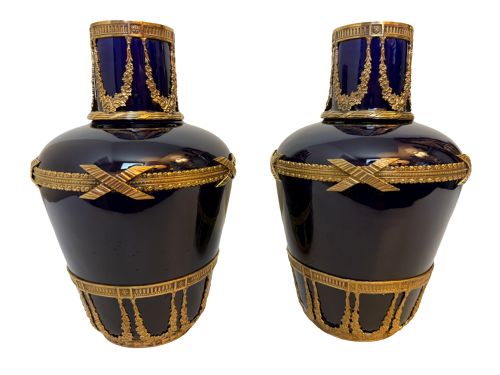
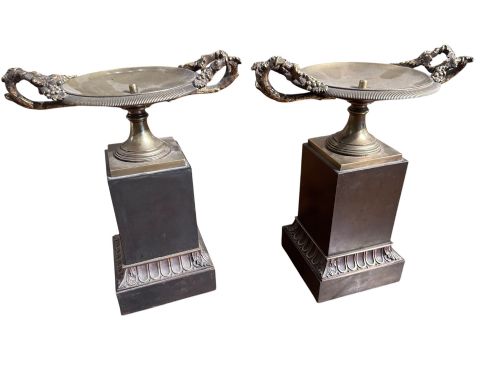


Ormolu Decorative Urns
These ormolu decorative urns bring nineteenth-century French elegance and weight to a room through gilded metal and fine stone.
Ormolu Decorative Urns
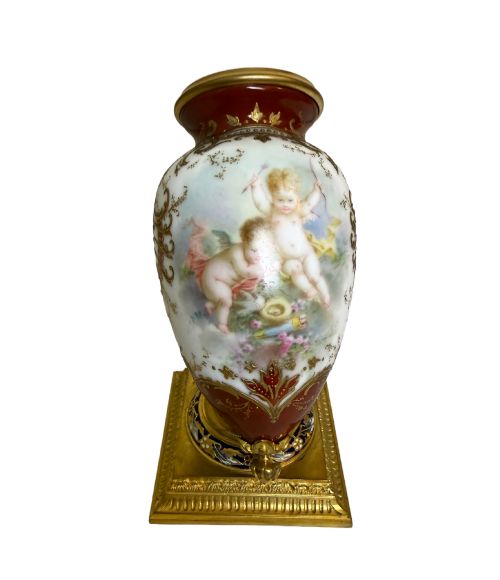
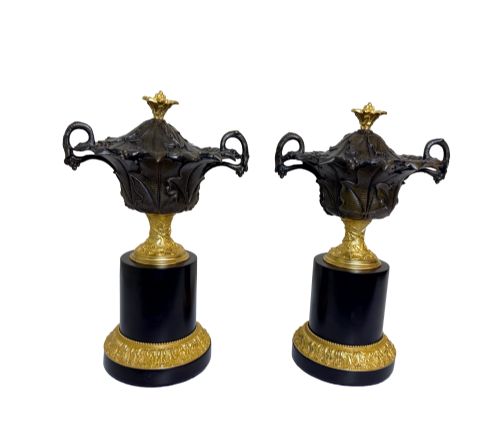
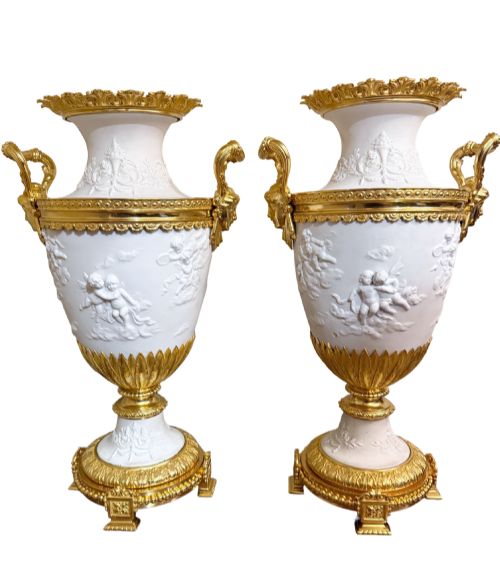
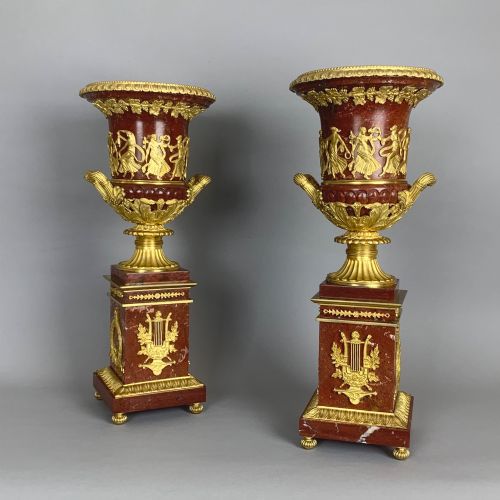
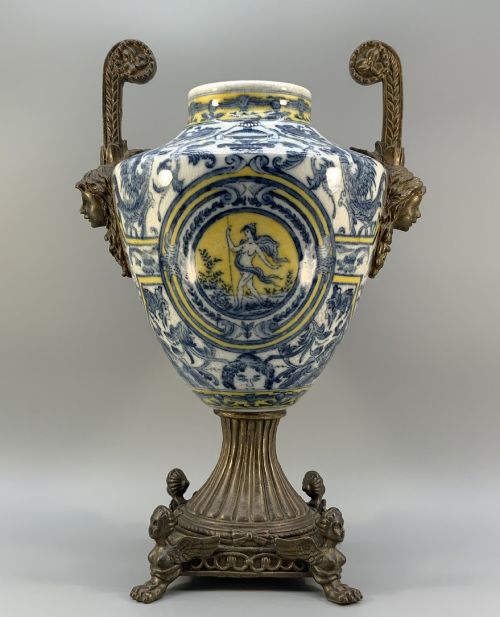
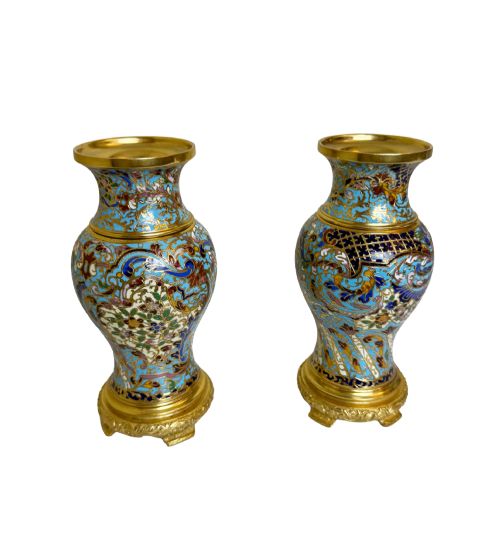
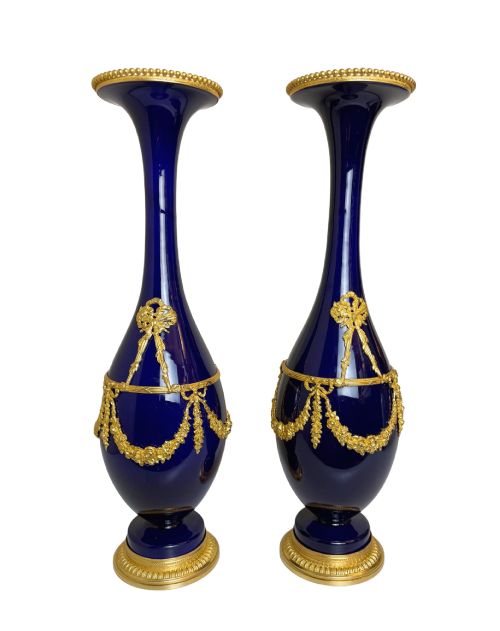
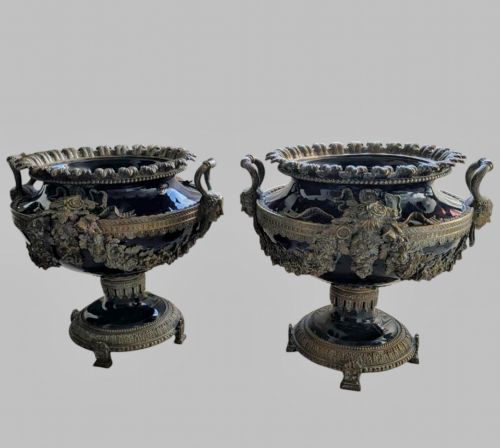
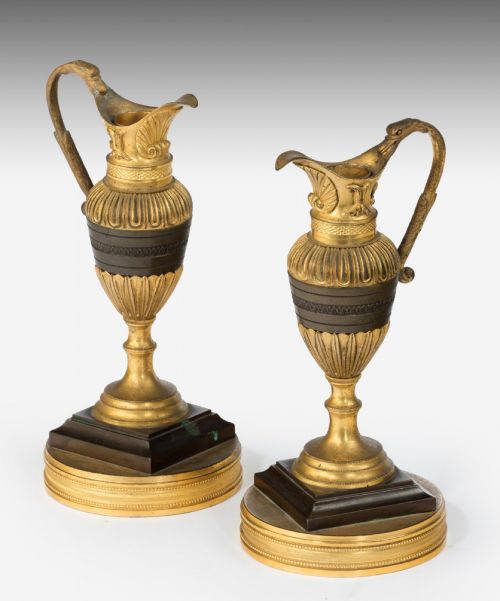
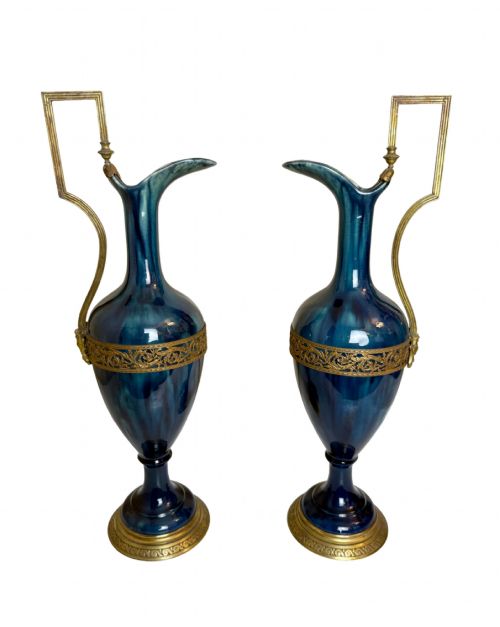
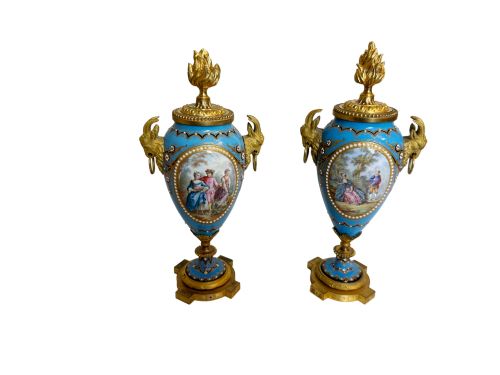
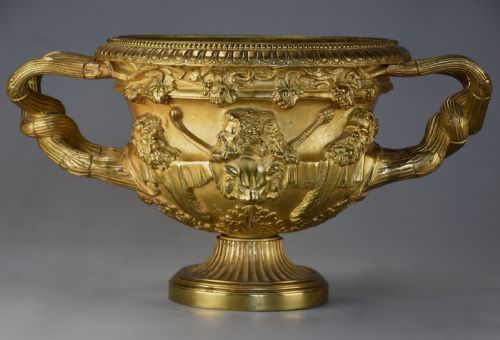
When you search for ormolu decorative urns, you encounter nineteenth-century pieces that draw heavily on French Empire, Louis XVI, and neoclassical design vocabularies. Most examples on this page are matched pairs featuring cast metal mounts combined with bodies of porcelain, marble, onyx, or glass.
The forms range from lidded cassolettes and classical vases to tazzas and grand tour reductions modelled on ancient antiquities. Makers often employed blue ceramic, white porcelain, and coloured stone to create high-contrast decorative objects designed for display on mantelpieces, pedestals, and tables.
Materials and construction
The manufacture of these objects relies on the combination of cast gilt bronze, or ormolu, with traditional ceramic and mineral bodies. Founders and mount-makers worked in bronze and brass, applying gold amalgamation or heavy gilding to achieve a bright, uniform metallic finish that contrasted sharply with patinated elements.
Vessels incorporate turned marble, onyx, and hand-painted porcelain bodies secured with threaded bronze rods, nuts, and pins. Enamel work, champlevé detailing, and moulded glass further augmented the complex assemblages produced by nineteenth-century Parisian workshops and provincial foundries.
Listings feature nineteenth-century items combining gilt bronze, Sevres-style porcelain, marble, and champleve enamel in classical and revival styles.
Judging quality in ormolu and bronze
The distinction between ordinary and exceptional pieces lies in the crispness of the bronze chasing and the depth of the gilding. Superior mounts exhibit sharp relief in foliage, masks, and classical motifs, whereas lesser castings suffer from softened details and flat, brassy plating.
Material selection also dictates overall grade, with heavy turned marbles, fine-pitted onyx, and hand-painted porcelain bodies representing higher tiers of production. The precision with which mounts fit the contours of stone or ceramic vessels reveals the competence of the original assembly.
Sevres·Meissen·Clodion
The Ormolu Decorative Urns Glossary
- Ormolu
- Gilt bronze produced by applying a mercury-gold amalgam to a bronze base and firing it to drive off the mercury. This historical technique yields a durable, deep golden lustre distinct from modern electroplating.
- Cassolette
- A dual-purpose decorative vessel featuring a reversible lid that functions either as an urn or, when flipped, a incense burner or candleholder. They frequently appear in pairs on marble and bronze bases.
- Champlevé
- An enamelling technique where troughs or cells are hollowed out of the metal surface and filled with vitreous enamel paste before firing. The resulting coloured patterns sit flush with the surrounding metal partitions.
- Grand Tour
- Souvenirs and miniature reductions of classical antiquities purchased by travellers touring European cultural centres during the nineteenth century. These bronze and marble pieces emulate famous sculptures and architectural relics.
Ormolu Decorative Urns: Frequently Asked Questions
What is ormolu?
Ormolu refers to gilt bronze, specifically created through the historic mercury-gilding process on cast bronze components.
This technique produces a rich, deep golden surface that resists tarnishing and retains its warmth over centuries.
How were urns used historically?
Nineteenth-century households placed these ornate vessels on mantelpieces, consoles, and pedestals purely for decorative display.
Some variants, such as cassolettes, served practical functions as lidded containers or receptacles for aromatics.
How do I date these pieces?
Dating relies on stylistic markers such as neoclassical proportions, Louis XVI revival motifs, and the specific casting quality of the bronze mounts.
Most surviving examples date from the nineteenth century, reflecting periods of intense revivalism in French decorative arts.
How do I care for ormolu?
Maintain the surface by dusting gently with a soft, dry cloth to prevent accumulation in the recesses of the chasing.
Avoid commercial metal polishes, chemical cleaners, and abrasive cloths, which strip away the thin layer of historical gilding.