



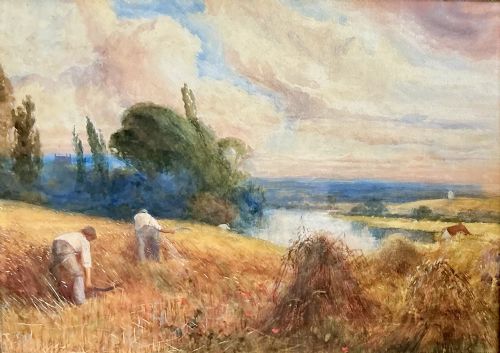


Original Victorian River Scene
An original victorian river scene captures the quiet bends and busy banks of nineteenth-century waterways through the observant eyes of period artists.
Original Victorian River Scene
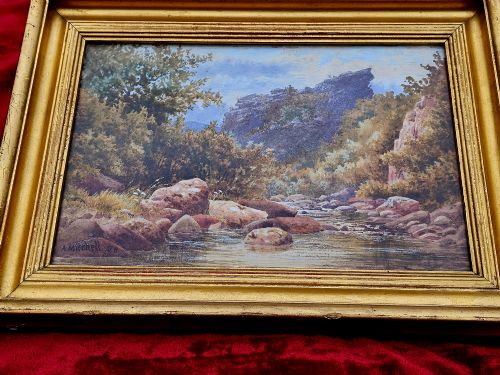
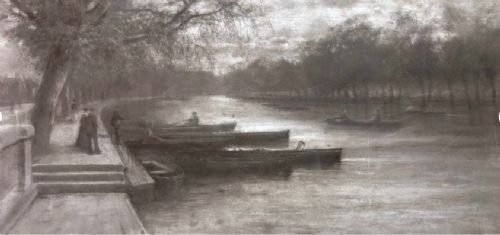
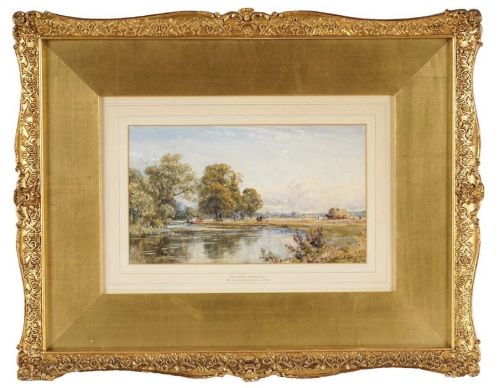
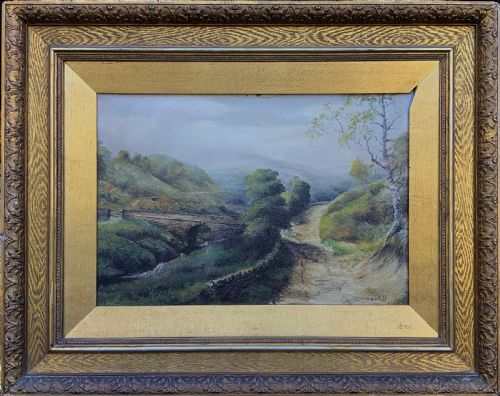
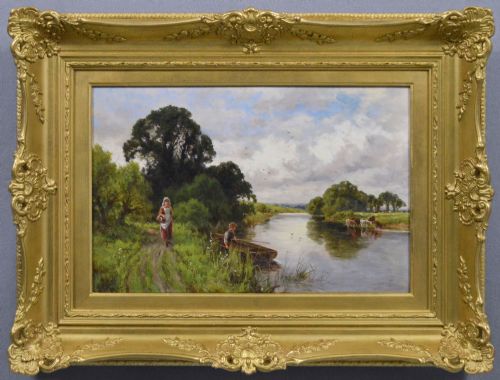
An original victorian river scene records the nineteenth-century British landscape along familiar waterways like the Thames, the Severn, and the Cam. These works capture pastoral riverbanks, working boats, and cattle watering in pastoral settings.
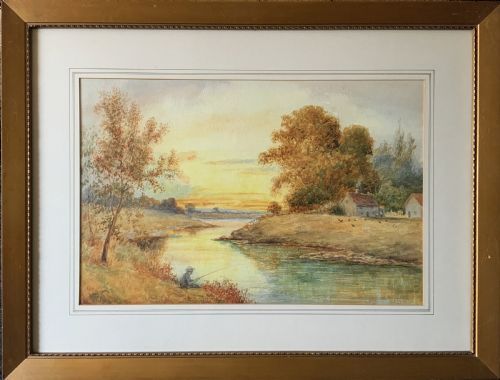
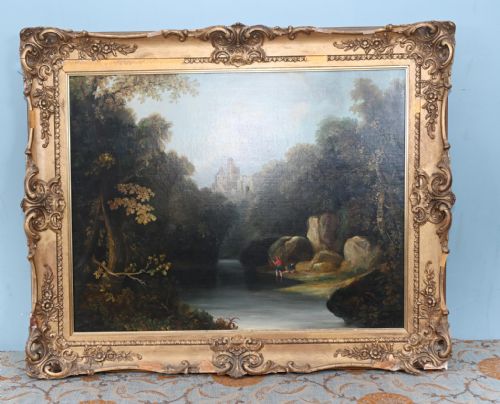
The common versions found here are watercolours on paper and oil paintings on canvas or wood panel, framed in period gilt wood. They range from small, intimate watercolours to large oil paintings by named British School artists.
Subjects stretch from quiet rural backwaters to identifiable landmarks such as Windsor Castle and St Paul's Cathedral. They reflect nineteenth-century naturalism and the Victorian appetite for landscape art.
How they were made
Painters built these works using watercolour on paper or oil on canvas and wood panel, applying pigment with traditional brushes to capture light on water. Many watercolours incorporate delicate charcoal or etching lines to define the riverbanks and architecture.
Frames of giltwood or gilt wood enclose the paintings, often original to the period and complementing the pastoral scenes within. Canvases are stretched over wooden frames while panels provide a rigid wooden support for finer brushwork.
Artists occasionally painted tiny fishermen on distant riverbanks, invisible until you peer closely through the glass.
What varies in quality
Quality rests in the artist's ability to handle light, atmosphere, and water movement rather than the mere presence of a signature. Finer paintings show confident brushwork, subtle tonal shifts in the sky, and convincing reflections on the river surface.
The condition of the paper, canvas, and original gilt frame influences the overall integrity of the piece. Works with strong provenance, exhibition history, or attribution to Royal Academy artists stand apart in depth of execution.
Alfred Young Nutt·Frederick Marriott·A. Mitchell·Robert W. Macbeth·Robert Thorne Waite·Henry H. Parker·Honore Cavaroc·Arthur Herbert Rigg·Henry John Kinnaird·Robert John Hammond·Colin H. Greenwood·Robert Winchester Fraser·Alfred Grey·Peter Deakin·John Wright Oakes·William Joseph Boyes·Walter Follen Bishop·A.A. Finch·William Langley·Charles Harmony Harrison·Thomas Baker·William Manners·H. Church·Claude Cardon·William Foster
The Original Victorian River Scene Glossary
- Watercolour
- A painting method where fine pigment is mixed with water-soluble binders and applied to paper. It allows for translucent washes that suit atmospheric river mists.
- Oil on Canvas
- Pigment suspended in drying oil applied to a woven fabric stretched across a wooden frame. This medium permits rich colour layering and detailed textures.
- Giltwood
- Wood carved and covered with a thin layer of gold leaf or gold paint. It provides a decorative and reflective border suited to nineteenth-century framing.
- British School
- A loose classification for artists working in Britain during specific centuries. It groups together painters sharing national stylistic traditions and academic training.
- Etching
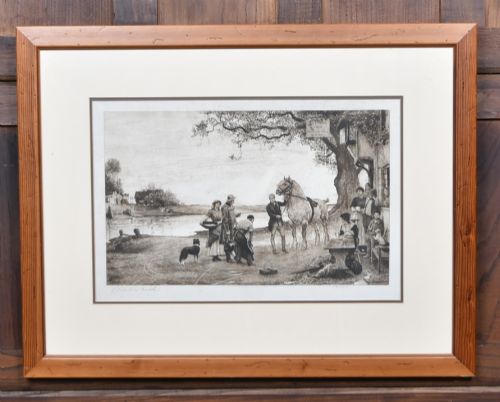
- A printmaking technique where lines are bitten into a metal plate with acid before being inked and pressed onto paper. It often appears in preparatory drawings or companion works.
Original Victorian River Scene: Frequently Asked Questions
What is an original victorian river scene?
An original victorian river scene is a nineteenth-century painting or watercolour depicting British rivers, bridges, and pastoral banks. These artworks document waterways during a period of intense rural and industrial change.
Artists of the British School painted these views directly from nature or in studios using field sketches. They record both quiet country backwaters and busy urban stretches of famous rivers.
How were these paintings displayed originally?
Victorian households displayed these river scenes in formal parlours and drawing rooms, typically mounted in heavy giltwood frames. The frames enhanced the light reflecting off the water depicted in the oils and watercolours.
Collectors often grouped topographical watercolours together by region or artist. They served as conversation pieces reflecting the owner's appreciation for British landscape art.
How do I care for antique watercolours?
Antique watercolours require protection from direct sunlight to prevent the pigments and paper from fading. Keep them away from damp environments to avoid foxing spots on the paper.
Display them behind glass with acid-free mounts that prevent the paper from touching the glazing. Stable indoor humidity helps preserve both the paper and the wooden frame.
How can I tell the period of a painting?
Dating relies on artist signatures, exhibition records, framing styles, and the specific materials used. Canvas stamps from nineteenth-century art suppliers offer reliable chronological clues.
Subject matter and clothing styles of figures near the river also help narrow down the decade. Many works bear contemporary inscriptions or exhibition labels on the reverse.