





Original Maritime Landscape Art
Original maritime landscape art captures the shifting light and atmosphere of coasts, harbours and estuaries across the nineteenth and twentieth centuries.
Original Maritime Landscape Art
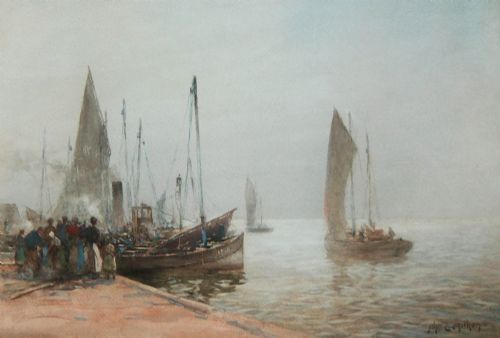
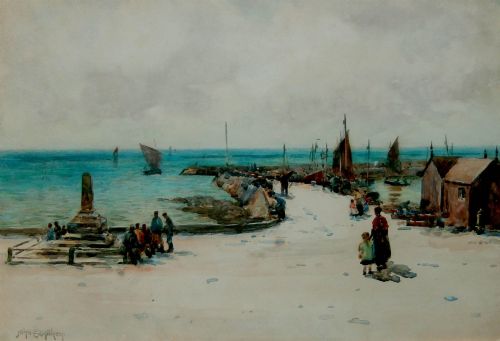
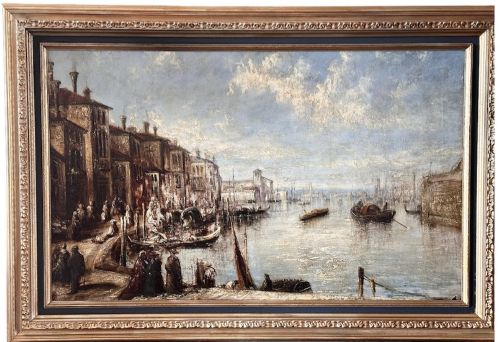
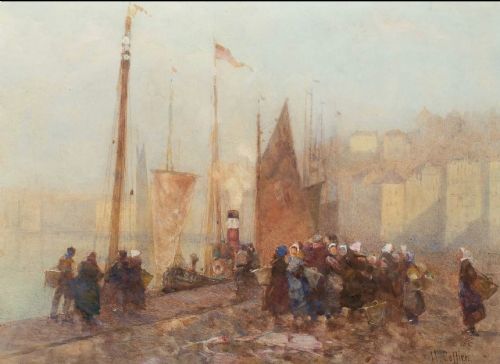
Buyers browsing original maritime landscape art will encounter a diverse selection of paintings and waterpaintings that focus on coastal views, working harbours and open seas. The inventory spans from the nineteenth century through the 1960s, capturing everything from traditional British fishing ports to French coastal scenes.
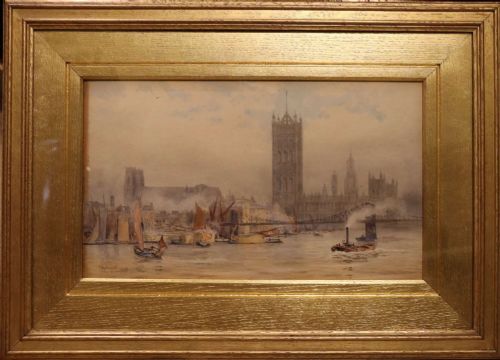
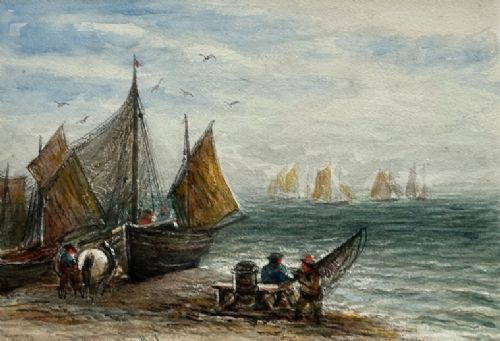
The works take several distinct forms, including detailed watercolour paintings on paper and robust oil paintings on canvas or board. Many pieces feature specific coastal locations such as St Ives, Whitby and Scarborough, providing a tangible record of maritime heritage.
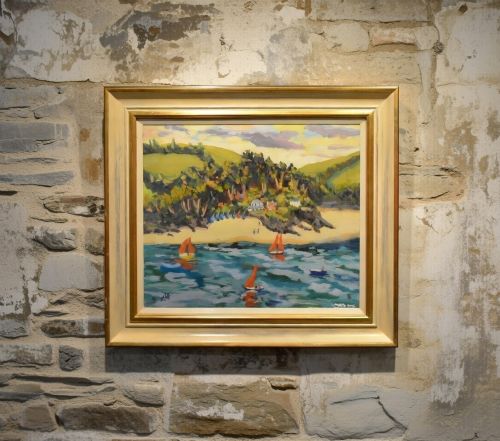
Stylistically, these pieces range from Victorian marine art and Edwardian watercolours to British Impressionism and Modern British interpretations. This variety ensures that collectors can find both tightly rendered topographical views and looser, more expressive impasto landscapes.
Materials and techniques
The foundational medium for many works is watercolour pigment applied to paper, often capturing the translucent light and atmospheric conditions of coastal havens. Artists utilised fine brushwork to delineate rigging, architecture and restless water.
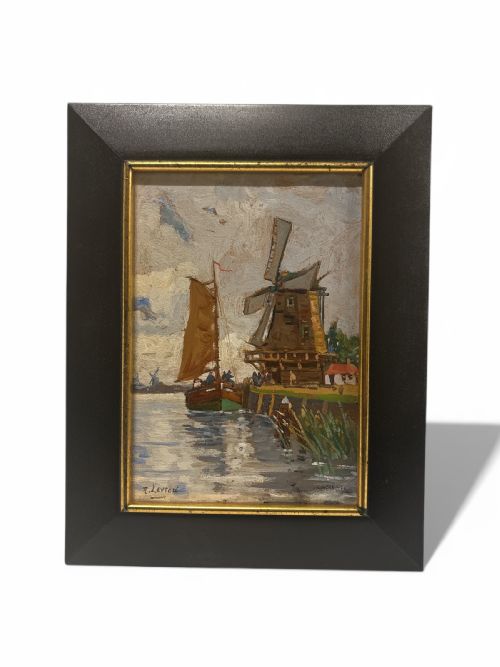
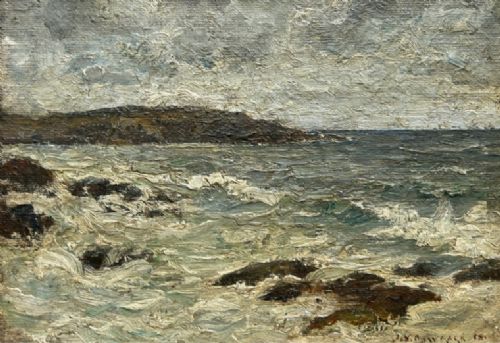
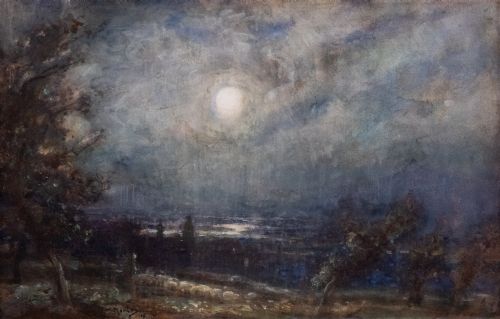
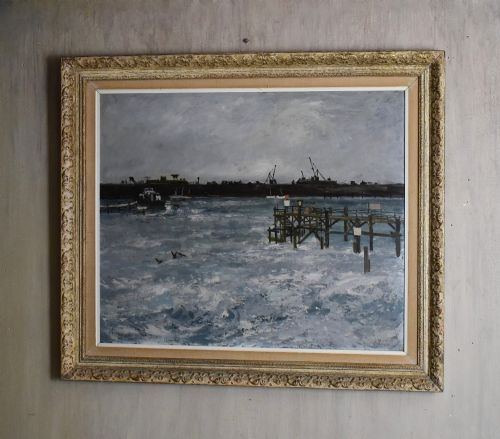
Alternatively, oil paint on canvas or board offered a heavier, more tactile medium suited to impasto techniques and textured sea views. These oil paintings frequently incorporated gilt wood frames that complement the depth of the palette.
Listings feature works spanning the nineteenth century through the 1960s, executed in oil and watercolour on canvas, board, and paper.
Assessing quality
Quality rests upon the artist's ability to command atmospheric perspective and convey the restless movement of water without stiffness. Superior examples demonstrate a confident handling of light, whether capturing the crisp glare of a harbour at midday or the muted tones of an evening departure.
The strength of the composition and the fidelity of the topographical or maritime detail further elevate a piece. Works that retain their original framing and surface stability command greater regard among collectors.
James Orrock·Thomas William Morley·Francis Moltino·Joseph Farquharson·Donald McIntyre
The Original Maritime Landscape Art Glossary
- Impasto
- Paint applied thickly to a canvas or board so that it stands out from the surface. This technique allows brush or palette knife marks to remain clearly visible, adding physical texture to waves and clouds.
- Watercolour
- A painting method in which the paints are made of pigments suspended in a water-based solution. The resulting works rely on the white of the paper to provide luminosity and light.
- Gilt wood
- Wood that has been treated with a thin layer of gold leaf or gold-coloured gilt paint. Frames finished in this manner frequently accompany nineteenth and early twentieth-century oil paintings.
- Seascape
- A work of art that depicts the sea, coastal views or maritime activities. These pieces often incorporate shipping vessels, harbours and cliffs.
- British Impressionism
- A painting style developed in the late nineteenth and early twentieth centuries focusing on everyday subjects and the play of natural light. Practitioners of this style often worked out of doors to capture transient atmospheric effects.
Original Maritime Landscape Art: Frequently Asked Questions
What periods do these paintings cover?
The available works span from the nineteenth century through the mid-twentieth century, encompassing Victorian, Edwardian, and mid-century modern movements.
This broad chronological range reflects changing artistic interpretations of coastal scenery and maritime life over several decades.
How do I choose between oil and watercolour?
Oil paintings on canvas or board offer robust textures, rich pigments, and substantial impasto surfaces that bring physical weight to maritime scenes.
Watercolours on paper tend to provide a lighter, more luminous quality that excels at capturing fleeting atmospheric effects and coastal light.
Where were most of these scenes painted?
Many pieces depict familiar British coastal locations, particularly working harbours and fishing ports around Cornwall, Yorkshire, and Scotland.
Other works extend to European shores, including French coastal towns and Venetian waters.
Are original frames important?
Original gilt wood or period frames often complement the aesthetic of nineteenth and early twentieth-century paintings and help preserve the historical integrity of the piece.
They provide context for how the artwork was displayed when first created.