


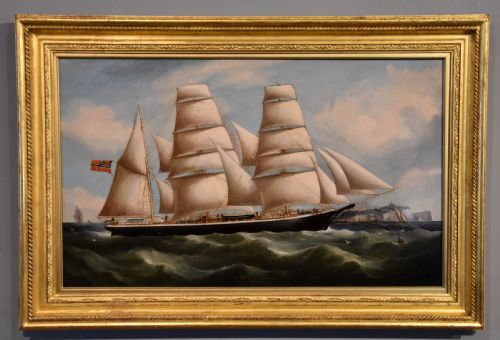


Framed Sailboat Oil Painting
A framed sailboat oil painting brings coastal atmosphere indoors, spanning quiet nineteenth-century waters and energetic twentieth-century maritime scenes.
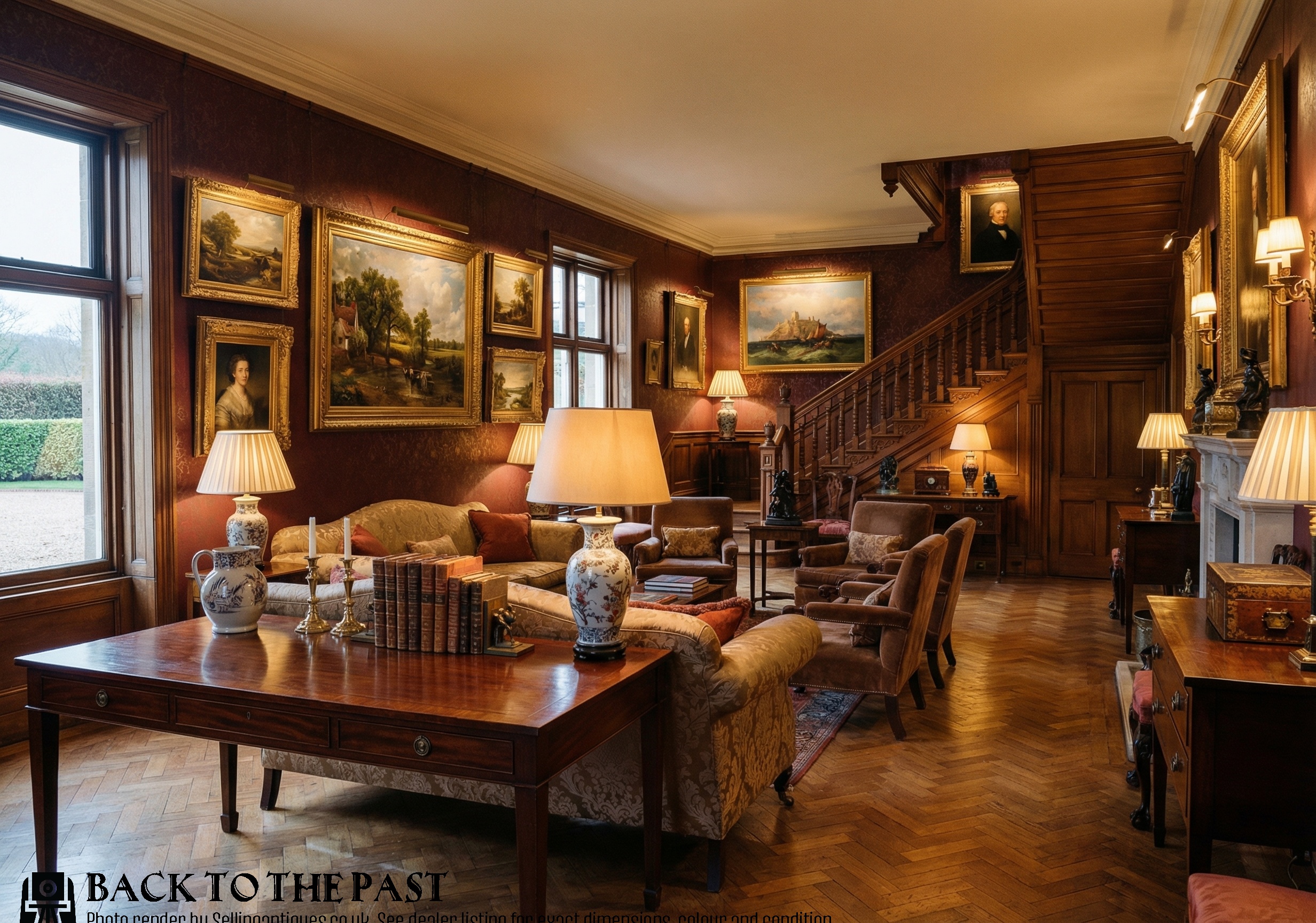
Framed Sailboat Oil Painting
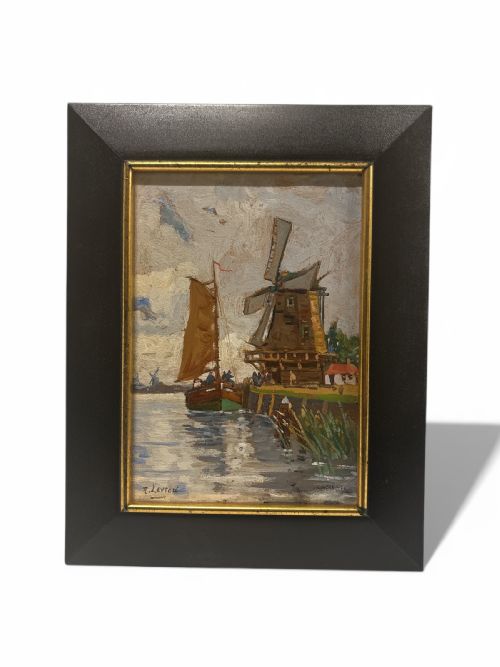
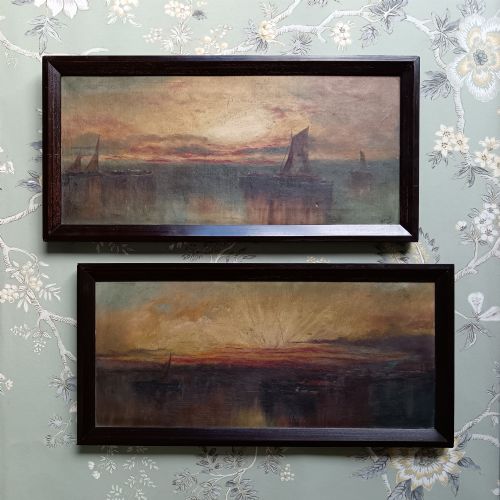
When you search for a framed sailboat oil painting, you encounter maritime artworks created across the nineteenth and twentieth centuries. These pieces depict vessels on canvas or board, capturing calm rivers, bustling harbours, and open seas.
The selection here includes works from the Victorian era through the Edwardian period and into the mid-twentieth century. Many pieces bear attribution to named British and European painters, while others remain unsigned examples of period marine art.
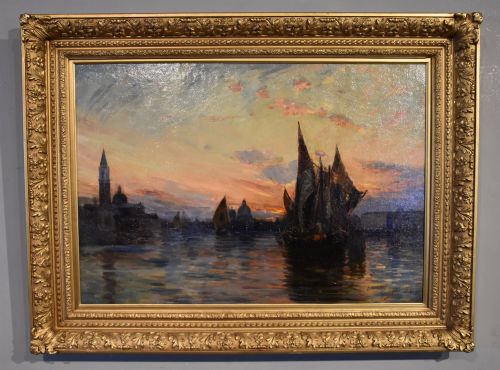
Subjects range from local coastal inlets and Venetian lagoons to international shipping lanes and quiet moonlight scenes. Most examples arrive set within period wooden or gilt frames that complement the canvas.
How They Were Made
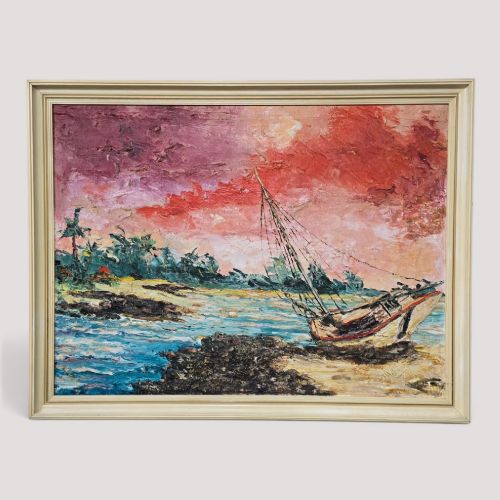
Artists applied oil paint to stretched canvas or wooden boards, utilising brushes and palette knives to build texture. Impasto techniques appear in later works, giving weight to sea foam and billowing sails.
Frames consist primarily of wood, frequently finished with gilt layers or carved details suited to the period. These surrounds protect the edges of the canvas or board while completing the visual presentation.
Several canvases cross international waters, recording vessels named Vick and Potosi on their voyages.
What Varies in Quality
The skill of the brushwork defines the upper tier of these maritime works, particularly in the rendering of water movement, light reflection, and rigging detail. Superior examples demonstrate a confident handling of atmosphere and scale.
The integrity of the original support and the preservation of the pigment layer influence the character of each piece. Surviving frames contemporaneous to the canvas add to the overall cohesion of the artwork.
R Leyton·B Nash·Thomas Hodgson Liddell·Richard B Spencer·Elisabeth Bardon·Louis Suire·Fred Pailhes·Norman Lloyd·Adrian Van Porten·Edward Seago·Hendrik Willebrord Jansen·Jane Vivian·George Henry Knight·E Tucker·Paul Jean Clays·Antonio Godoy·Charles Euphrasie Kuwasseg·John William Gilroy·William Edward Webb
The Framed Sailboat Oil Painting Glossary
- Canvas
- A heavy woven fabric stretched across a wooden frame to serve as a painting surface. It provides the ground for the majority of traditional oil works.
- Impasto
- A technique where paint is laid onto a surface in thick layers, standing out visibly from the canvas. This method introduces tactile depth to waves and clouds.
- Board
- A rigid wooden or composition panel utilised as a support for oil paint instead of stretched fabric. Smaller outdoor sketches frequently employ this material.
- Gilt
- A thin layer of gold leaf or metallic paint applied to wooden mouldings. It frames the perimeter of many period paintings.
- Marine art
- Artistic works that depict or draw main inspiration from the sea, ships, and coastal views. This genre encompasses both calm river scenes and stormy open-water events.
Framed Sailboat Oil Painting: Frequently Asked Questions
How do I hang a framed oil painting?
Support the weight of the frame using sturdy picture hooks fixed securely into wall studs or appropriate masonry anchors. Position the piece at eye level away from direct sunlight and heat sources.
Ensure the hanging wire or brackets on the reverse match the weight of the wooden frame and canvas combination. Check the fixings periodically to maintain stability.
Are these paintings original works?
The selection comprises original hand-painted works created directly by artists on canvas or board rather than mechanical reproductions. Each piece carries individual brushstrokes and pigment textures.
Signatures appear on many canvases, while other works remain attributed to specific schools or periods based on their technique and style.
What periods do these artworks represent?
The collection spans the nineteenth century through the Edwardian era and into the mid-twentieth century. Styles shift from traditional Victorian marine scenes to twentieth-century Impressionist interpretations.
Dates and stylistic markers help place each piece within its historical and artistic context.