

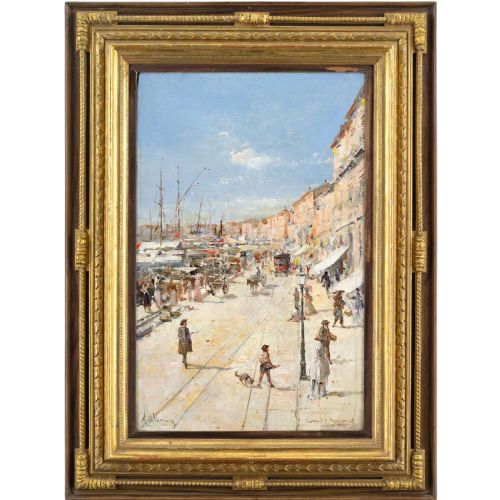
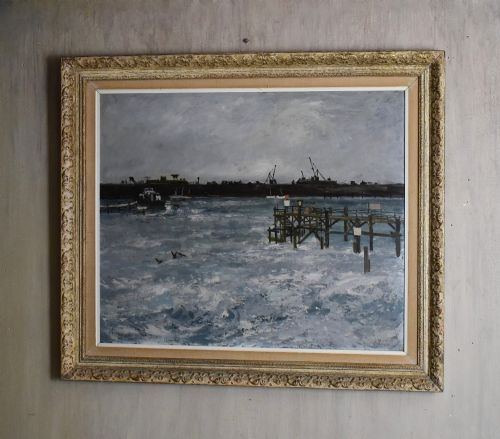
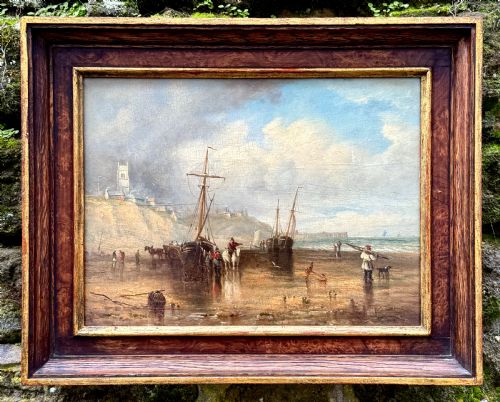
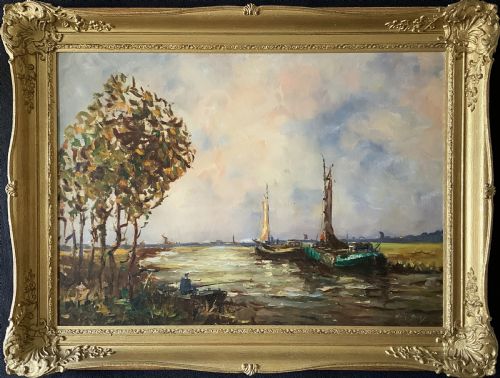
Gilt Framed Harbour Painting
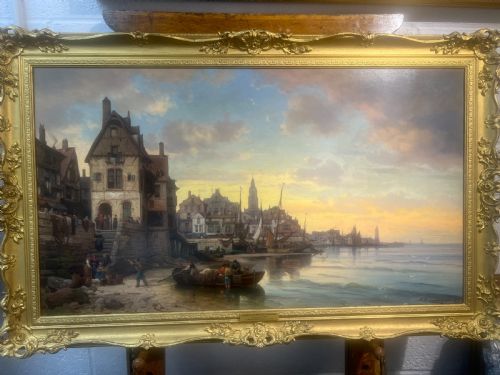
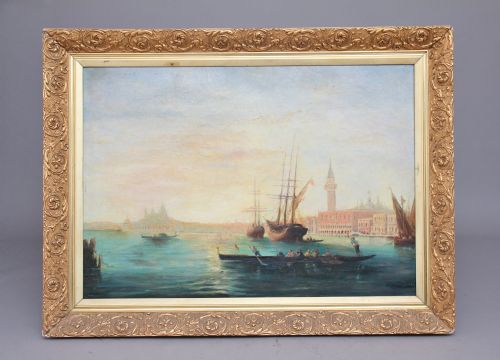
A gilt framed harbour painting brings maritime trade, coastal villages and historic vessels directly onto the wall inside a decorative gold leaf border.
Gilt Framed Harbour Painting
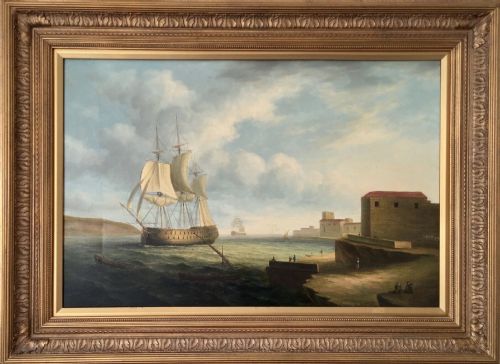
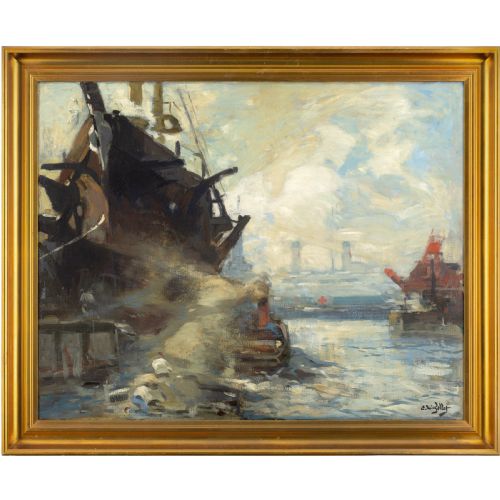
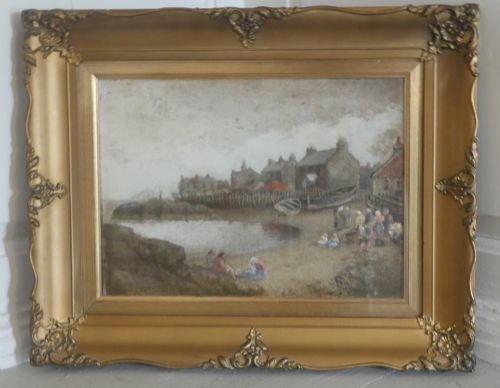
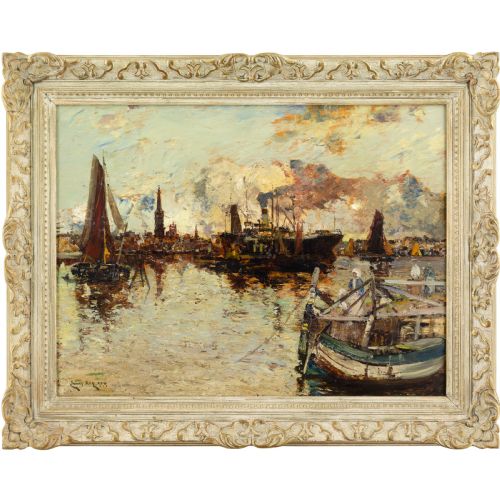
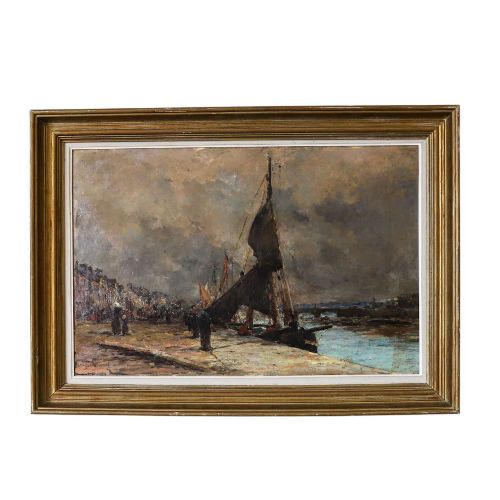
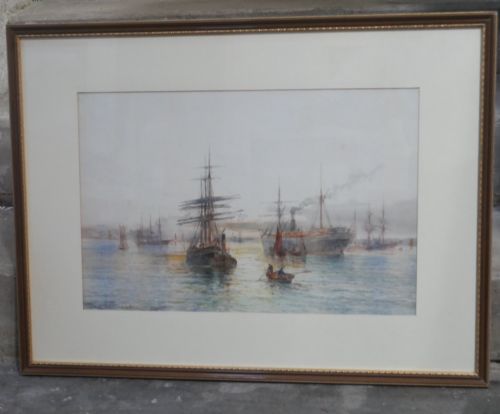
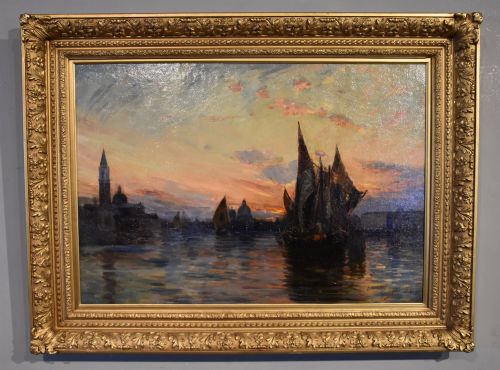
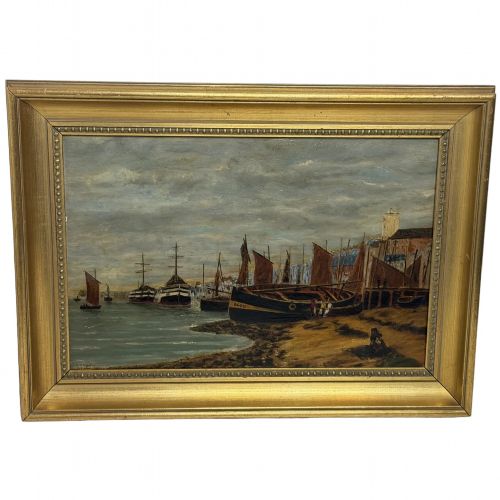
A gilt framed harbour painting depicts coastal scenes, shipping ports, and maritime vistas housed within ornate or moulded gold leaf frames. When searching this phrase, a buyer encounters works spanning from the nineteenth century through the mid twentieth century, capturing busy trading ports and quiet fishing harbours alike.
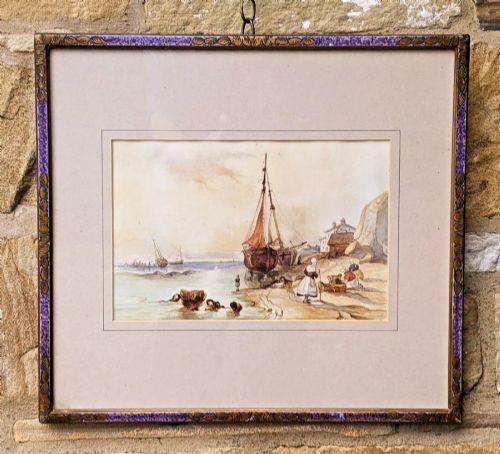
The subjects range from British Cornish ports like St Ives and Polperro to international waterscape locations including Venice, Rotterdam, and Valletta. Oil paint on canvas or panel forms the majority of these works, alongside occasional watercolours and pastels secured under glass.
How they were made
Artists built these marine works using oil paint applied to stretched canvas, wooden panels, or paper supports, often employing visible brushstrokes characteristic of Impressionism and nineteenth century maritime traditions. The physical application varies from smooth academic rendering to textured impasto capturing the movement of choppy seas and rigging.
The surrounding frames utilise wood carved or moulded to receive layers of gold leaf or gilt finish, securing the artwork while adding visual weight and reflectivity to the composition.
Several artists clearly preferred painting heavy fishing trawlers over calm waters, ensuring plenty of churning sea foam.
What varies in quality
The distinction between standard works and exceptional examples lies in the confidence of the brushwork and the precision with which rigging, vessel architecture, and coastal light are rendered. Superior paintings capture atmospheric depth and spatial realism rather than relying on formulaic depictions of water and sky.
Frame craftsmanship also dictates overall quality, with hand gilded wooden mouldings providing greater visual harmony to the artwork than later replacement frames or mass produced plaster embellishments.
James Hardy·Eugène-Louis Gillot·Edward Mills·William Banks Fortescue·James Kay RSW·Augusto Alberici·Peter Brannan·Thomas Creswick·Willem Bos·Charles Euphraisie Kuasseg·Thomas Hodgson Liddell·Charles William Wyllie·William Edward Webb·George Turland Goosey·Adrian Van Porten·Claude Lorrain·William Tuck·Fred Waugh·T.S. Wallis·Sir Edwin Landseer·Antonio Godoy
The Gilt Framed Harbour Painting Glossary
- Gilt
- A thin layer of gold leaf or gold paint applied to the surface of a wooden frame. This finish adds a reflective boundary that isolates the painted maritime scene from the surrounding wall.
- Impressionism
- An art style characterised by relatively small, thin, yet visible brush strokes and an accurate depiction of changing light. In marine painting, this technique conveys the shimmer of sunlight upon coastal water.
- Panel
- A rigid support for painting, typically made of wood, used frequently in older marine works before canvas became the dominant medium. It provides a stable surface that resists the sagging associated with stretched fabric.
- Impasto
- A technique where paint is laid on an area of the surface in very thick layers, usually thick enough that the brush or painting-knife strokes are visible. Marine artists utilise this method to render churning waves and textured stone quays.
Gilt Framed Harbour Painting: Frequently Asked Questions
What periods do these paintings date from?
The available selection primarily encompasses nineteenth century works alongside early twentieth century and mid century pieces. Artists recorded maritime life across various decades from the eighteen hundreds through the nineteen sixties.
Specific stylistic indicators, such as Victorian academic precision or later impressionistic brushwork, help place individual canvases within their respective eras.
How were these maritime scenes originally displayed?
Owners traditionally hung these works in formal parlours, dining rooms, and maritime offices to display wealth, travel, or commercial shipping interests. The heavy gold leaf frames were specifically designed to catch the ambient light of gas lamps or natural windows.
Today, these framed artworks suit living rooms and studies where traditional wall decor complements period architecture.
Are all the frames original to the paintings?
Many works retain their period gilt wooden frames, showing appropriate signs of age in the gold leaf and underlying gesso. Some pieces have been paired with complementary frames over their long history to ensure proper structural protection.
Examining the corner joints and rabbet edge helps determine whether a frame has been married to the canvas at a later date.