

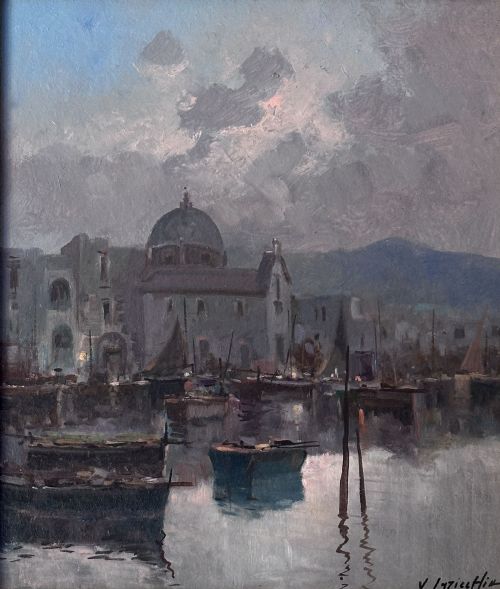
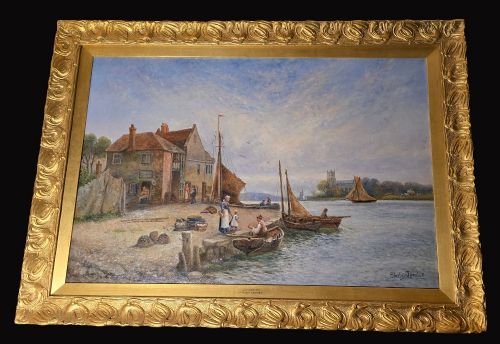


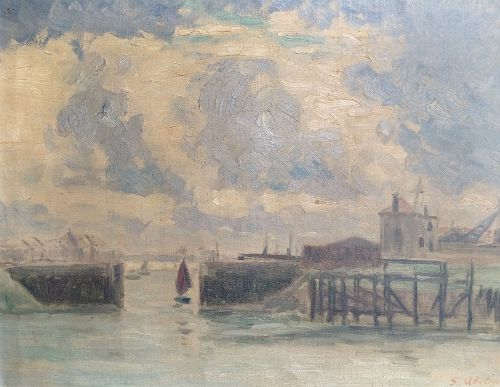

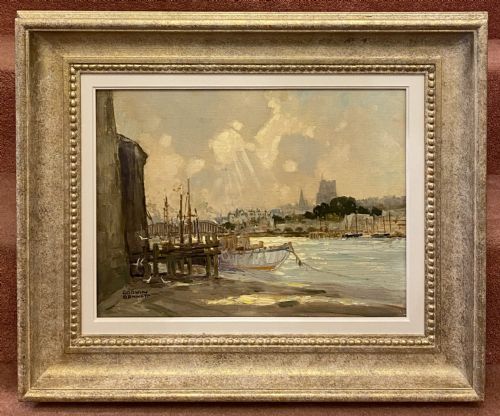


Vintage Harbour View Painting
A vintage harbour view painting brings salt air and working docks directly into your room through oils and watercolours.
Vintage Harbour View Painting
When you search for a vintage harbour view painting, you encounter coastal scenes from the nineteenth century through the mid-twentieth century. These artworks record busy fishing docks, quiet estuary towns and continental ports across Britain and Europe.
The works appearing here span diverse regional traditions including the Newlyn School, British Impressionism, Post-Impressionism and the twentieth century British school. You find depictions ranging from Whitby and St Ives to French Mediterranean ports and Scandinavian waters.
Most pieces on this page take the form of framed oil paintings on canvas or delicate watercolours on paper. Artists capture these maritime locations through varying lenses, from detailed historical views to studies of light and atmosphere.
Materials and methods
Makers applied oil paint to canvas or wood panels, building rich textures that capture the heavy movement of coastal water and weathered stone quays. Other artists worked with watercolour and ink on paper, applying fluid washes to render bright skies and reflective harbour surfaces.
Framing forms an integral part of these pieces, often utilising wood to house the canvas or watercolour securely behind glass or in open display. These traditional supports and mediums ensure the enduring survival of coastal scenes executed decades ago.
Vintage Harbour View Painting Retail Price Guide 2026
Typical asking prices for vintage harbour view painting among the pieces listed under this phrase on Sellingantiques today, from the lower quarter to the upper quarter. They describe what is for sale here now, not the wider market.
Listings feature works spanning the nineteenth century through the 1950s, utilising canvas, paper, wood, oil paint, and watercolour.
Elements of quality
Quality rests upon the artist's ability to handle changing light and atmosphere, distinguishing a lively study of a southern French port from a routine topographical record. Masterful brushwork in oil or translucent control in watercolour elevates a coastal scene from simple documentation to compelling art.
The strength of composition and the specific location depicted also shape the standing of a piece, with certain Cornish harbours or bustling industrial pools holding greater visual weight. Original signatures and documented historical context further separate standard works from exceptional examples.
George F Pennington·Alfred George Morgan·Gyrth Russell·William Tuck·Alfred Henry Vickers·Albert Robert Quinton·James Torrington Bell·S J Lamorna Birch·Rowland Henry Hill·Harry Wanless·Edward Fletcher·Johan Jens Neumann·Augustus William Enness·Godwin Bennett
The Vintage Harbour View Painting Glossary
- Watercolour
- A painting method where fine pigment is suspended in water-based solution, typically applied to paper. This medium allows for luminous washes ideal for capturing sea spray and open skies.
- Oil on canvas
- Pigment mixed with drying oil applied to a stretched fabric surface. This technique permits deep layering and rich texture.
- Post-Impressionism
- An art movement extending Impressionism while rejecting its limitations, favouring a greater emphasis on symbolic content and heavy brushwork. Works in this style show bold handling of harbour townscapes.
- Woodblock print
- An image created by carving a design into a block of wood, applying ink, and transferring it to paper. These prints often accompany early works from British landscape artists.
- Newlyn School
- An art colony based in Cornwall focusing on naturalistic depictions of coastal life and local fishermen. Painters associated with this movement captured authentic maritime conditions.
Vintage Harbour View Painting: Frequently Asked Questions
How do I hang a vintage harbour view painting?
Ensure your wall supports the weight of the wooden frame and canvas, using appropriate fixings secured firmly into wall studs or solid masonry.
Position the artwork at eye level in a room with stable humidity to protect both the paper or canvas and the original frame.
Where were these harbour scenes painted?
Artists painted these scenes on location across British fishing ports like Whitby, St Ives, and Scarborough, as well as continental sites in France and Scandinavia.
Many works record specific docks, historical quays, and coastal towns as they appeared during the nineteenth and twentieth centuries.
How do I identify the period of a painting?
Examine the materials, frame construction, and artist signatures alongside any recorded dates or stylistic markers like Post-Impressionist brushwork or Edwardian palette choices.
Written inscriptions on the reverse of the canvas or paper often provide precise locations and years.
What is the difference between oil and watercolour?
Oil paint utilises a slow-drying oil binder on canvas or wood, allowing thick texture and deep colour manipulation suitable for heavy seas and dramatic light.
Watercolour employs water-soluble pigment on paper, yielding translucent effects and delicate washes that capture bright coastal atmospheres.