




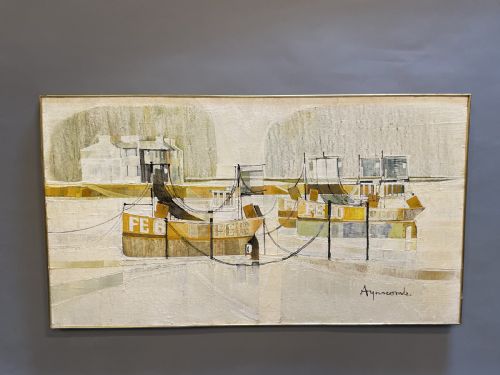


Original Harbour Scene
An original harbour scene captures maritime trade and coastal life across British and international ports through the eyes of painters working from the nineteenth century onward.
Original Harbour Scene
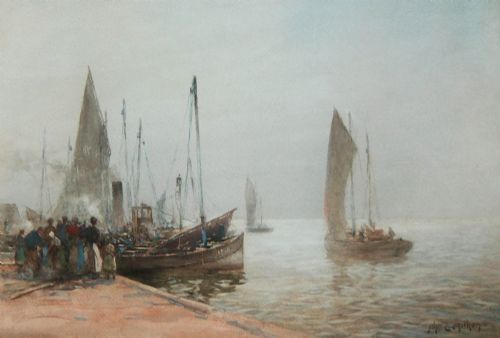
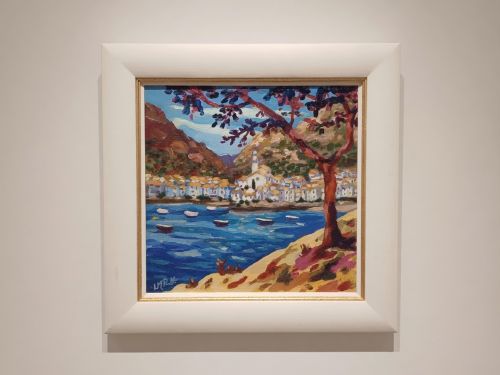
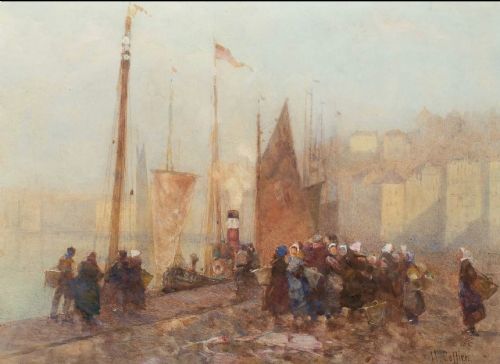
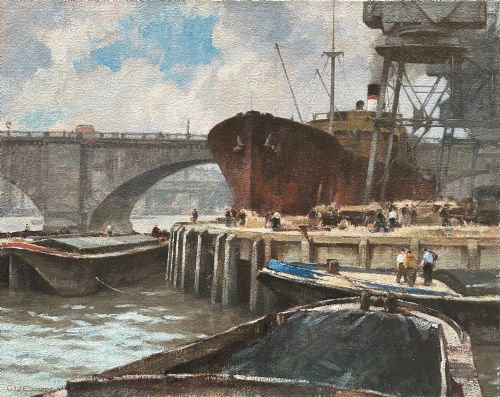
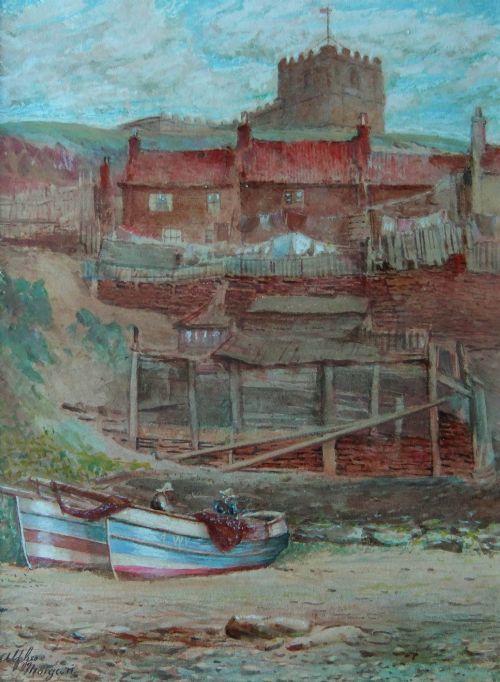
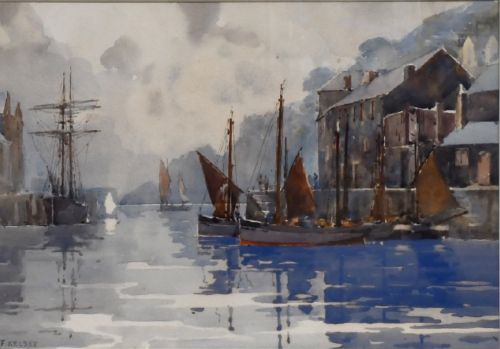
An original harbour scene typically depicts working ports, tidal inlets, and fishing stations located along British coasts and international waters. The selections available here range from nineteenth-century watercolours of Yorkshire fishing docks to mid-twentieth-century impressionist oils of Cornish harbours.
Makers recorded in the evidence encompass named artists such as James E. Aitken, William Lee Hankey, and Frank W. Scarborough, alongside regional practitioners working within British Impressionism, Victorian realism, and post-impressionist styles.
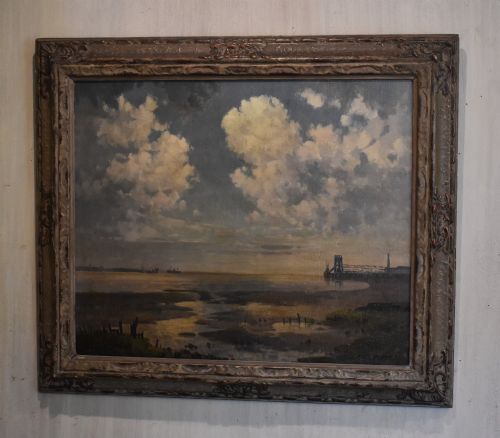
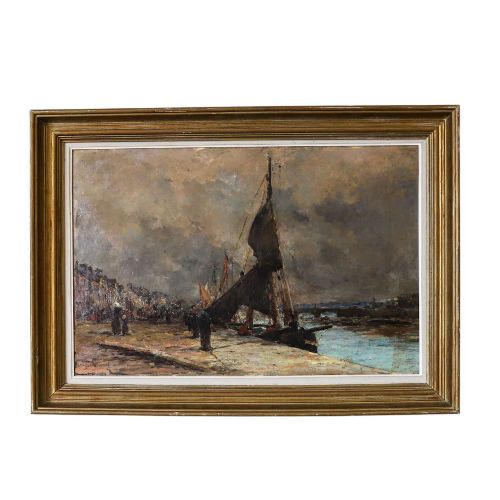
The physical formats present on this page include framed watercolours on paper, oil paintings on canvas and board, and pastel drawings, often housed within period gilt wood frames.
How they were made
Artists working on paper utilised watercolour pigments applied with fluid washes to capture shifting light and coastal weather, sometimes reinforced with pastel or ink lines. Works executed on canvas or wood panel rely upon oil paint layers, building texture through brushwork and impasto to render choppy seas and stone quaysides.
Framing forms an integral part of the physical object, with many surviving examples retained in original gilt wood frames or hand-enamelled polychrome surrounds that complement the palette of the painting.
Several artists clearly enjoyed painting Whitby Harbour so often they practically rented space on the abbey hill.
What varies in quality
Quality rests upon the artist's command of tone and atmosphere, distinguishing rapid topographical sketches from deeply observed compositions that successfully convey the movement of water and light on maritime architecture. Stronger examples demonstrate confident handling of pigment and secure provenance through artist signatures or gallery labels such as Liberty & Co.
The condition of the support and pigment layer dictates durability, where unblemished watercolour surfaces free from foxing and stable oil paintings on canvas or board retain the maker's intended chromatic intensity.
Kenneth Cozens·James E Aitken·John E Aitken·William Banks Fortescue·Lucy Pratt·Clive Browne·Hector Caffieri·Cyril Walduck Edwards·Alfred G Morgan·Frank Kelsey·George F Pennington·Richard Harry Carter·Gyrth Russell·William Lee Hankey·George Turland Goosey·Fred Lawson·James Kyd·Adrian Van Porten·William Tuck·Donald McIntyre·John Bell·James Thomas Watts·Kate E Booth·Jan van Couver·Frederick Stuart Richardson
The Original Harbour Scene Glossary
- Watercolour pigment
- Finely ground colour mixed with a water-soluble binder, applied in translucent washes on paper.
- Oil paint
- Pigment suspended in a drying oil, typically linseed, allowing for rich impasto and slow blending on canvas or board.
- Impressionism
- A style focusing on the visual impression of the moment, particularly shifting light and open-air conditions.
- Gilt wood
- Timber frames covered with a thin layer of gold leaf or metallic gilding, standard for period fine art.
- Provenance
- The documented history of ownership of a work of art, often established through signatures, labels, or exhibition records.
Original Harbour Scene: Frequently Asked Questions
What subjects do these maritime paintings show?
These works record bustling fishing ports, tidal slipways, and coastal architecture across locations like Whitby, St Ives, and foreign harbours. They focus on local shipping, trawling luggers, and everyday maritime trade.
Many compositions incorporate the working life of fisherfolk, capturing nets being spread and vessels moored against stone quays during the nineteenth and twentieth centuries.
How should I hang an oil painting?
Oil paintings on canvas or board require stable indoor environments away from direct sunlight and excessive humidity. Proper picture wire and wall fixings suited to the weight of the gilt wood frame ensure secure display.
Allowing adequate clearance from direct heat sources prevents the wooden stretcher frames and oil pigment layers from drying out prematurely.
Are these watercolours original works?
The watercolours listed are hand-painted primary works by individual artists rather than modern reproductions. Each piece displays the unique brushstrokes, pigment granulation, and paper textures characteristic of authentic period art.
Signatures, dates, and inscriptions found on the paintings further confirm their origins as unique historical items.
How do I identify a Victorian harbour scene?
Victorian watercolours and oil paintings are typically characterised by detailed topographical accuracy, traditional maritime subjects, and heavier gilt wood frames. The palette often reflects nineteenth-century preferences for muted earth tones and dramatic coastal light.
Signatures or period labels on the reverse often provide definitive confirmation of a nineteenth-century origin.