


Original British Maritime Art
Original british maritime art records coastal life, harbour views and sailing vessels through Victorian, Edwardian and mid-twentieth century works.
Original British Maritime Art
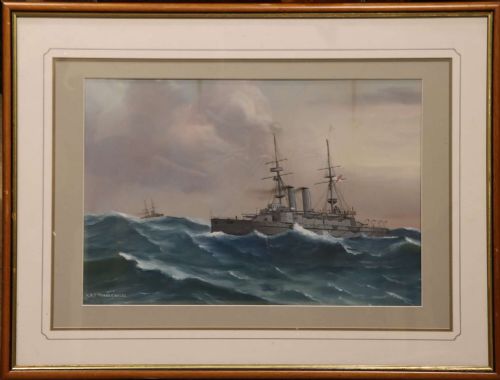
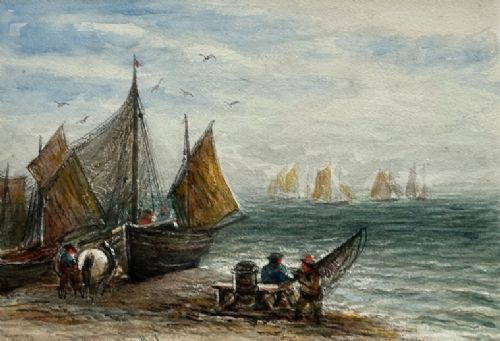
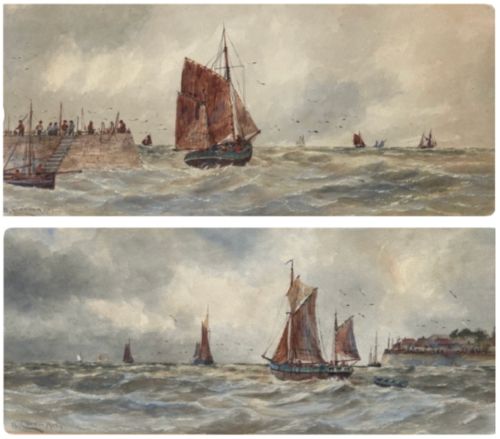
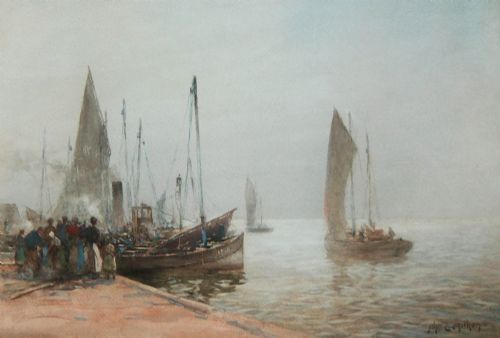
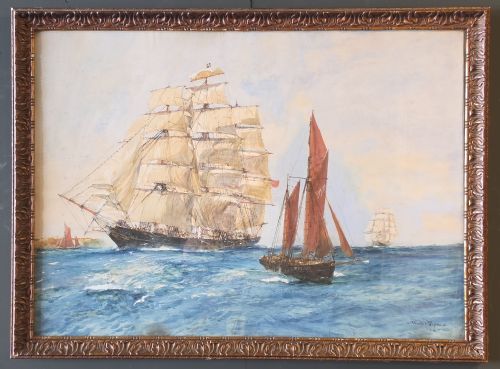
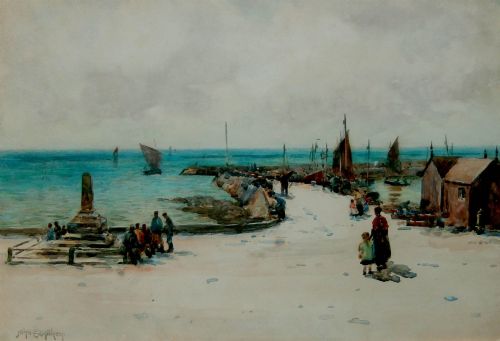
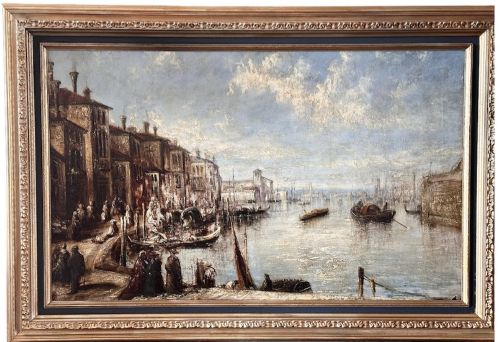
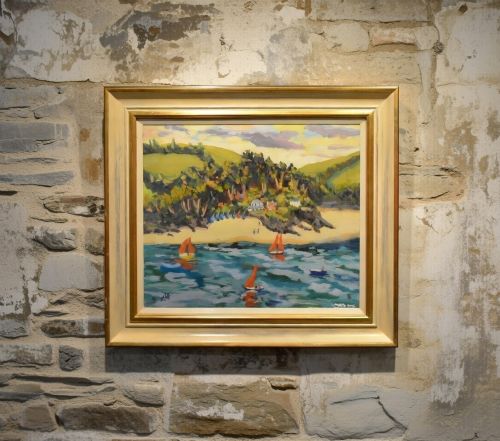
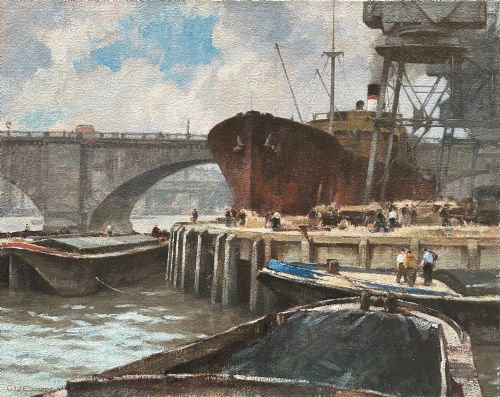
Original british maritime art captures coastal scenery, fishing vessels, harbours and shipping scenes across the nineteenth and twentieth centuries. A buyer investigating this category will most frequently encounter watercolours and oil paintings depicting familiar coastal locations such as Whitby, St Ives and Scarborough. These works range from late Victorian topographical watercolours to mid-century oil paintings executed on board or canvas.
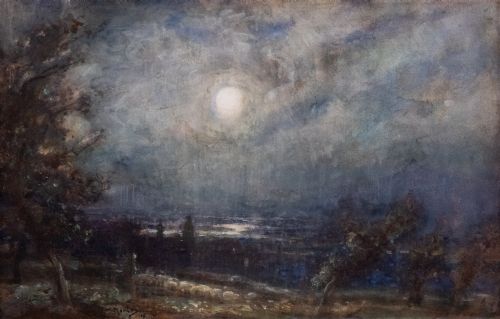
The subjects span bustling working ports, quiet river estuaries, moonlit coastal landscapes and dramatic rocky seascapes. Many pieces record specific regional ports in Cornwall, Yorkshire and along the Humber, reflecting a sustained artistic engagement with Britain's maritime heritage. Smaller watercolour studies and larger framed oil paintings alike offer a direct visual record of historical coastal trades and coastal geography.
How they were made
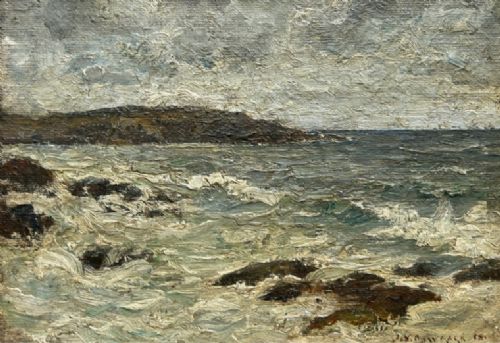
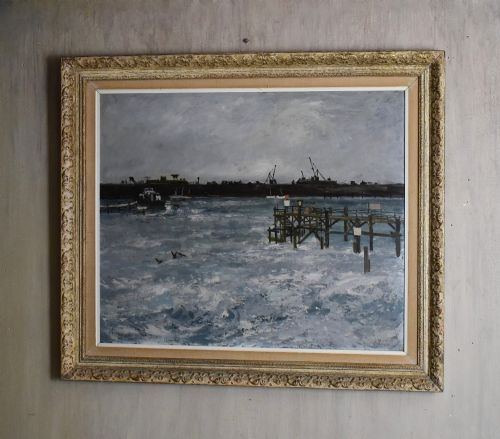
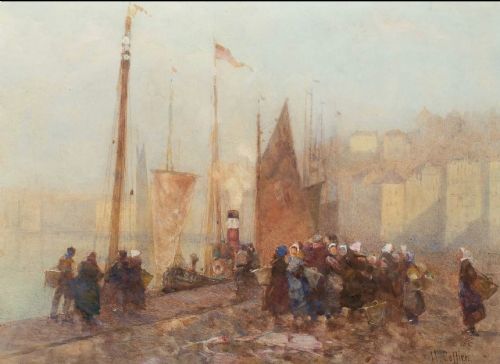
Artists created these maritime works utilising traditional painterly methods, applying oil paints to canvas, panel or board, and watercolours with pigment on paper. Many nineteenth-century watercolours rely on delicate washes and fine brushwork to render atmospheric skies and calm harbour water. Conversely, later twentieth-century pieces often employ heavier impasto oil techniques to build textured surfaces representing rocky coastlines and rough seas.
Framed presentation typically involves wood surrounds, sometimes paired with glass to protect works on paper. Support materials vary from stretched canvas and wooden panels to heavy watercolour paper and board, each chosen to suit the specific demands of indoor studio painting or plein-air coastal sketching.
Listings span periods from the Victorian era through the 1960s, featuring works executed in watercolour, oil on canvas, and oil on board.
What varies in quality
Quality in these maritime works rests upon the artist's command of light, atmosphere and marine anatomy, such as the correct rigging of sailing ships and the natural movement of water. Stronger pieces display confident brushwork and precise topographical observation, capturing the specific character of a harbour or the weight of a laden fishing boat. Weaker examples may rely on formulaic compositions and rigid draughtsmanship without genuine engagement with coastal light.
The handling of materials also distinguishes the range, where skilled pigment application preserves the luminosity of watercolours or the rich impasto depth of oil paintings. Surviving works that retain their original character and strong provenance demonstrate a higher level of artistic achievement within the British maritime tradition.
James Orrock·Charles Edward Dixon·Thomas William Morley·Francis Moltino·Hector Caffieri·William Matthison·Henry Barlow Carter·Thomas Bush Hardy·Edward Seago
The Original British Maritime Art Glossary
- Gouache
- An opaque water-based medium containing pigment, water and a binding agent such as gum, often used to achieve bright highlights in maritime watercolours. It allows artists to build solid passages of colour that contrast with transparent watercolour washes.
- Impasto
- A technique where paint is laid onto a canvas or board in very thick layers, standing visibly above the surface. This method creates tactile texture, frequently utilised in coastal scenes to render choppy waves or rough stone quays.
- Coble
- A traditional type of open fishing boat with a high bow and flat floor, commonly found along the North East coast of England. These distinctive vessels appear frequently in regional marine watercolours and oil paintings.
- Seascape
- A genre of art that depicts ships, coastal views, marine life and the sea itself as the primary subject. In British art, seascapes range from calm harbour anchorages to turbulent open-water storms.
Original British Maritime Art: Frequently Asked Questions
What subjects do these maritime paintings show?
These works predominantly depict British coastal landscapes, working harbours, fishing boats, and sailing vessels at sea. Scenes often focus on recognizable locations like Whitby, St Ives, and Scarborough.
Artists recorded daily coastal life, including fishing fleets leaving port, vessels docked at low tide, and quiet river estuaries. The subject matter reflects Britain's deep historical connection to maritime trade and coastal communities.
How should I display watercolour maritime art?
Watercolour paintings require protection from direct sunlight to prevent the pigments and paper from fading over time. Framing behind glass with acid-free mounts helps preserve the integrity of the paper.
Positioning these pieces away from humid environments, such as unventilated bathrooms, ensures the paper and wooden frames remain stable. Stable indoor conditions maintain the long-term condition of nineteenth and twentieth-century works on paper.
How can I tell the period of a maritime painting?
Stylistic clues, framing materials, and artist signatures help establish the approximate date of creation. Victorian and Edwardian watercolours often feature meticulous draughtsmanship and muted washes, while mid-twentieth century works frequently exhibit bolder brushwork and heavier impasto.
Signatures, dates inscribed on the reverse, and exhibition labels provide direct evidence of a piece's era. Comparing the artistic style to known active dates of the painter narrows down the creation window.
What is the difference between oil and watercolour marine art?
Oil paintings utilise pigments suspended in drying oils applied to canvas, wood panels, or boards, offering rich textures and deep colour saturation. Watercolours employ water-soluble pigments on paper, producing lighter, translucent effects.
Oils generally allow for heavier impasto and greater durability against environmental factors, whereas watercolours rely on the white of the paper to provide luminosity. Each medium offers a distinct visual interpretation of light on water and coastal weather.