



Orientalist Decor Statue
An orientalist decor statue brings the romanticised imagery of North Africa and the Near East into domestic interiors through figures cast in bronze, spelter, and plaster.
Orientalist Decor Statue
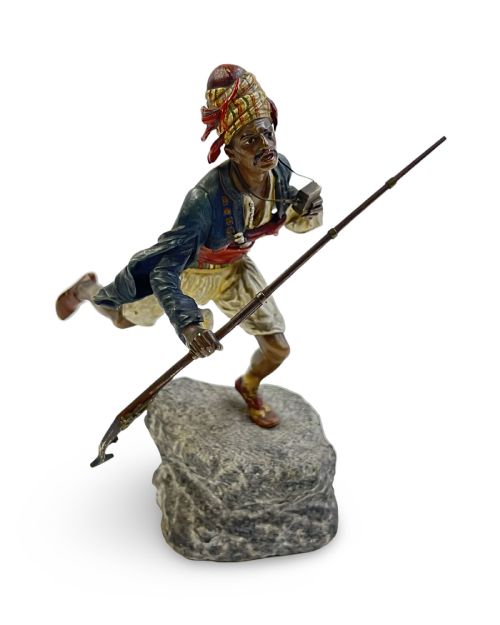
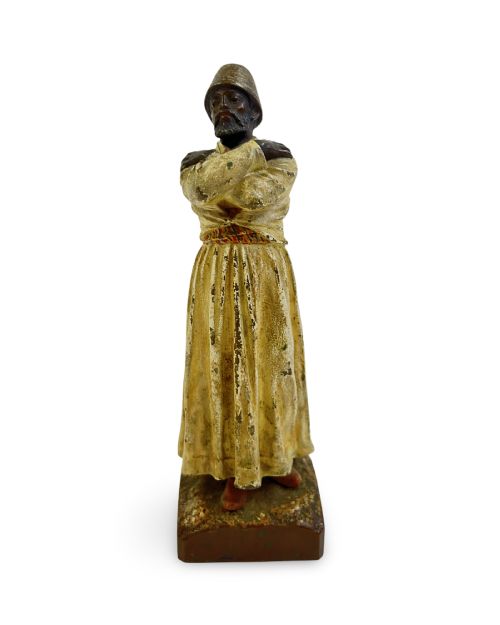
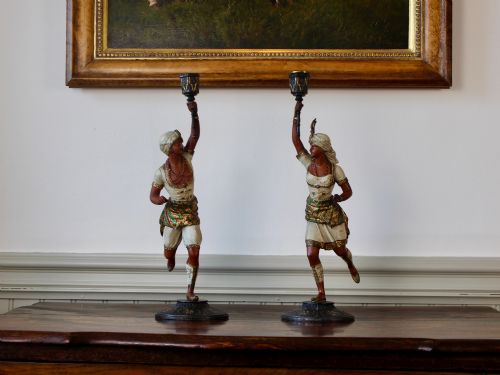
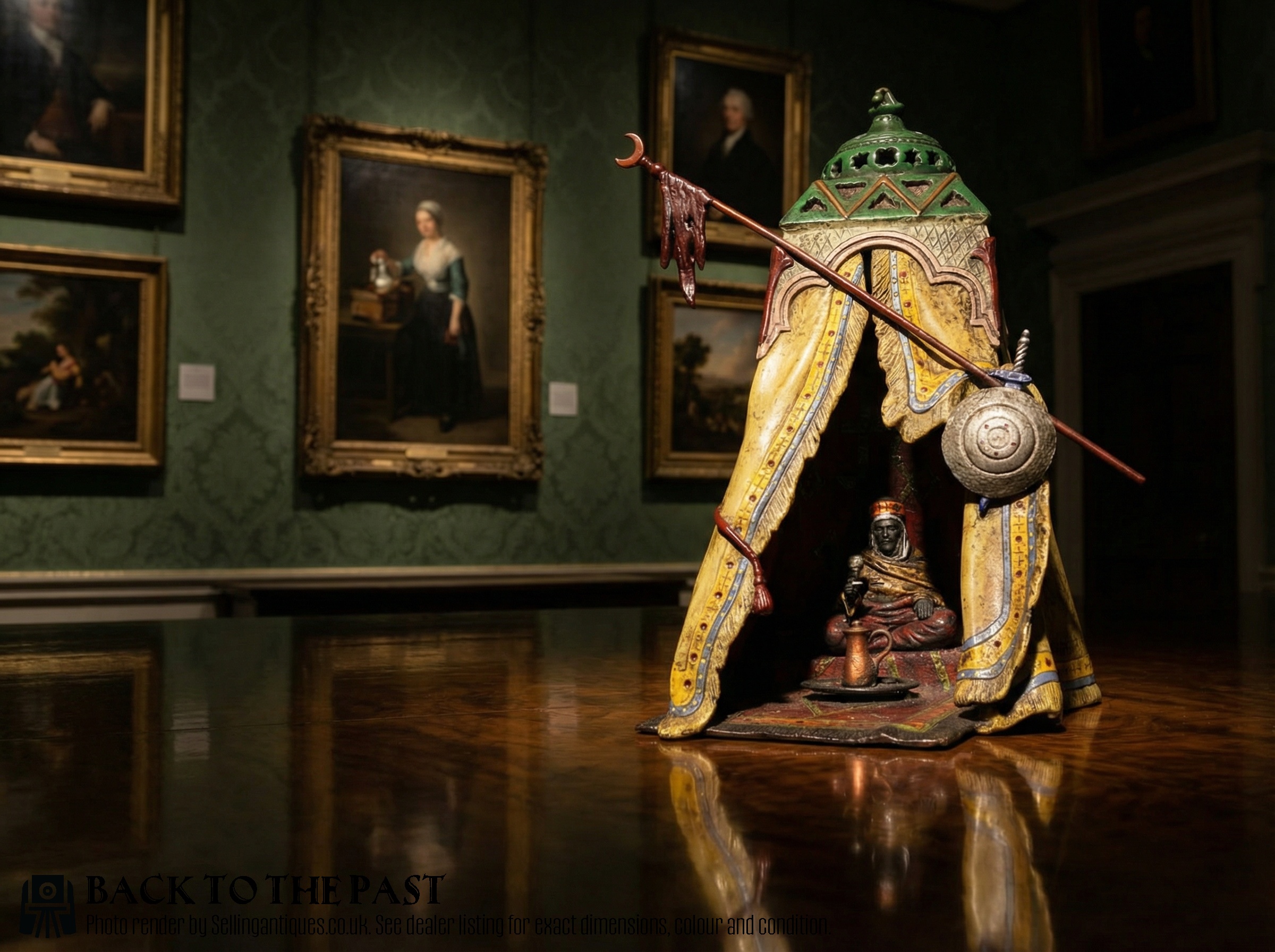
An orientalist decor statue encompasses sculptures, porcelain figurines, and figural candlesticks that reflect European fascination with Eastern subjects during the Victorian era and the early twentieth century. Buyers seeking this category encounter diverse representations, including Moorish warriors, whirling dervishes, Arab water carriers, and merchants.
The objects originate from varied European centres, ranging from Austrian cold-painted bronzes to English Worcester porcelain and French foundry works. These pieces date principally from the late nineteenth century up to nineteen hundred, capturing a distinct period of stylistic enthusiasm.
How they were made
Foundries and studios utilised metals such as bronze and spelter, often finishing the cast surfaces with cold-painting or polychrome oil paints to render intricate textiles and skin tones. Ceramic works combined porcelain bodies with detailed enamel and paint applications to achieve similar visual richness.
Plaster was also employed for larger sculptural pairs, allowing workshops to model elaborate Moorish and Arabesque costumes with significant dimensional depth.
Whirling dervishes spin eternally in cold-painted bronze, bringing a dose of mystical Austrian kinetic energy straight to the mantelpiece.
What varies in quality
Quality rests upon the precision of the casting and the preservation of the original surface pigments, whether cold paint, enamel, or oil. Finer bronzes display sharp chiselling and detailed facial expressions, whereas simpler spelter or plaster iterations rely more heavily on surface colour.
The distinction between standard commercial production and superior studio output is visible in the nuance of the drapery, the stability of the polychrome pigments, and the overall anatomical conviction of the figures.
Franz Xaver Bergman·Hadley Worcester·Royal Dux
The Orientalist Decor Statue Glossary
- Cold-painted bronze
- Bronze sculpture painted with unfired oil-based paints after casting. This technique was particularly favoured by Viennese foundries for small decorative figures.
- Spelter
- A zinc alloy commonly utilised as a less expensive alternative to bronze in nineteenth-century decorative metalwork. It takes detail well but possesses a lighter weight.
- Polychromed
- Decorated in several colours, applied to surfaces such as plaster, porcelain, or metal. It enhances the theatricality typical of orientalist subjects.
- Orientalism
- The imitation or depiction of aspects of Eastern cultures in the West by writers, designers, and artists. It dominated much of nineteenth-century European decorative art.
Orientalist Decor Statue: Frequently Asked Questions
What materials are orientalist statues made from?
These decorative objects appear in bronze, spelter, porcelain, and plaster, frequently enhanced with cold paint, enamel, or oil paint.
Such materials dictated both the weight and the level of fine detail achievable by the maker.
How do you date an orientalist statue?
Dating relies on stylistic clues, foundry marks, and the specific materials used, placing most examples in the nineteenth century or around nineteen hundred.
Victorian pieces often reflect contemporary European exhibitions and the era's widespread interest in travel literature.
Where were these figures originally displayed?
Middle-class and wealthy Victorian homes showcased these sculptures on mantelpieces, in drawing rooms, and upon specialised decorative pedestals.
They served as conversation pieces that reflected the owner's awareness of global exploration.
What is cold-painted bronze?
Cold-painted bronze refers to metal figures decorated with paint applied after casting without the use of a kiln firing process.
Because the paint is unfired, surviving examples often show natural wear that speaks to their age and handling.