




Dark Bronze Orientalist Sculpture
These dark bronze orientalist sculpture pieces capture 19th-century subjects with remarkable detail and dramatic patination.
Dark Bronze Orientalist Sculpture
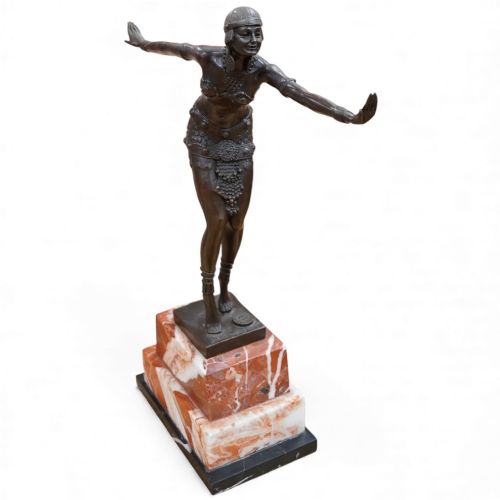
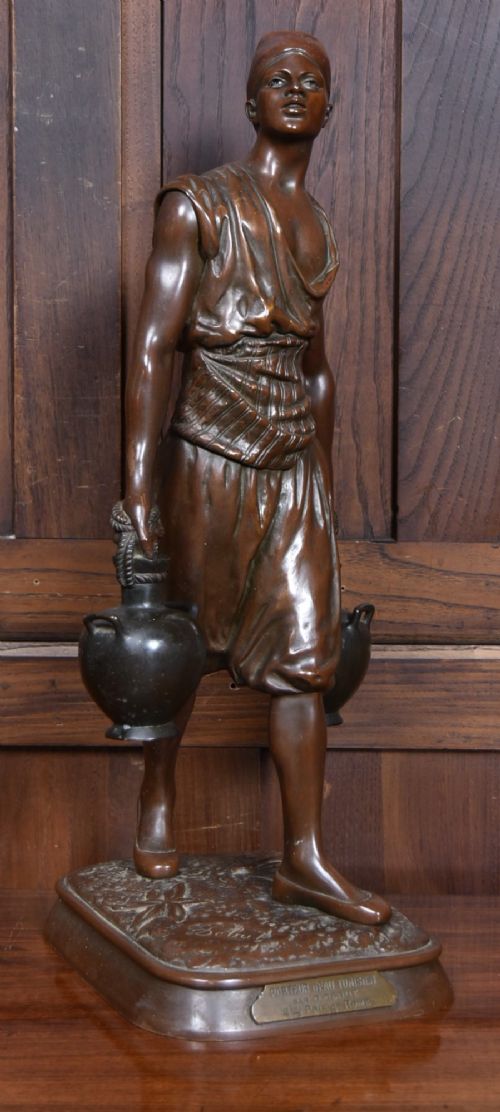
When buyers search for dark bronze orientalist sculpture, they encounter figural works depicting figures from North Africa, the Middle East, and Asia, produced primarily during the Victorian and Edwardian eras. The most frequent examples include depictions of water carriers, merchants, snake charmers, and dancers cast in varied metallic alloys.
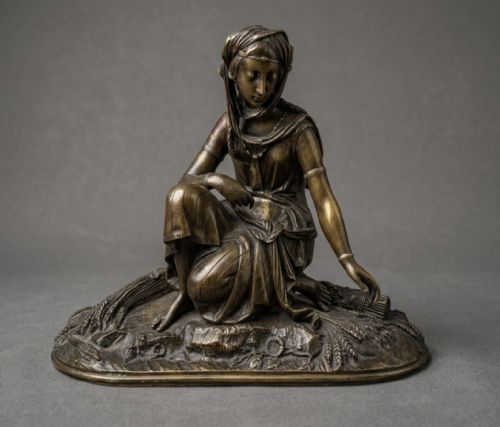
The objects span multiple forms, ranging from cabinet bronzes and large floor-standing figures to figural lamps and portrait busts. Works often incorporate specific regional clothing, architectural fragments, or animals such as camels and donkeys to establish the narrative setting.
Originating across European studios during the height of the orientalist movement, these sculptures reflect Western fascination with Eastern cultures. The pieces on this page primarily date from the 1860s through the 1920s, showing stylistic transitions from strict Victorian realism into Art Nouveau and Art Deco forms.
Materials and casting methods
The construction relies heavily on bronze and patinated bronze, often finished with dark chemical treatments to accentuate muscle tone, drapery folds, and facial expressions. Certain items integrate cold paint over metallic surfaces, whilst others combine bronze with carved wood, marble bases, or glass elements.
Foundries utilised lost-wax and sand-casting techniques to achieve intricate detail in hair, jewellery, and textiles. Post-casting chiselling and filing refined the surfaces before the application of multi-layered patinas or polychrome cold-painted finishes.
The sculptural forms range from cabinet bronzes and portrait busts to floor-standing figures and functional lamps.
Assessing quality in sculpture
Quality separates through the crispness of the chase work, where finer examples preserve individual strands of hair, woven textile patterns, and subtle facial musculature without softening from worn moulds. Superior castings exhibit careful attention to anatomical proportion and balanced composition.
The depth and stability of the dark patination or the preservation of original cold-painted pigments dictate the visual strength of the piece. Base materials such as heavy veined marble plinths or substantial timber mounts further distinguish standard works from exceptional studio output.
Edouard Drouot·Alfred Dubucand·Arthur Waagen·Charles Arthur Bourgeois·Franz Bergman·Emmanuel Villanis·Claire Colinet·Pierre Jules Mène·J. Angles
The Dark Bronze Orientalist Sculpture Glossary
- Orientalism
- An artistic movement focusing on the subjects, culture, and scenery of North Africa, the Middle East, and Asia. It heavily influenced European visual arts throughout the nineteenth century.
- Patination
- The chemical or natural surface treatment applied to bronze to alter its colour and protect the metal. Dark patinas are typical for highlighting sculptural relief.
- Cold-painted bronze
- A technique where paint is applied to a cold metal surface rather than fired in a kiln. This method demands careful sealing to prevent flaking over time.
- Spelter
- A zinc alloy commonly utilised as a less expensive alternative to bronze during the nineteenth century. It frequently mimics bronze through applied dark finishes.
- Lost-wax casting
- A method of metal casting where a molten metal is poured into a mould that has been created by means of a wax model. This allows for exceptional intricacy in figural work.
Dark Bronze Orientalist Sculpture: Frequently Asked Questions
How do I identify a dark bronze orientalist sculpture?
These sculptures depict figures from North Africa and the Middle East, executed in dark patinated metal, often mounted on marble bases. Look for detailed traditional garments, turbans, or architectural props.
The creation dates typically centre on the Victorian and Edwardian periods, reflecting the widespread popularity of orientalist themes in European salons.
What is the difference between bronze and spelter?
Bronze is a heavy copper alloy that takes fine detail and holds rich patinas securely. Spelter is a softer zinc-based alternative that feels lighter and requires careful handling.
Many nineteenth-century figures utilise spelter as an economical substitute, identifiable by a lighter weight and occasional paint flaking.
How should I clean a dark bronze surface?
Dust the sculpture gently with a soft, dry brush to remove particles from recessed crevices. Avoid commercial metal polishes, which strip the original dark patination.
Applying a light microcrystalline wax occasionally helps protect the metal surface from atmospheric moisture without altering the finish.
Are cold-painted bronzes fragile?
Cold-painted surfaces consist of non-fired pigments applied over metal, making them susceptible to scratching and flaking if handled roughly. Display these pieces away from direct sunlight and high humidity.
Cleaning requires extreme caution, restricting maintenance to very gentle dusting with a dry artist brush.