


Oriental Wooden Sideboard
These oriental wooden sideboard examples bring substantial storage and distinct regional character to a room.
Oriental Wooden Sideboard
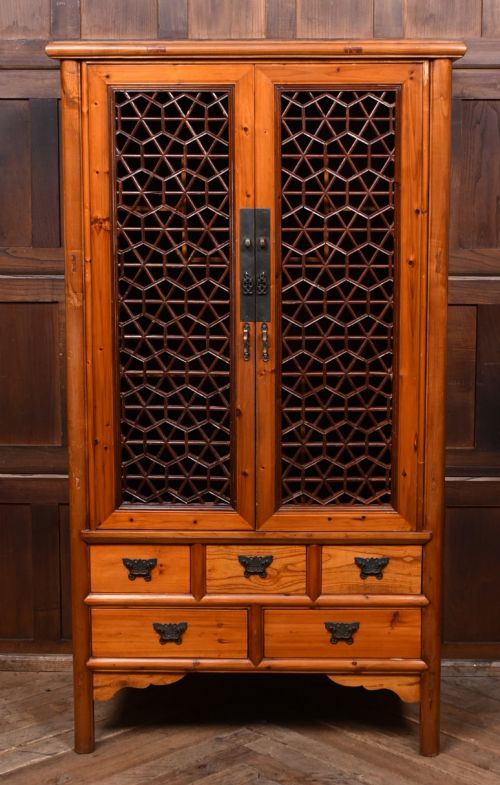
An oriental wooden sideboard serves as a functional storage piece originating from diverse Asian and colonial traditions, including Chinese, Japanese, Tibetan, Korean, Indian and Burmese workshops. These items encompass side cabinets, console tables, larder cupboards and sideboards produced across the nineteenth and early twentieth centuries.
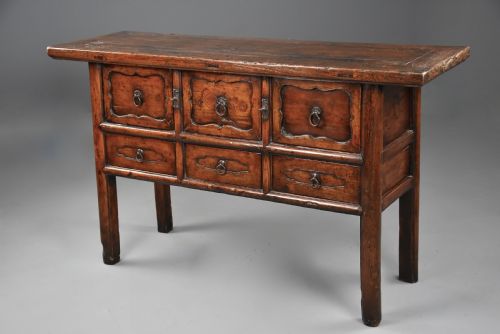
The Chinese elm dresser or sideboard represents the most frequent form encountered on this page. Such pieces often display provincial characteristics, console table formats or multi-drawer configurations.
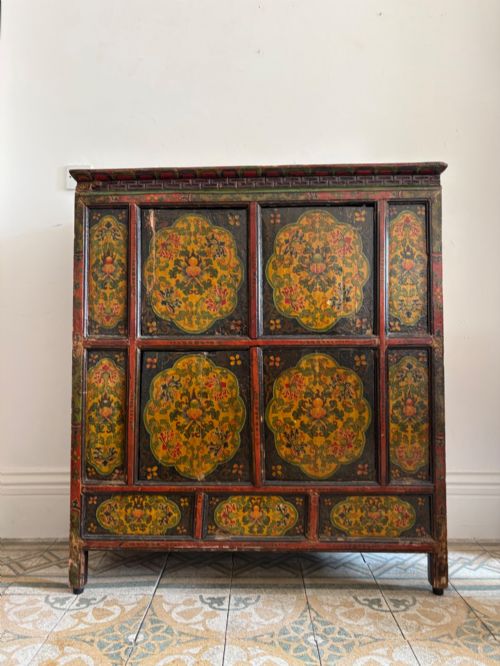
Beyond China, the selection extends to Japanese larder cupboards and traditional tansu, Tibetan hand-painted cabinets, Indian and Burmese padauk sideboards, and Korean side cabinets. European interpretations in the Regency Chinoiserie and Anglo-Egyptian or Anglo-Burmese styles also appear.
Materials and construction
Construction relies heavily on regional timber species such as elm, teak, padauk and pine, joined through traditional cabinet-making methods. Elm variants, including locust wood, provide durable frameworks for rustic Chinese dressers and console tables.
Surface decoration frequently involves red or black lacquer, mineral pigments and hand-painted floral motifs. Elaborate examples feature carved, gilded or inlaid details, whilst others rely on the natural grain of the wood enhanced by a fine patina.
Listings feature woods such as elm, teak, padauk and pine, spanning the nineteenth century into the 1920s.
Assessing quality and craftsmanship
Quality separates through the integrity of the timber, the depth and preservation of the lacquer or hand-painted decoration, and the survival of original hardware. Pieces retaining their early surface finishes and patination demonstrate superior historic condition.
The precision of carved elements and the structural stability of drawers and doors distinguish finer workshop output from simpler utilitarian items.
The Oriental Wooden Sideboard Glossary
- Patina
- The surface sheen and texture developed through age and use. A fine patina indicates genuine historic wear on wood and lacquer.
- Lacquer
- A durable resin finish applied to wood and polished to a smooth coating. Red and black lacquer variations frequently define Asian cabinets.
- Padauk
- A dense tropical hardwood prized for its rich colour and durability. Indian and Burmese sideboards utilise this material for substantial cabinet work.
- Tansu
- A traditional Japanese mobile storage chest or cabinet. Kitchen tansu, known as mizuya, provide specialised compartments for domestic utensils.
- Chinoiserie
- European decorative style reflecting Chinese artistic influences. Regency examples emulate oriental lacquering techniques on side cabinets and chiffoniers.
Oriental Wooden Sideboard: Frequently Asked Questions
What is a mizuya?
A mizuya is a Japanese kitchen tansu designed for storing culinary equipment and provisions.
These cabinets feature multiple sliding doors, shelves and small drawers arranged for practical domestic use.
How do I care for lacquered wood?
Lacquered surfaces require gentle dusting with a soft, dry cloth and protection from direct sunlight and extreme humidity.
Avoid chemical polishes that can degrade historic resin finishes and mineral pigment decorations.
Where were elm sideboards made?
Elm sideboards and console tables originate primarily from provincial workshops across China.
Local cabinet makers utilised elm and its varieties for sturdy storage furniture featuring distinct grain patterns.
What distinguishes padauk furniture?
Padauk furniture is characterised by the use of a heavy, dense tropical timber native to regions including Burma and India.
Cabinets made from this wood often exhibit carved ornamentation and robust construction intended for formal living spaces.