


Oriental Storage Credenza
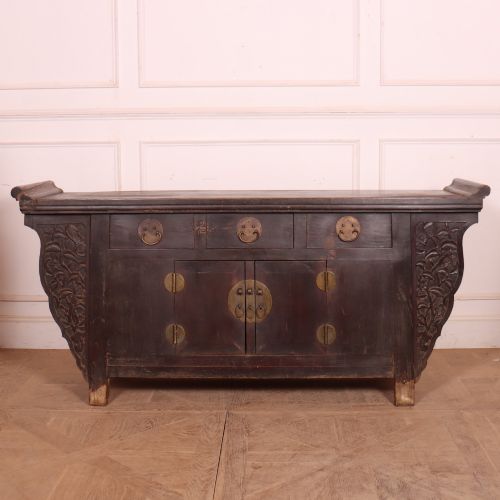
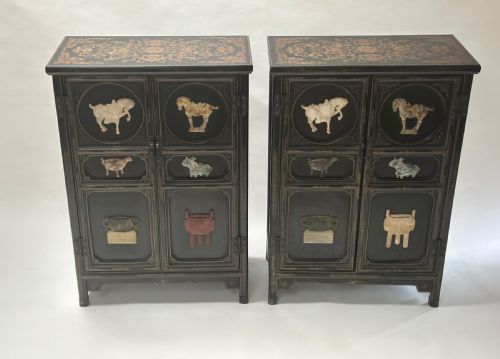
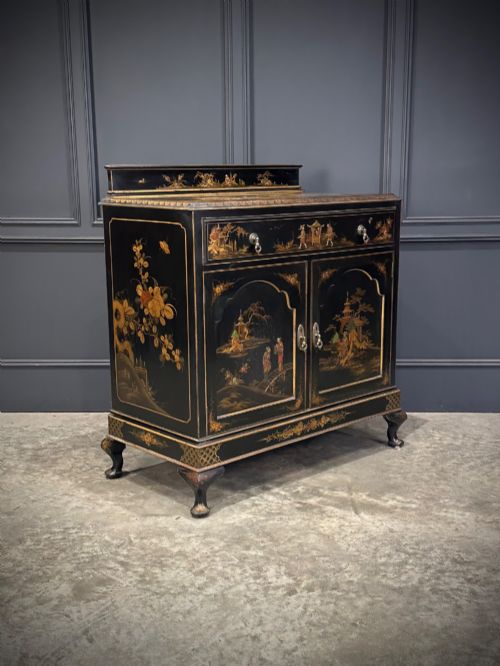
These oriental storage credenza pieces bring bold lacquer, elm, and traditional carving into a room with genuine presence.
Oriental Storage Credenza
An oriental storage credenza spans sideboards, side cabinets, and chests of drawers from the nineteenth century up to nineteen-twenty, alongside Regency pieces. Buyers encounter both traditional Chinese Provincial or Qing Dynasty forms and European Chinoiserie interpretations.
The practical function remains storage, expressed through cupboards, cabinets on stands, and chests. Elm and lacquered wood dominate the forms, offering generous interior capacity behind panelled doors or drawer fronts.
Materials and construction
Construction relies heavily on sturdy native woods such as Chinese elm, shaped into substantial sideboards and cupboards. Surfaces receive layered applications of black or red lacquer, often complemented by intricate carving.
Decoration employs traditional techniques including gilding and hardstone inlay. Brass hardware frequently secures doors and drawers, adding functional contrast to the finished wood and lacquer surfaces.
Some nineteenth-century cabinets hide their storage secrets behind elaborate stands and gilded panels.
Assessing quality
Quality rests upon the depth and preservation of the lacquer work and the crispness of any carving or gilding. Pieces featuring sophisticated Chinoiserie detailing or substantial elm construction demonstrate greater artisan skill.
The integrity of the structural joinery and the original state of the brass mounts distinguish finer examples. European interpretations like French Mercier Frères pieces show distinct cabinetmaking standards compared to provincial Chinese workshops.
The Oriental Storage Credenza Glossary
- Chinoiserie
- European decorative style inspired by Chinese art and design. It often manifests in lacquered furniture and gilt motifs.
- Japanned
- European imitation of Japanese and Chinese lacquerwork. The technique uses heat-cured varnish layers on wood.
- Elm
- A durable hardwood commonly used in Chinese cabinetmaking. It provides strong structural frames and pleasant grain patterns.
- Hardstone
- Minerals such as jade or soapstone used for decorative inlay. These stones appear on panels and cabinet doors.
Oriental Storage Credenza: Frequently Asked Questions
How do I clean lacquered furniture?
Dust surfaces gently with a soft, dry microfibre cloth. Avoid harsh chemical polishes and keep pieces away from direct sunlight.
Moisture can damage fragile lacquer finishes over time. Maintain a stable indoor humidity to protect the wood and decoration.
What is the difference between Chinese and European Chinoiserie?
Chinese pieces originate from workshops in regions like Shanxi, reflecting local traditions and practical storage needs. They utilise native woods such as elm and traditional lacquer methods.
European Chinoiserie interprets these aesthetic traditions through Western cabinetmaking forms. Makers in France and Britain applied japanning to local furniture shapes during periods like the Regency.
Where should I place a credenza?
These cabinets suit dining rooms or living spaces needing substantial surface area and enclosed storage. Position them against interior walls away from direct heat sources.
Ensure the clearance allows cabinet doors and drawers to open fully. The decorative lacquer and gilding deserve prominent placement in the room.
How do I identify a nineteenth-century piece?
Examine the timber construction, joinery methods, and the wear patterns on the lacquer. Nineteenth-century examples often display hand-cut joinery and aged patination on the brass hardware.
Compare the decorative motifs against documented styles from the Qing Dynasty. Construction details on the interior and back panels also indicate the age of the cabinet.