


Vintage Asian Storage Cupboard
A vintage asian storage cupboard brings rich colour, storied timber and practical depth into a room.
Vintage Asian Storage Cupboard
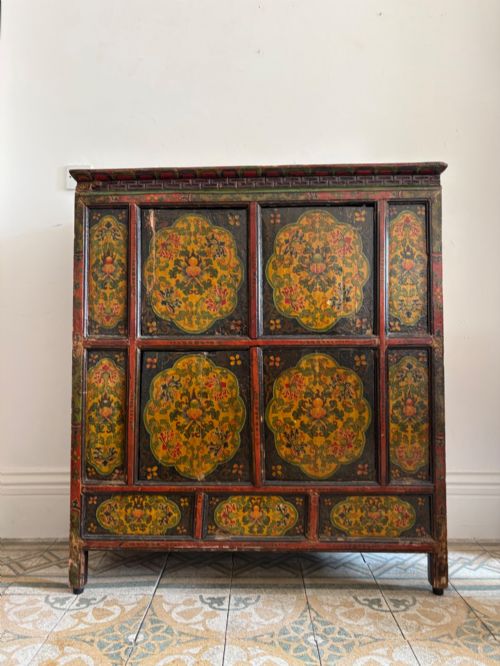
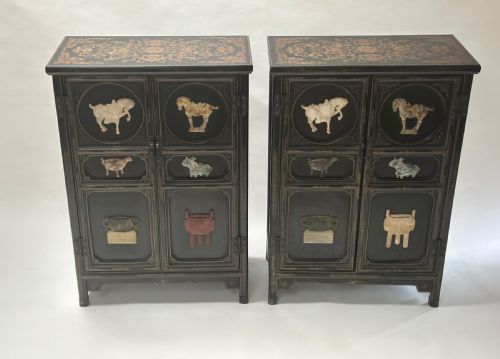
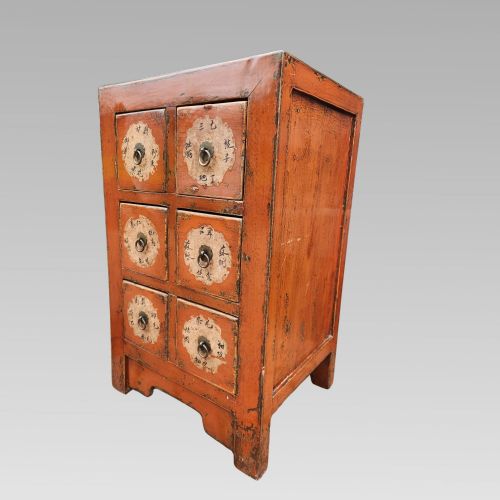
When you search for a vintage asian storage cupboard, you encounter a diverse range of forms including sideboards, apothecary chests, noodle cabinets and tansu chests. These pieces originate from traditions across China, Japan, Korea, Tibet and Burma, spanning the nineteenth century through to the early twentieth century.
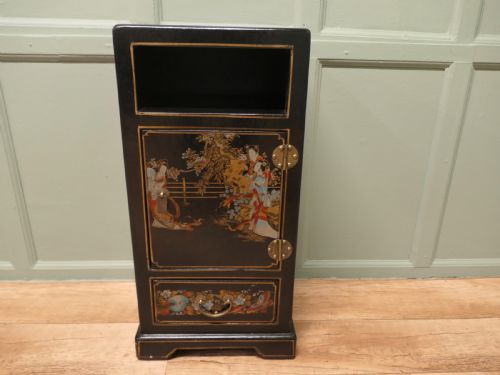
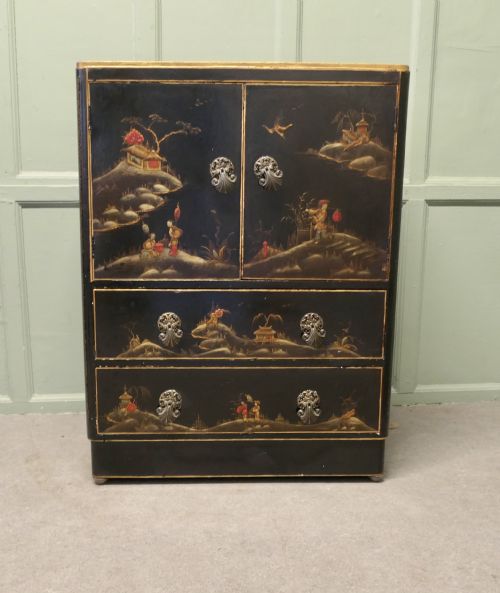
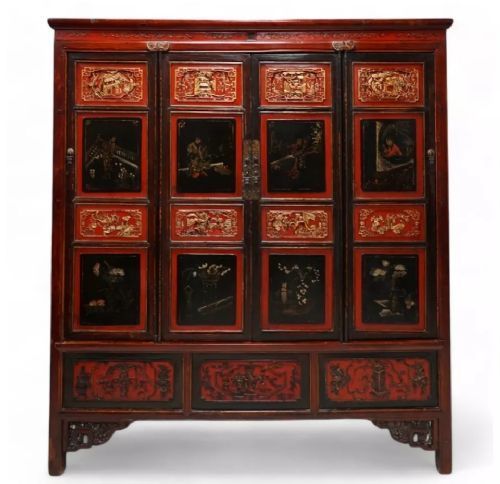
The most common examples on this page are black and red lacquer Chinoiserie cupboards, elm marriage cabinets, and Japanese merchant or kitchen tansu chests. Each item serves as both a functional storage piece and a striking focal point with distinct regional characteristics.
How They Were Made
These items rely on traditional hardwoods such as elm, teak, camphor wood, zitan and keyaki, paired frequently with secondary pines. Craftsmen built these cabinets to endure, utilising robust joinery that often avoided metal nails entirely.
Surfaces received elaborate finishes including layered red and black lacquer, hand painted floral or avian motifs, and intricate wood carvings. Brass and iron hardware, from heavy hinges to decorative drop handles and lock plates, secured the doors and drawers while adding structural contrast.
Some apothecary chests retain faint herbal aromas locked into the timber after a century of housing traditional dried medicines.
What Varies in Quality
Quality rests primarily in the integrity of the original surfaces and the depth of the timber grain. Pieces retaining their original lacquer, hand painted details or patinated wood sit clearly above those with heavy modern interventions.
Construction refinement also separates standard utility items from finer works. Finely fitted drawers, stable compound frames, and original forged brass or iron mountings indicate superior craftsmanship from regional workshops.
The Vintage Asian Storage Cupboard Glossary
- Tansu
- A traditional Japanese mobile storage chest built for domestic or merchant use. These units often feature multiple stacking sections and sliding doors.
- Chinoiserie
- European artistic interpretation and imitation of Chinese and East Asian artistic traditions. This style frequently manifests in lacquered furniture decorated with figures, landscapes and flora.
- Lacquer
- A durable natural resin finish applied in multiple coats to wood. It creates a smooth, glossy protective surface that accepts pigments and intricate painted decoration.
- Marriage Cabinet
- A large traditional Chinese cabinet traditionally given as a wedding gift to hold personal linens and valuables. They are characterised by prominent brass pin hinges and removable centre stiles.
- Zitan
- A dense, heavy Asian hardwood prized for its dark purple-black colour and fine grain. Furniture made from this material commands high regard among collectors.
Vintage Asian Storage Cupboard: Frequently Asked Questions
How were tansu chests used?
Tansu chests served versatile storage roles in Japanese homes and shops, holding clothing, kitchen utensils or merchant account books. Their modular design allowed owners to transport them easily during fires or relocations.
Today, these chests adapt readily to modern interiors as bedside tables, media stands or statement hallway chests, providing segmented drawer space for smaller items.
What is a noodle cabinet?
A noodle cabinet is a specialised regional Chinese storage piece featuring open slatted or panelled doors designed to provide ventilation. Historically, they kept food items secure while allowing air circulation in warm climates.
In contemporary spaces, these cabinets work well in living rooms or kitchens to display ceramic collections or store tableware behind distinctive slatted woodwork.
How do I identify a lacquer finish?
A traditional lacquer finish offers a deep, luminous sheen built up through successive coats of treated tree sap. Under close inspection, genuine antique lacquer often shows subtle craquelure and gentle wear consistent with age.
Care for these surfaces involves dusting with a soft cloth and avoiding direct sunlight or excessive moisture to preserve the integrity of the painted decoration.
Are these cabinets heavy?
Many of these storage pieces utilise dense regional hardwoods like elm, teak and keyaki, making them substantially heavy. Compound cabinets and large sideboards require careful placement and often need two people to move safely.
Their substantial weight contributes to their structural stability, ensuring that doors hang true and heavy drawers operate securely within their frames.