
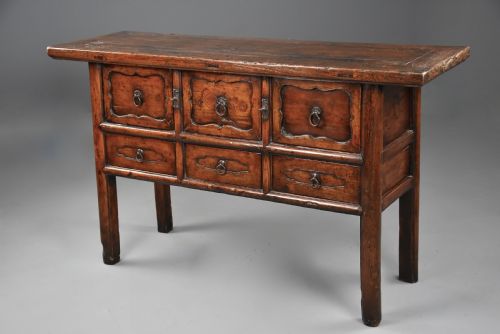


Wooden Chinese Sideboard
A wooden chinese sideboard brings architectural presence and rich grain to a room, offering practical storage grounded in centuries of provincial craftsmanship.
Wooden Chinese Sideboard
When you search for a wooden chinese sideboard, you are looking at substantial storage furniture originating primarily from the nineteenth century, encompassing styles from the Qing Dynasty and Chinese provincial traditions. These pieces often blur the line between sideboards, console tables, and side cabinets, functioning as versatile anchors for dining rooms and hallways.
The versions you are most likely to meet on this page span classic elm constructions and striking red or black lacquered finishes. They range from rustic dressers with fine patinas to intricately carved side cabinets bearing regional characteristics.
The form adapts readily to contemporary interiors while retaining traditional joinery and hardware. Whether you encounter a low console or a taller storage cabinet, each piece reflects the functional domestic requirements of its period.
Materials and construction
Construction relies heavily on native elm, prized for its durability and prominent grain, alongside select pieces fashioned from teak and lacquered wood. Artisans shaped these timbers using traditional joinery techniques that accommodated wood movement without relying on modern fasteners.
Surfaces frequently feature hand-applied red or black lacquer, sometimes enhanced with delicate gilding or carved relief work. Metal elements in brass and iron provide functional reinforcement and visual contrast through hinges, lock plates, and drawer pulls.
Listings feature nineteenth-century materials including elm, teak, iron, brass, and lacquered wood across various regional styles.
Evaluating quality and finish
Quality reveals itself in the integrity of the timber and the depth of the finish, where natural elm develops a rich, tactile patina through decades of use. Superior examples display crisp carving and balanced proportions that respect traditional regional styles without crude alterations.
The sophistication of the hardware and the retention of original lacquer surfaces distinguish finer works from simpler utilitarian items. Healthy timber and stable joinery ensure that drawers and doors operate as intended while preserving historical character.
The Wooden Chinese Sideboard Glossary
- Elm
- A resilient hardwood native to Asia, frequently utilised for furniture frames and panels due to its fibrous grain and strength. It takes on a warm, deep patina over generations of handling.
- Lacquer
- A durable resin coating applied in multiple layers to seal and decorate wood surfaces. It provides a smooth, protective shell that often accommodates carved details and colour pigments.
- Qing Dynasty
- The final imperial dynasty of China, spanning the seventeenth to the early twentieth century. Furniture from this era often combines restrained scholar aesthetics with robust regional utility.
- Chinoiserie
- A European artistic style reflecting Chinese motifs and techniques. In antique furniture, it describes pieces incorporating Asian decorative elements adapted for export or domestic taste.
Wooden Chinese Sideboard: Frequently Asked Questions
How do I date a wooden chinese sideboard?
Dating relies on examining the timber shrinkage, tool marks left by traditional hand woodworking, and the natural wear accumulated on the patina. Construction methods and joinery styles also point toward the nineteenth century.
Hardware placement and the composition of lacquered or waxed surfaces offer further clues to the period of origin. Comparing provincial characteristics helps narrow down the decade of manufacture.
Where should I place a wooden chinese sideboard?
These sideboards suit dining rooms for tableware storage, or hallways where a console or low cabinet creates a striking focal point. Their substantial presence anchors large wall spaces effectively.
Ensure placement avoids direct heat sources and strong sunlight to protect historic wood and delicate lacquer finishes from drying out over time.
How do I care for antique lacquer?
Maintain lacquer surfaces by dusting gently with a soft, dry cloth and avoiding all chemical cleaners or abrasive polishes. Keeping ambient humidity stable prevents the underlying wood from expanding and cracking the finish.
Occasional gentle waxing can protect unlacquered elm elements, but lacquer requires only minimal touching to preserve its original sheen.
What is the difference between an altar table and a sideboard?
Altar tables typically feature higher proportions with elongated tops and upturned flange ends, originally designed for ceremonial use in domestic halls. Sideboards focus on enclosed storage and drawer space for domestic items.
While both share nineteenth-century Chinese construction methods, their functional anatomy dictates how they integrate into modern living spaces.