

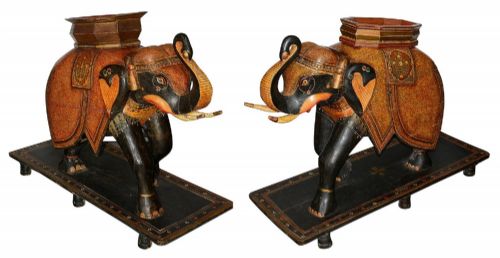


Oriental Wooden Figure
Oriental wooden figure pieces span intricate Chinese and Japanese deities, scholars, and animals carved from dense hardwoods.
Oriental Wooden Figure
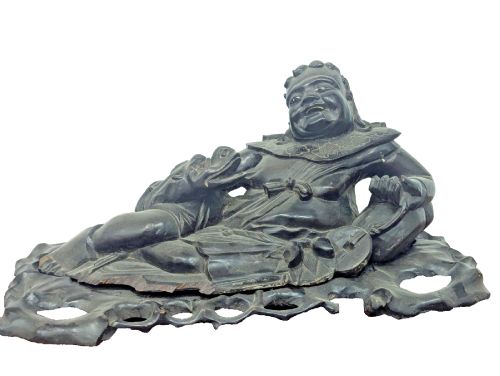
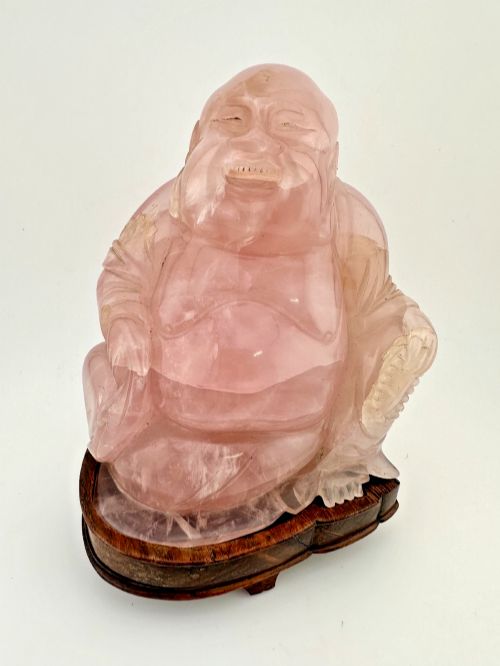
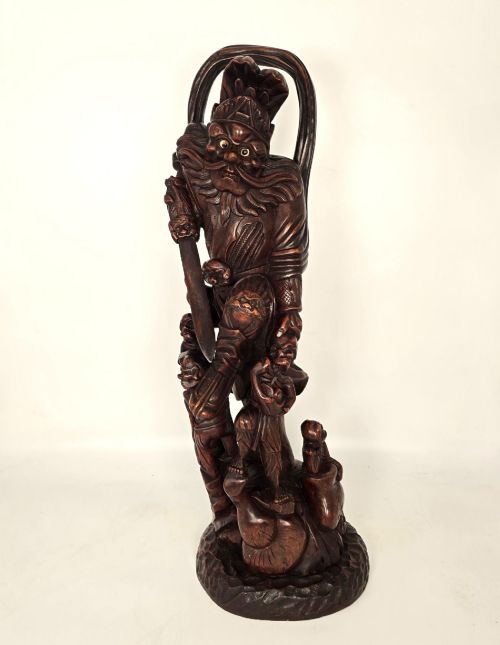
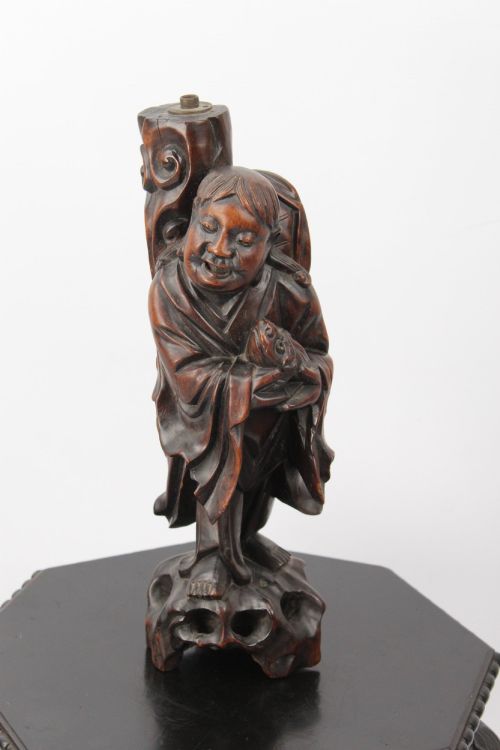
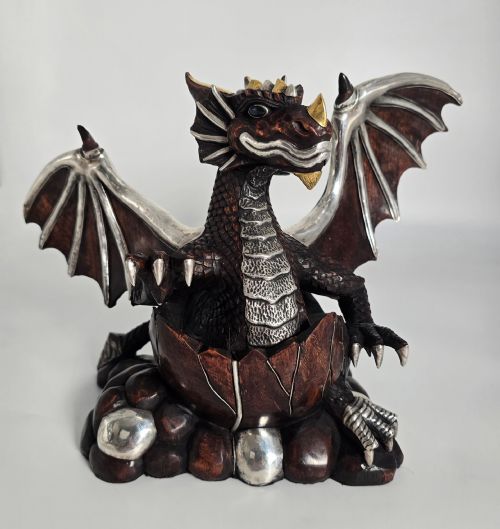
When you search for an oriental wooden figure, you encounter carved representations originating largely from Chinese and Japanese traditions. These sculptures depict figures ranging from Daoist immortals and Buddhist deities to fishermen, scholars, and temple guardians.
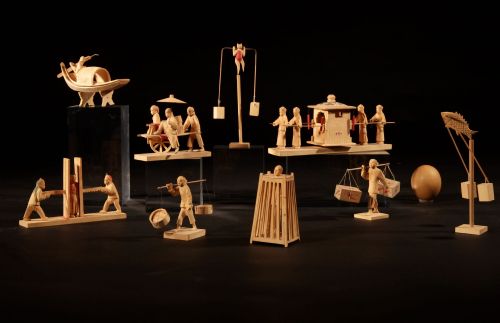
The selections available here lean heavily toward nineteenth-century and early twentieth-century examples, produced during periods such as the Qing Dynasty and the Meiji Period. Formats vary from small okimono and boxwood carvings to monumental temple figures and root wood sculptures.
Materials and Carving Techniques
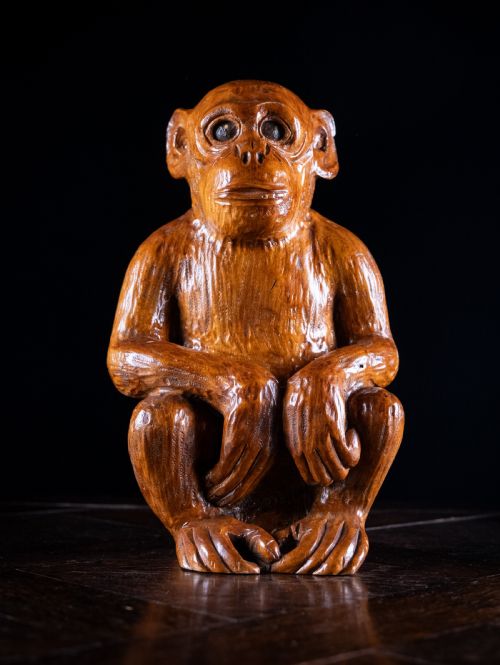
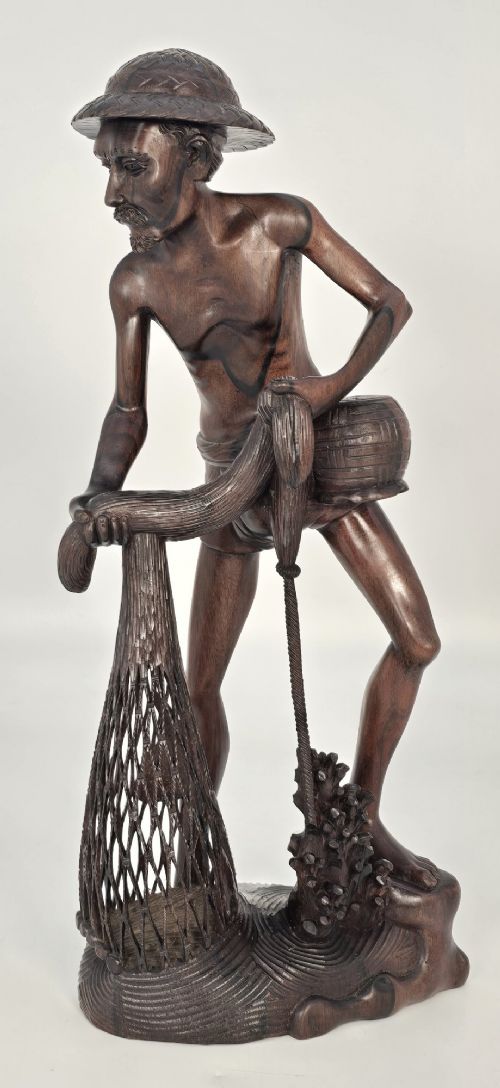
Artisans utilised dense materials such as hardwood, boxwood, root wood, and hongmu to create these sculptures. Grain patterns in the wood often dictate the natural posture of figures, particularly in root wood carvings of scholars and mythical beasts.
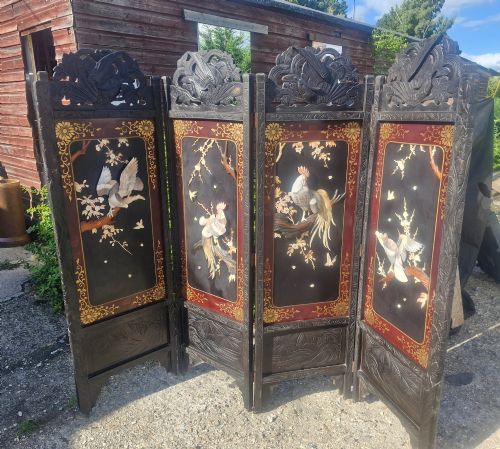
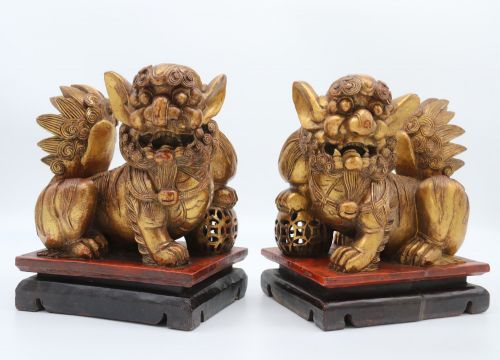
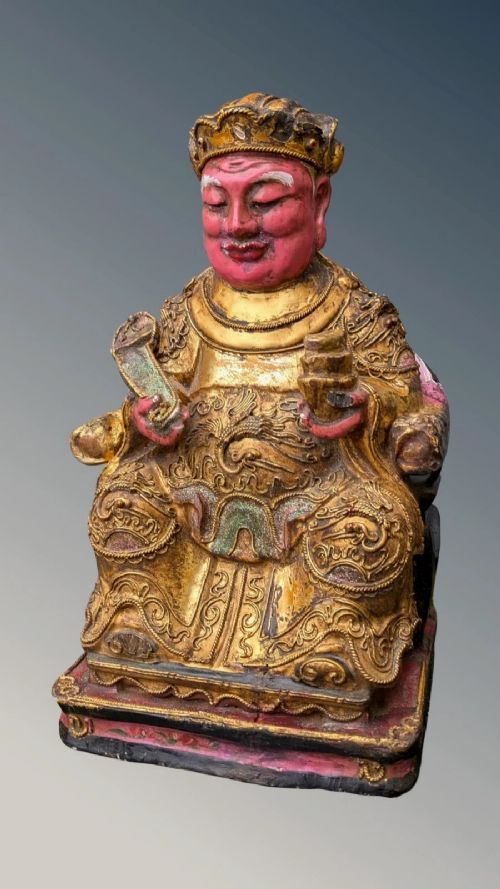
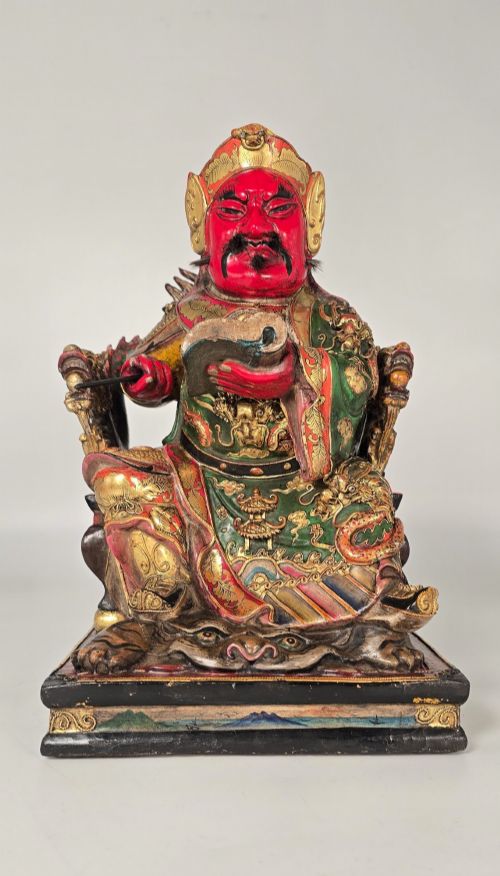
Surface treatments frequently involve layers of lacquer, gold leaf, gesso, and polychrome paint. Detailed relief work combines deep carving with hand-painted pigments, metal mounts, and inlaid bone.
Styles represented span the Qing Dynasty, Meiji Period, Anglo-Indian traditions, and traditional Chinese forms.
Evaluating Execution and Detail
The preservation of original surface finishes, including polychrome paint, lacquer, and gilding, separates standard decorative objects from finer sculptural examples.
The Oriental Wooden Figure Glossary
- Okimono
- A Japanese ornamental statue or sculpture, typically displayed in an alcove or on a shelf. These small-scale carvings often depict everyday workers, historical figures, or animals.
- Hongmu
- A category of dense, heavy Chinese hardwoods, often translated as red wood. It provides a dark, fine-grained surface suited for intricate nineteenth-century carving.
- Lokapala
- A Buddhist guardian king, frequently depicted in temple sculptures wearing elaborate armour. These figures stand as protectors of the four cardinal directions.
- Gesso
- A plaster mixture applied as a smooth surface prep for painting or gilding. It provides a stable base for the polychrome finishes found on temple figures.
- Root wood
- Timber shaped by the natural growth of tree roots, utilised by carvers to suggest dynamic forms. Scholars and mythical animals frequently emerge from these organic shapes.
Oriental Wooden Figure: Frequently Asked Questions
What periods do these figures come from?
The pieces span the nineteenth century and the early twentieth century, encompassing the Qing Dynasty in China and the Meiji Period in Japan.
Earlier examples date back to the seventeenth century, while the majority reflect late-Qing and Meiji craftsmanship.
How do Chinese and Japanese figures differ?
Chinese carvings frequently portray Daoist immortals, scholars, temple guardians, and mythical creatures in hardwood or polychrome wood.
Japanese examples often include boxwood netsuke, okimono of daily life, and figures rendered in traditional styles like Nata-tsukuri.
What woods were commonly used?
Carvers utilised dense materials such as boxwood, root wood, hongmu, and general hardwoods. These timbers allowed for deep, crisp relief work.
Softer woods were occasionally employed for larger architectural or temple sculptures destined for interior shrines.
How were surface finishes applied?
Surfaces were often treated with layers of lacquer, gold leaf, gesso, and hand-painted polychrome pigments. Metal mounts and inlaid bone were also integrated into the designs.
Many pieces retain traces of original gilding and pigment, particularly those originating from temples.
Where were these figures displayed?
Smaller carvings, such as okimono and boxwood figures, sat on household tables, shelves, or inside display cabinets.
Larger monumental sculptures and guardian figures stood within temples, ancestral halls, and elite residences.