
Chinese Carved Wood
When you handle Chinese carved wood pieces, you meet dense dense rosewoods, soft elms, and deep camphor timbers shaped into furniture, figures, and stands across centuries.
Chinese Carved Wood
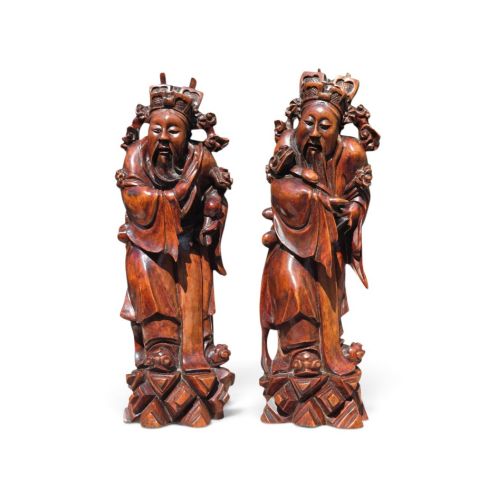
Chinese carved wood encompasses everything from domestic seating and low tables to temple panels, ancestor figures, and scholar objects. The items appearing on this page span the Victorian era back to the eighteenth century, with nineteenth-century pieces dominating the selection.
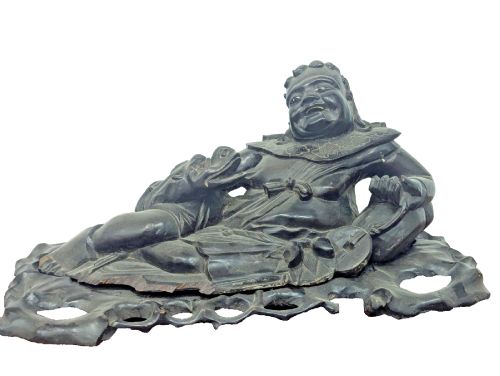
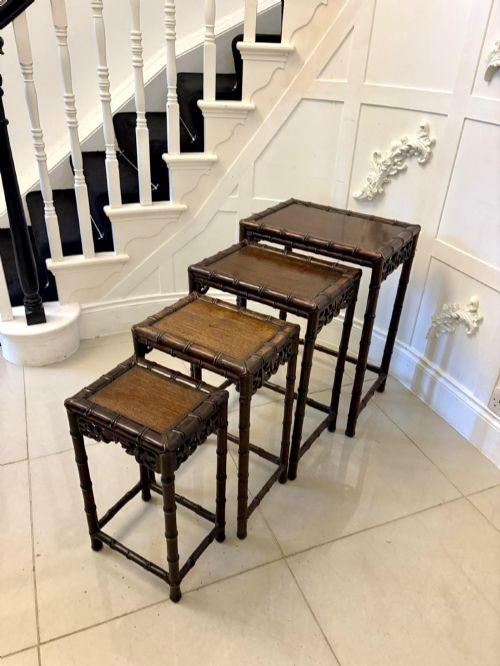
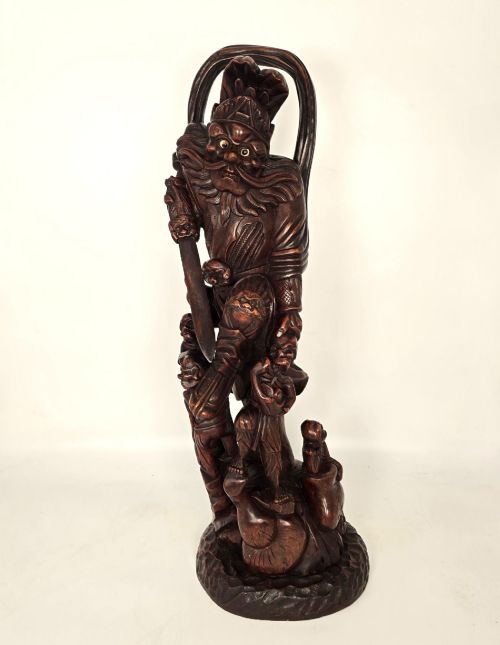
Buyers routinely encounter functional furniture such as armchairs, opium tables, nests of tables, and display stands alongside sculptural forms like guardian figures and foo dogs. Hardwoods predominate, often supplemented by elm, lacquer, and marble inserts.
Originating largely from Qing Dynasty workshops and later export production, these items reflect both traditional Chinese craftsmanship and styles adapted for Western interiors. The surviving inventory prioritises sturdy seating and small display furniture suited to modern spaces.
Materials and technique
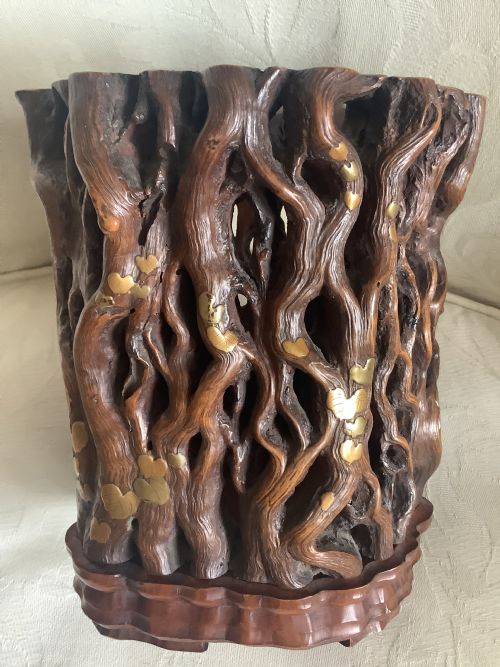
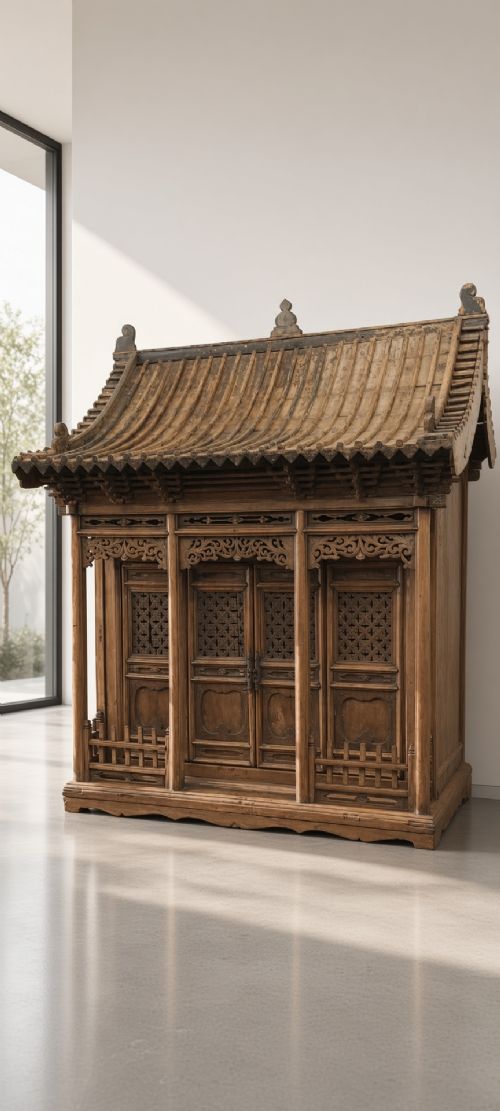
Artisans relied heavily on dense native timbers such as rosewood, padouk, huanghuali, and camphor wood, which tolerated intricate, deep relief carving without splintering. Softer woods like elm served larger structural forms like marriage cabinets and yoke-back chairs, often finished with red lacquer or gilt.
Joinery techniques dispensed with metal nails, using precise mortise and tenon joints that allowed the timber to expand and contract naturally. Carvers employed chisels and gouges to render elaborate dragons, floral motifs, and figures with crisp undercut layers.
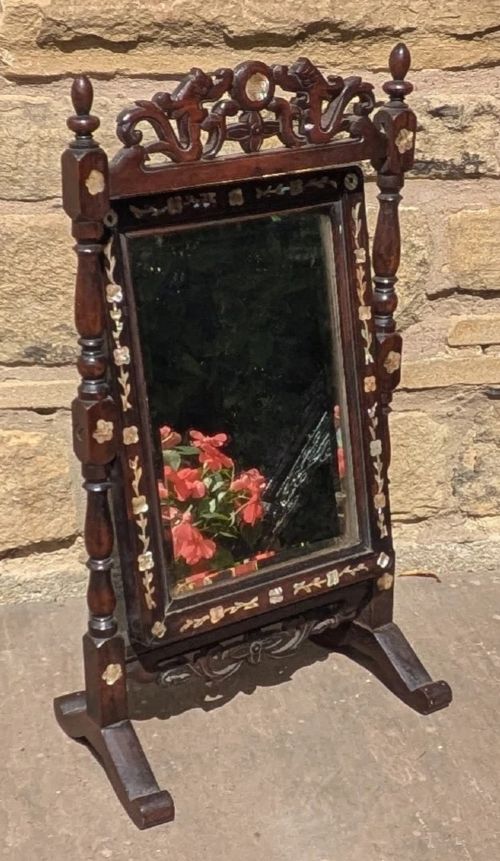
Surfaces received extensive hand-polishing and waxing to bring out the natural grain and deep patina of the hardwood. Inlaid details involving mother-of-pearl, marble panels, or brass wire further enhanced the constructed forms.
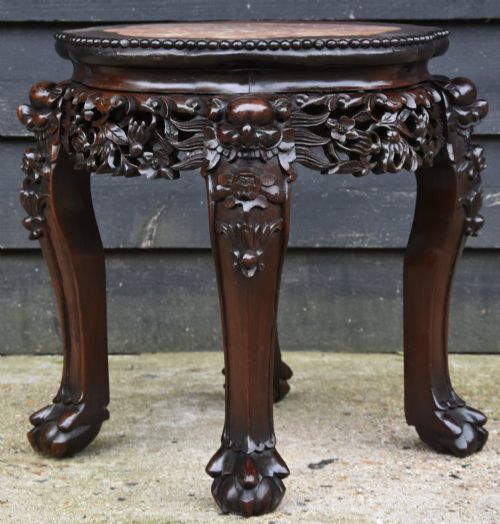
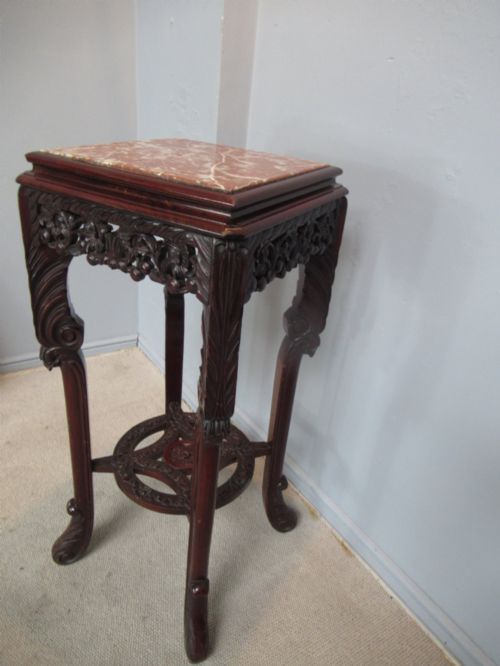
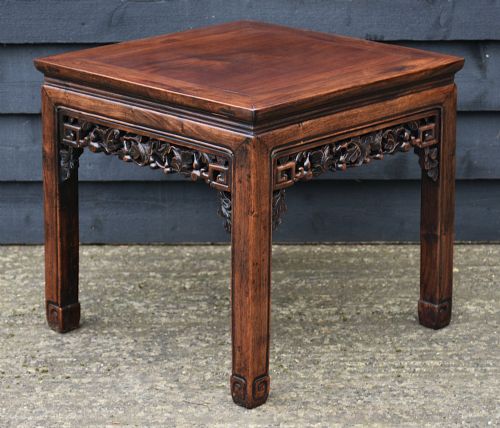
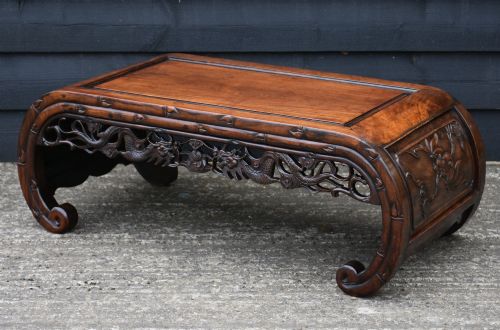
Listings feature 19th-century rosewood low tables, elm yoke-back armchairs, and camphor trunks alongside marble-top jardiniere stands.
Judging the work
Quality rests primarily on the depth and clarity of the carving, where superior examples display sharp undercut details rather than shallow, mechanical incisions. Figures and floral motifs should possess anatomical and botanical conviction, avoiding stiff or repetitive patterns.
The choice of material dictates baseline excellence, with dense, heavy hardwoods commanding greater respect than softer secondary timbers. The integrity of the original construction, including tight joinery and minimal structural replacement, separates museum-grade survivors from heavily repaired pieces.
Surface preservation plays a decisive role, as an undisturbed original patina or intact lacquer finish elevates an object significantly. The harmony between the functional form and the decorative program ensures that the carving enhances the piece rather than clutters it.
The Chinese Carved Wood Glossary
- Hongmu
- A generic Chinese term applied to dense, hard, dark tropical timbers translated simply as red wood. It covers several species prized for furniture making.
- Qing Dynasty
- The final imperial dynasty of China, ruling from sixteen forty-four to nineteen twelve. Most antique carvings encountered today date from its later decades.
- Opium table
- A low domestic table traditionally used for serving tea or smoking, characterised by short legs and often minimal, elegant framing.
- Foo dog
- A traditional guardian lion sculpture, usually paired, placed to protect thresholds and domestic spaces. They combine feline and canine attributes.
- Yokeback armchair
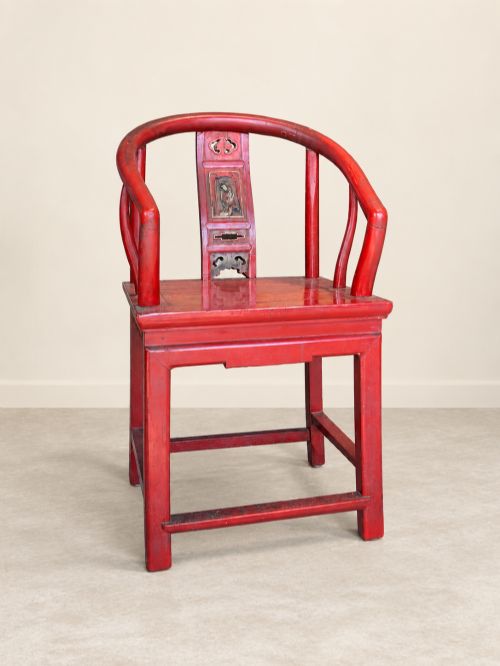
- A traditional Chinese seating form featuring a crestrail that curves upward and outward like a yoke. These chairs emphasise ergonomic comfort and clean structural lines.
Chinese Carved Wood: Frequently Asked Questions
How do I care for antique hardwood?
Keep wooden pieces away from direct heat sources and sudden humidity shifts to prevent the timber from splitting. Feed the surface occasionally with natural wax and avoid modern silicone-based polishes.
Dust regularly with a soft, dry cloth to protect the intricate carved crevices. Proper environmental control preserves both the structural joinery and the historic patina.
Are these pieces from the Qing Dynasty?
Many items originate from the late nineteenth or early twentieth centuries during the final decades of the Qing Dynasty. Others extend back into the eighteenth century or reflect later traditional manufacture.
Examining the construction methods, tool marks, and wear patterns helps determine the exact period. Each piece carries signs of its specific era of production.
How were low tables used?
Low tables served versatile domestic functions in traditional interiors, often positioned for tea service, writing, or displaying prized objects. Their modest height suited floor seating or low platform beds.
Today, these sturdy forms translate easily into modern coffee tables or plant stands. Their compact scale makes them adaptable to contemporary living spaces.
What is camphor wood used for?
Camphor wood provided the primary material for storage chests and trunks due to its natural aromatic insect-repellent properties. This fragrant timber protected textiles and documents from moths and dampness.
Chests often featured carved exterior panels depicting dragons, landscapes, or daily life scenes. Their durable construction allowed them to survive centuries of domestic utility.