
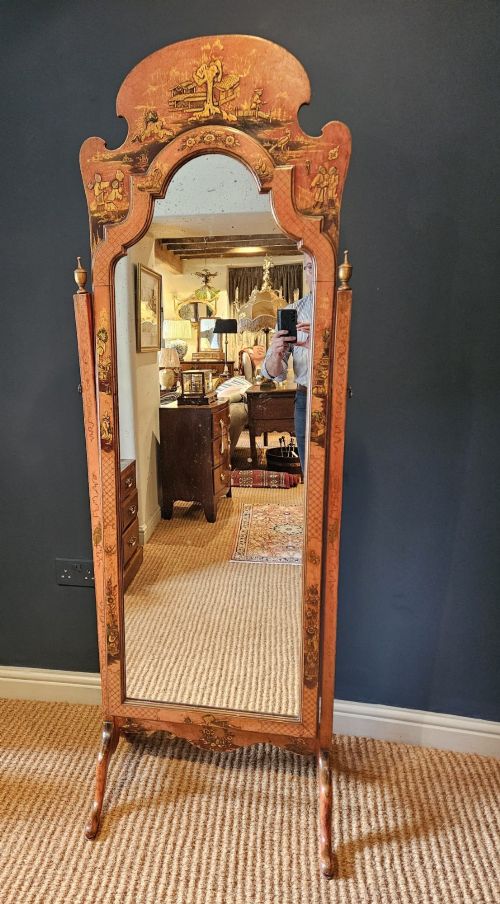
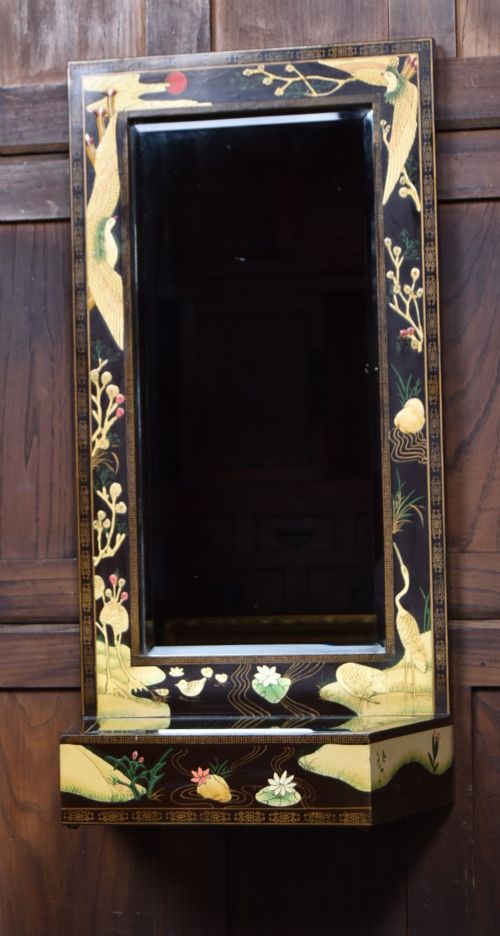
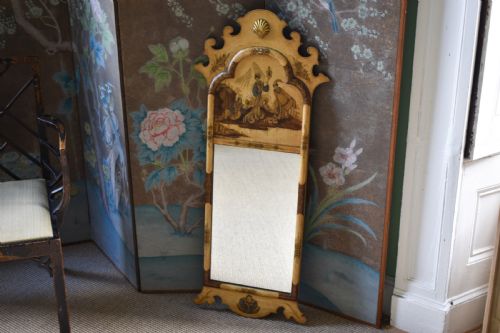
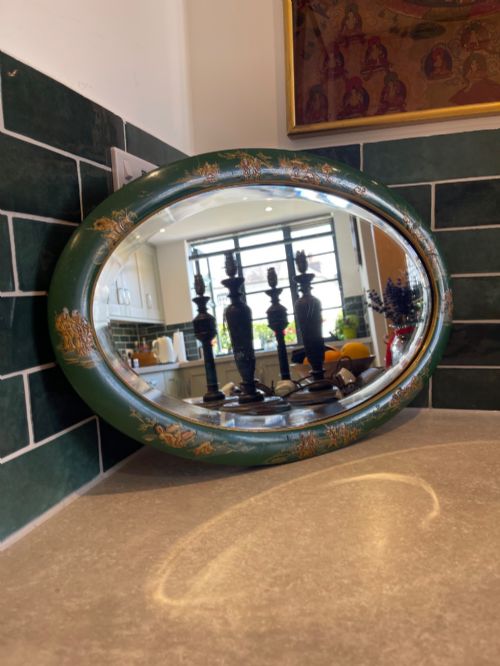





Oriental Style Mirror
An oriental style mirror brings distinctive lacquerwork, gilt decoration, and evocative motifs into an interior.
Oriental Style Mirror
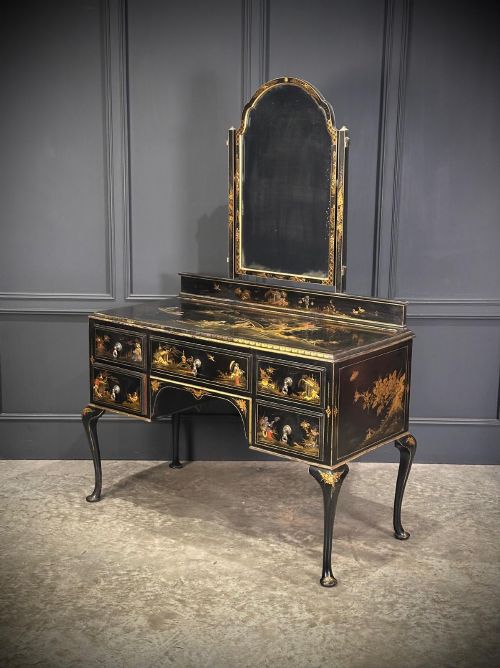
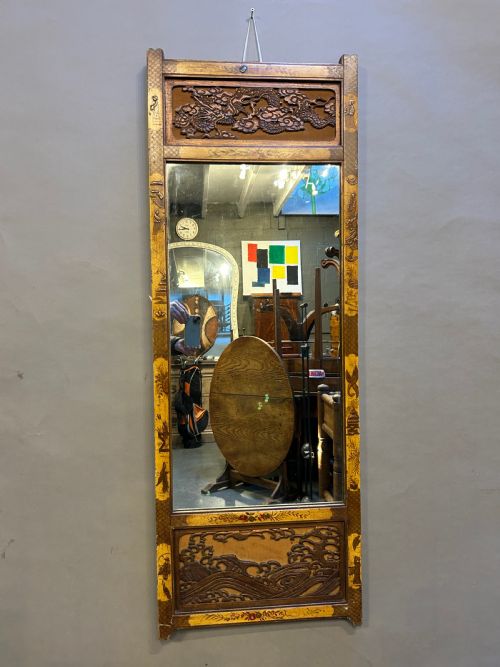
When you search for an oriental style mirror, you encounter pieces spanning from the Georgian period through the Victorian era, Edwardian years, and into the 1920s and 1930s. The selection ranges from wall mirrors and cheval mirrors to dressing tables, pier wall mirrors, and console tables.
You are most likely to meet wall mirrors and dressing table mirrors finished in Chinoiserie styles, alongside occasional Moorish revival pairs and Aesthetic period bamboo furniture.
Origins include pieces from the 19th Century, 1800, 1880, 1900, 1910, 1920, and 1930, reflecting diverse revivals of Asian and Eastern design motifs across British decorative history.
Materials and construction
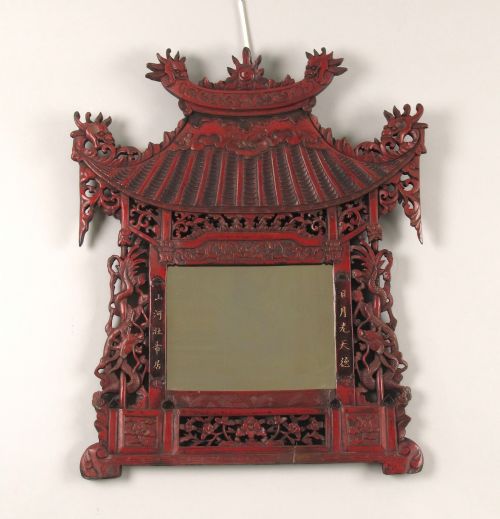
Makers utilised wood as the primary substrate, applying layers of lacquer to surfaces in black, red, cream, and ebonised finishes. Gold leaf and gilt ornamentation highlight architectural elements like pagodas and figurative scenes.
Mirror glass and lacquered wood combine with brass hardware and occasionally bamboo elements, depending on whether the piece aligns with Chinoiserie, Qing Dynasty, or Aesthetic Movement traditions.
Materials recorded across these listings include glass, wood, lacquer, gilt, gold leaf, brass, and bamboo.
Craftsmanship and finish
The sophistication of the lacquerwork and the depth of the gilt decoration distinguish finer examples from simpler commercial items. Hand-painted motifs depicting traditional landscapes or figures show varying degrees of artistic control.
The integrity of the wooden frame, the clarity of the mirror glass, and the preservation of the original finish determine the overall standard of each piece.
The Oriental Style Mirror Glossary
- Chinoiserie
- European interpretations of Chinese and East Asian artistic traditions, popular in furniture and mirror decoration. This style frequently employs lacquered surfaces and gilt motifs.
- Japanned
- A European imitation of Japanese lacquerwork using resin-based varnishes and heat curing. It typically appears in scarlet or black finishes on period frames.
- Cheval mirror
- A full-length mirror hung in a frame that allows it to tilt. These freestanding pieces often feature elaborate lacquered supports.
- Pier wall mirror
- A tall mirror designed to hang on the narrow section of wall between windows. They frequently match console tables or dressing furniture.
- Aesthetic Movement
- A late-nineteenth-century design approach emphasising art for art's sake. It often incorporates bamboo frames and non-traditional asymmetrical layouts.
Oriental Style Mirror: Frequently Asked Questions
How do I date a chinoiserie mirror?
Dating relies on examining the construction methods of the wooden frame, the type of mirror glass, and the characteristics of the lacquer finish. Earlier pieces often display hand-beveled glass and distinct joinery appropriate to Georgian or Victorian periods.
Later examples from the Edwardian era or the 1920s and 1930s show machine-sawn timber and differing formulation of the underlying wood and ground layers.
Are these mirrors fragile?
The combination of wood, glass, and delicate lacquer finishes requires careful handling during placement and cleaning. Avoid positioning lacquered frames in direct sunlight or humid environments to protect the surface.
Dusting with a dry cloth preserves the gilt and painted details without harming the finish.
What is the difference between Chinoiserie and Moorish styles?
Chinoiserie draws upon East Asian motifs, featuring lacquered surfaces, pagodas, and figures rendered in gilt or contrasting paint. Moorish revival pieces incorporate geometric patterns, horseshoe arches, and Islamic architectural influences.
Both styles served as decorative revivals in British interiors during the nineteenth and early twentieth centuries.