
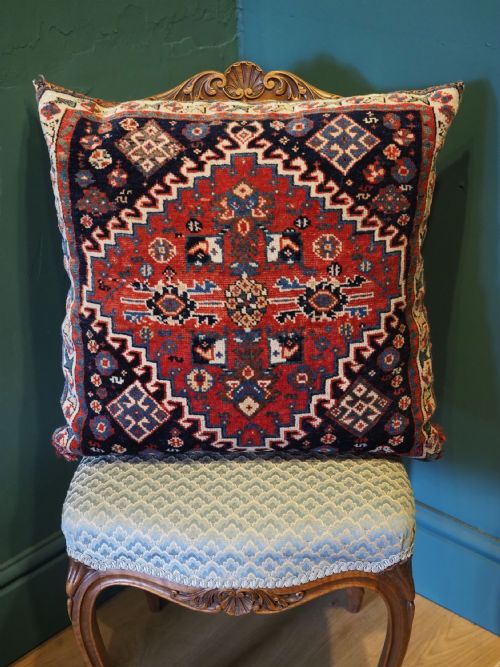
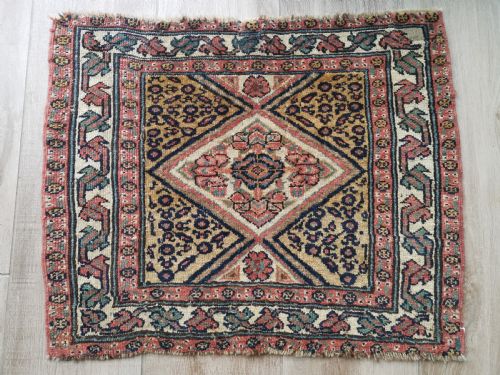
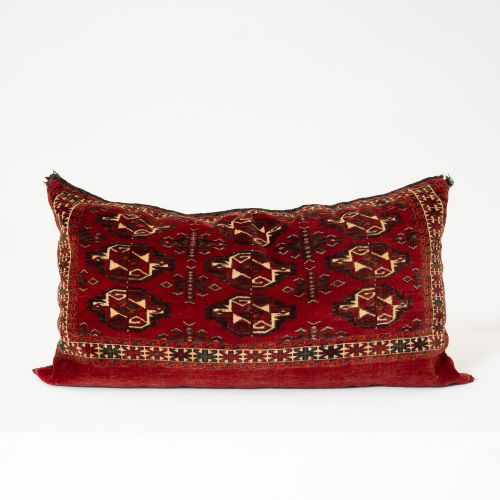

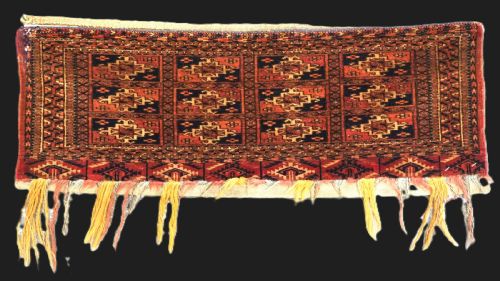


Oriental Rug Cushion
An oriental rug cushion brings nomadic tribal weaving into daily seating through converted saddlebags, torbas and kilim fragments.
Oriental Rug Cushion
An oriental rug cushion transforms utilitarian tribal textiles into domestic furnishings through thoughtful conversion. When searching for an oriental rug cushion, buyers encounter forms repurposed from nineteenth and early twentieth century storage items.
The objects derive largely from tribal and nomadic groups including Turkmen, Baluch, Qashqai and Kurdish weavers. These pieces originate as saddlebags, bag faces, torbas, mafrashes and flatwoven kilims before conversion into cushions and pillows.
Dated examples span the period from the mid nineteenth century through the early twentieth century. Flatwoven kilim cushions appear alongside pile-woven bag faces retaining original backs.
Materials and Technique
Makers utilised wool and hand-spun wool combined with cotton foundations for structural stability. Weavers employed traditional upright looms to construct dense pile surfaces and flatwoven structures.
Colour derives from natural dyes and vegetable dyes yielding rich, saturated tones across tribal designs. Artisans finished pieces with durable backings and secure seams to adapt storage bags for domestic seating.
Nomadic weavers smuggled entire tent wardrobes into these compact bags, now doubling as lumbar support.
Assessing Quality
Quality rests upon the fineness of the weave, the clarity of tribal motifs and the integrity of the material. Tightly knotted pile surfaces and crisp geometric or boteh drawings separate finer work from simpler production.
The survival of original backs, complete tribal motifs such as guls or kedjebe designs, and the depth of natural dye colouration elevate individual cushions within the range.
The Oriental Rug Cushion Glossary
- Torba
- A small Turkmen storage bag traditionally used inside a tent. These rectangular hangings frequently supply the face for decorative cushions.
- Kilim
- A flatwoven textile produced by interlocking weft threads over warps. These pileless pieces yield durable and colourful cushion covers.
- Boteh
- A stylised floral or almond motif of Persian origin. This repeating shape appears frequently on tribal bag faces and rug cushions.
- Chuval
- A large Turkmen tent bag used for household storage. Surviving fragments and faces of these bags are adapted into cushions.
- Mafrash
- A rectangular storage bale or chest cover made by nomadic tribes. The panels of these containers are often converted into cushions.
Oriental Rug Cushion: Frequently Asked Questions
What is an oriental rug cushion?
An oriental rug cushion is a decorative soft furnishing created from antique tribal textiles such as saddlebags, storage bags and kilim fragments.
These pieces repurpose authentic nomadic weaving into functional cushions for domestic interiors.
How were tribal bags used originally?
Nomadic tribes utilised these woven containers inside tents and for transport during seasonal migrations. They stored household goods, bedding and personal items.
Over time, surviving sections of these storage pieces found new life as decorative cushions.
How should I care for a rug cushion?
These textile cushions require gentle maintenance appropriate for historic wool and natural dye materials. Regular light vacuuming without a beater bar removes surface dust.
Professional textile cleaning is recommended for deeper maintenance to protect the antique fibres.