

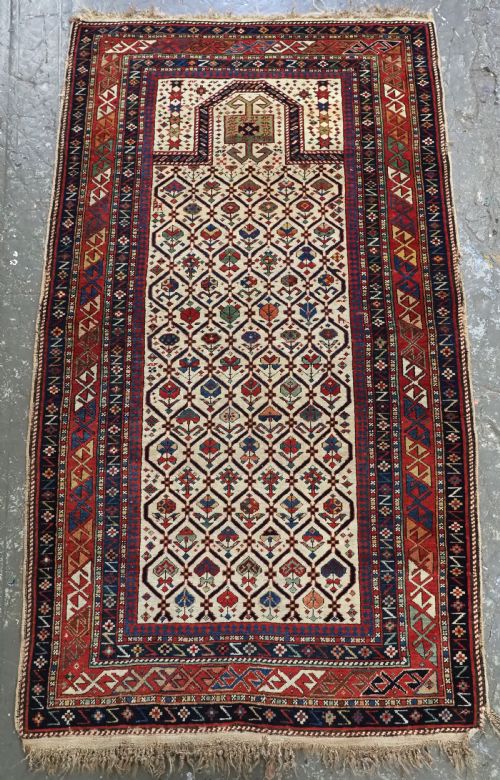
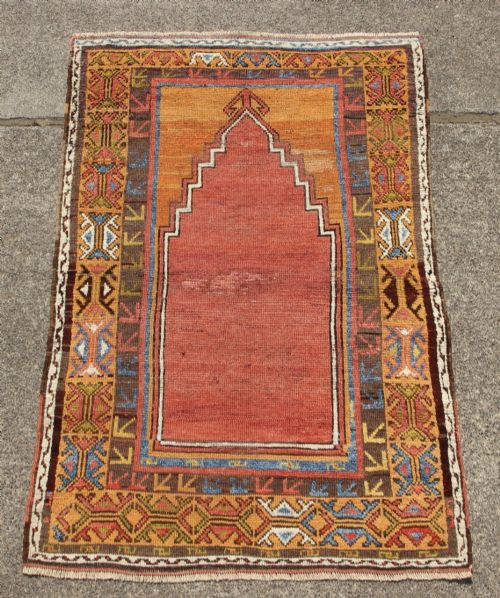
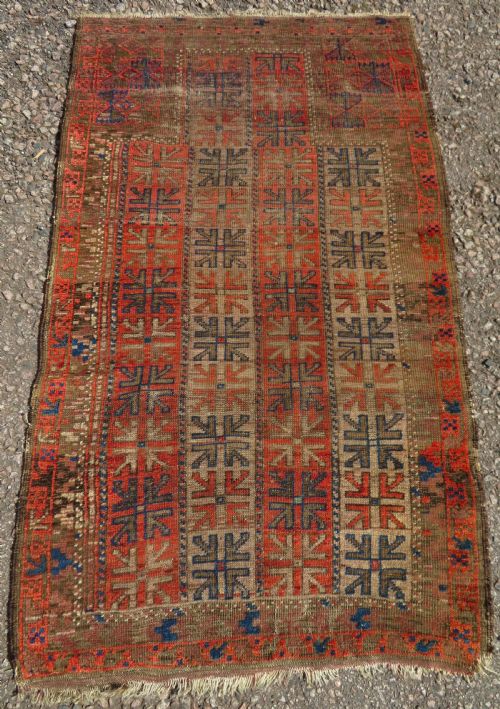
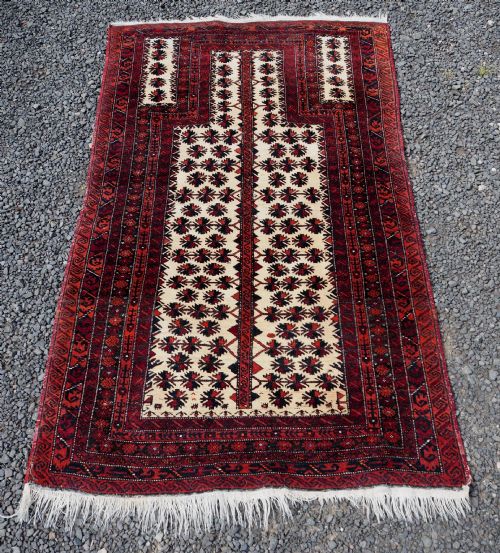

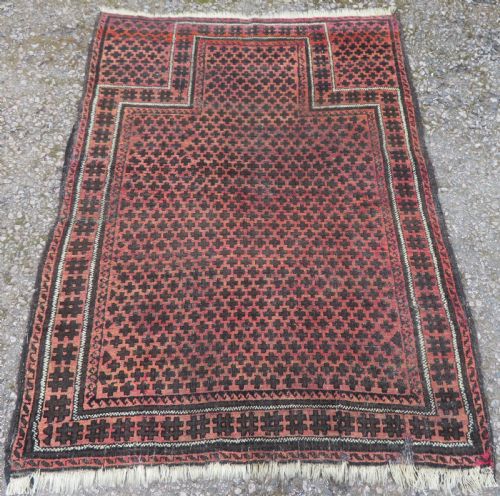

Oriental Prayer Carpet
An oriental prayer carpet is a woven textile featuring a mihrab design, traditionally used for daily devotion.
Oriental Prayer Carpet
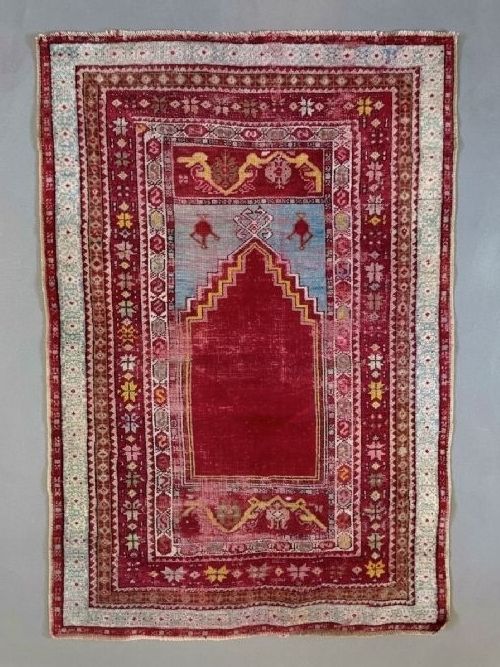
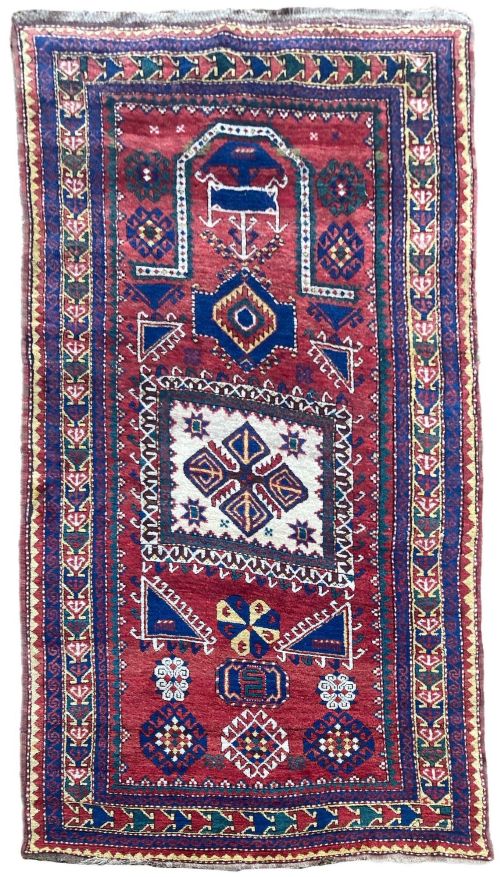
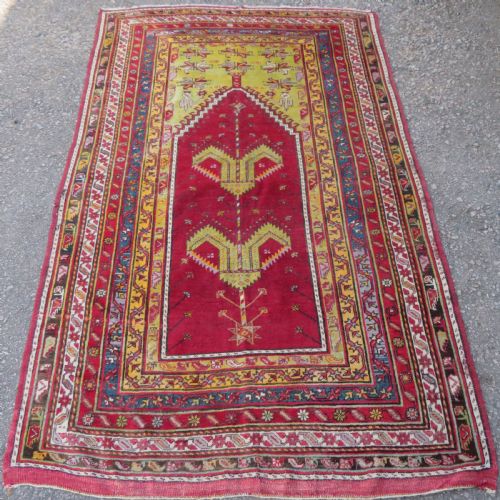
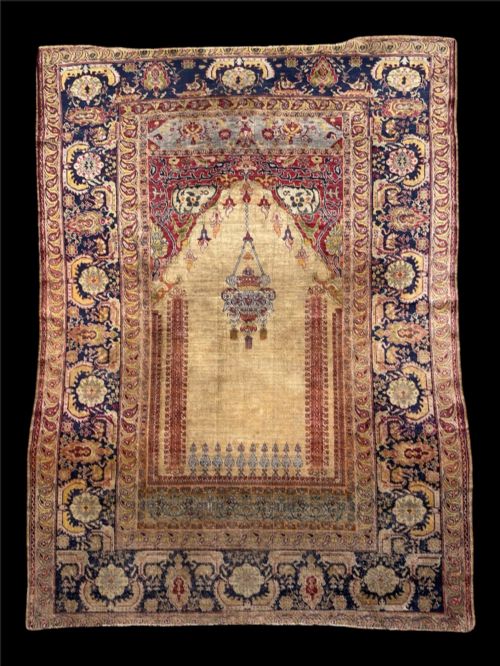
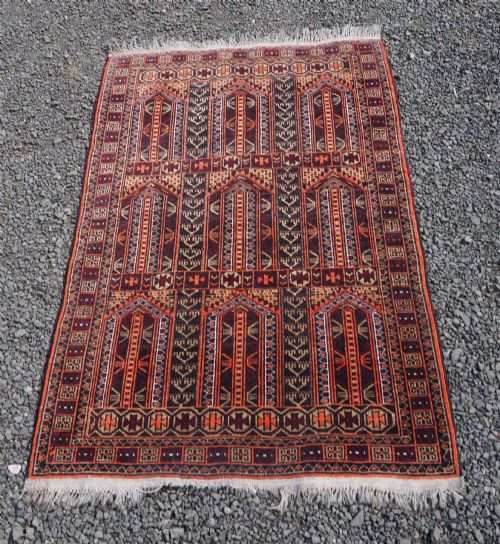
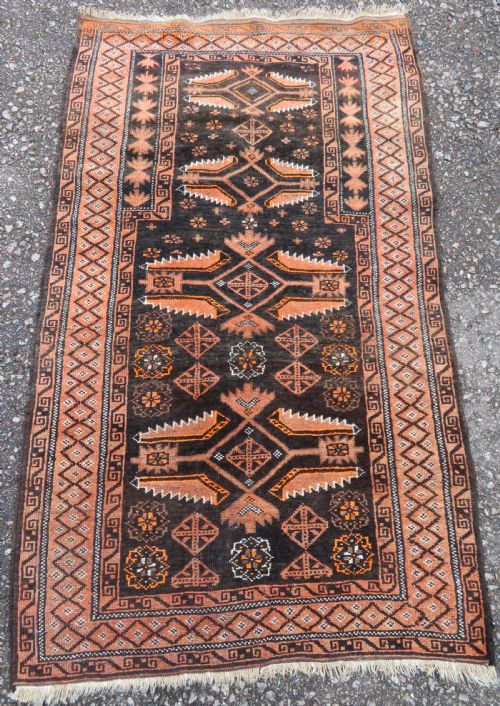
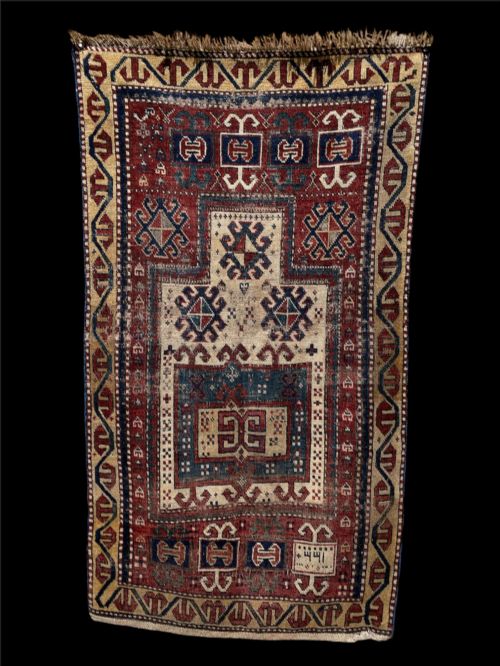
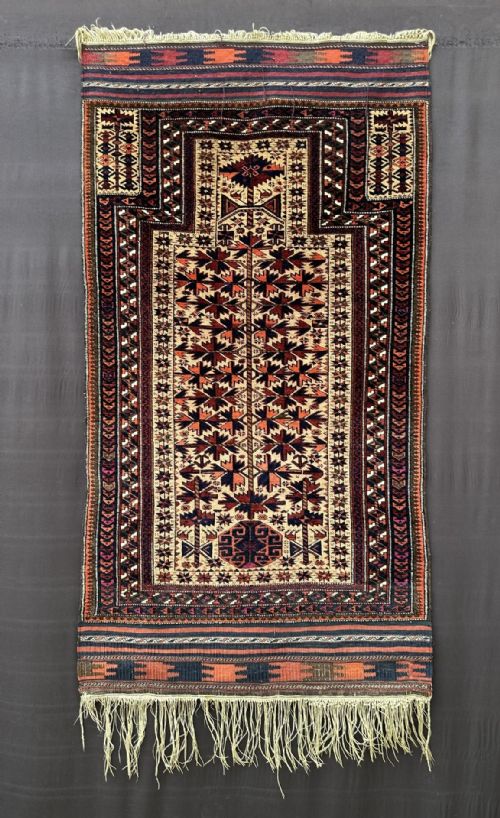
An oriental prayer carpet designates a woven textile defined by a pointed architectural arch known as a mihrab, which indicates the direction of prayer. These pieces originate from distinct weaving traditions spanning Caucasian, Anatolian, Persian and Afghan tribal centres.
The most common examples encountered on this page date from the nineteenth and early twentieth centuries, produced by village and nomadic weavers rather than large urban workshops. They appear as portable rugs and smaller mats designed for individual use rather than expansive floor coverings.
How They Were Made
Construction relies upon hand-spun wool, cotton and occasionally silk foundations knotted tightly by hand, paired with camel hair or goat hair for specific structural or tonal contrasts. Weavers utilised natural dyes to achieve saturated palettes across the field and borders.
Tribal and village makers incorporated long kilim ends and mixed techniques, producing flat-woven transitions that protected the pile edges from fraying during regular use.
Oriental Prayer Carpet Retail Price Guide 2026
Typical asking prices for oriental prayer carpet among the pieces listed under this phrase on Sellingantiques today, from the lower quarter to the upper quarter. They describe what is for sale here now, not the wider market.
Some weavers snuck tiny rams' horns into the arch to ward off trouble.
What Varies in Quality
The standard of execution depends upon the precision of the knotting and the clarity of the architectural mihrab geometry, where tighter density yields sharper lines and greater structural longevity. The purity and depth of the natural dyes also separate common examples from exceptional survivals.
Intricacy of design, such as floral lattice patterns, double mihrabs or specific tribal motifs, dictates the visual complexity of the piece and reflects the skill of the individual weaver.
The Oriental Prayer Carpet Glossary
- Mihrab
- The arched niche depicted on the rug that mimics the prayer niche in a mosque, orienting the worshipper.
- Kazak
- A style of bold, geometric rug woven in the Caucasus region, typically featuring primary colours and strong rectilinear motifs.
- Kilim
- A flat-woven textile technique utilised at the ends of many carpets to provide a durable transition before the knotted pile begins.
- Ghiordes
- A historic Anatolian weaving centre known for distinctive prayer rug designs featuring prominent columns and floral motifs within the arch.
- Baluch
- A tribal grouping from the borderlands of Persia and Afghanistan known for dark, saturated palettes and geometric field patterns.
Oriental Prayer Carpet: Frequently Asked Questions
What is a mihrab design?
The mihrab is the central pointed arch depicted on the surface of the rug, symbolising the prayer niche found in mosques. It directs the user's attention toward Mecca during devotion.
Weavers across Anatolia, the Caucasus and Persia adapted this architectural form into distinctive regional geometries and colour palettes.
How do I care for an antique rug?
These textiles require gentle handling, regular gentle vacuuming without a rotating brush, and professional cleaning suited to natural dyes and wool. Keeping them out of direct sunlight prevents the fading of natural colours.
Placing an appropriate underlay beneath the piece prevents slipping and reduces friction between the foundation and the floor.
What materials were used?
Foundation threads and pile consist primarily of hand-spun wool, cotton and occasionally silk, supplemented by camel hair or goat hair for natural colour variations. Colour was derived from natural dye sources before synthetic alternatives became widespread.
The combination of these materials creates the tactile weight and resilience characteristic of nineteenth and early twentieth-century weaving.