

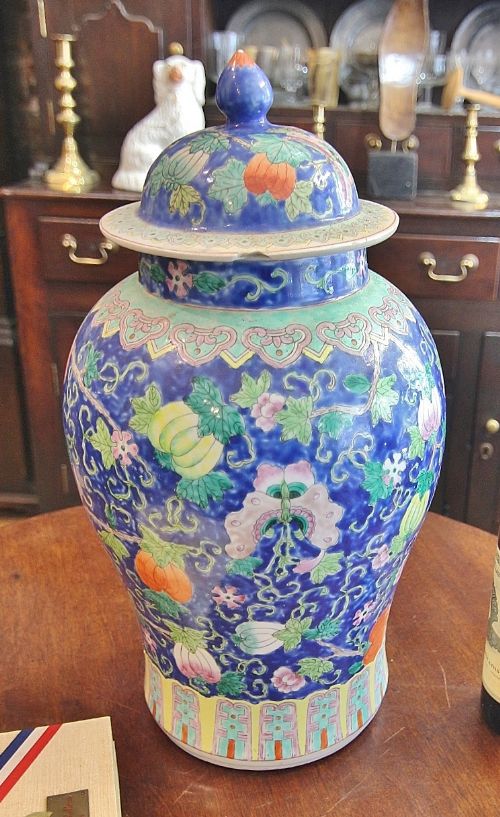
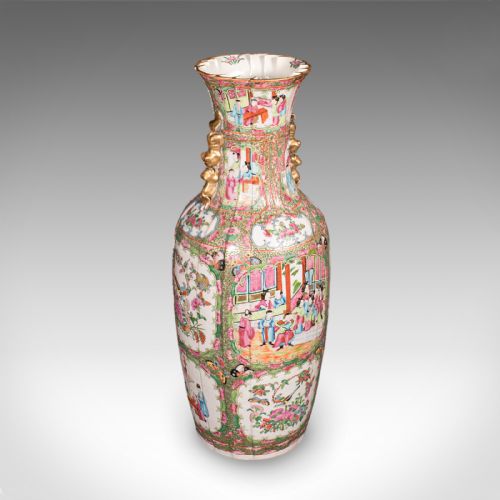
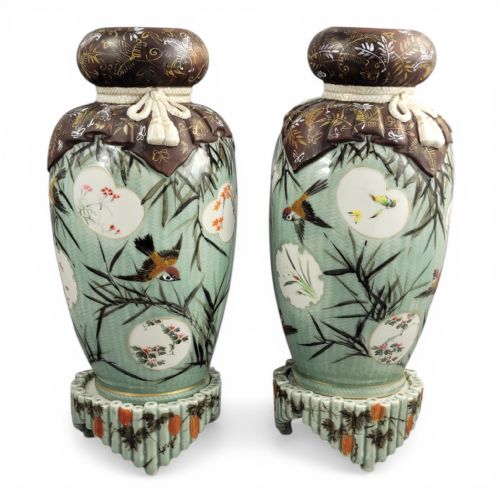


Oriental Porcelain Floor Vase
These large oriental porcelain floor vase pieces bring scale and intricate hand-painted detail to a room, drawing the eye with rich enamels and grand proportions.
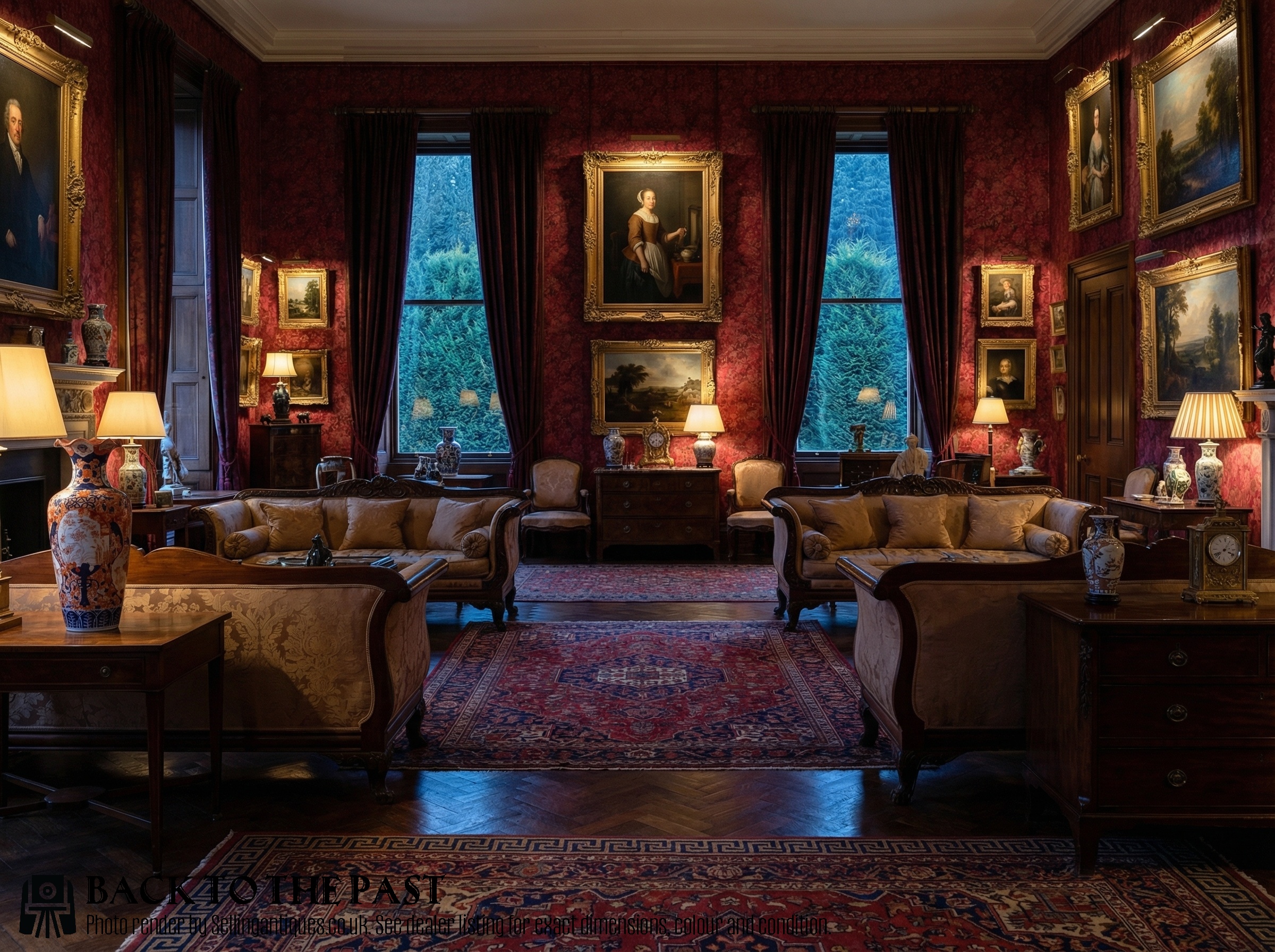
Oriental Porcelain Floor Vase
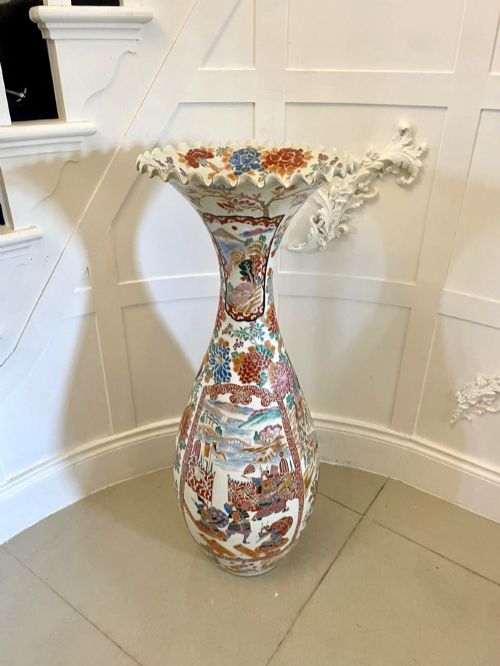
An oriental porcelain floor vase is a substantial decorative vessel designed to stand directly on the ground rather than upon a table or cabinet. These grand objects typically measure several feet in height, requiring dedicated space to display their considerable presence.
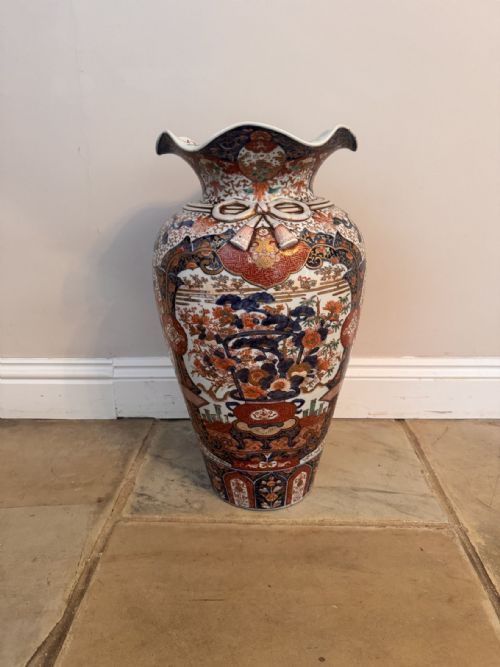
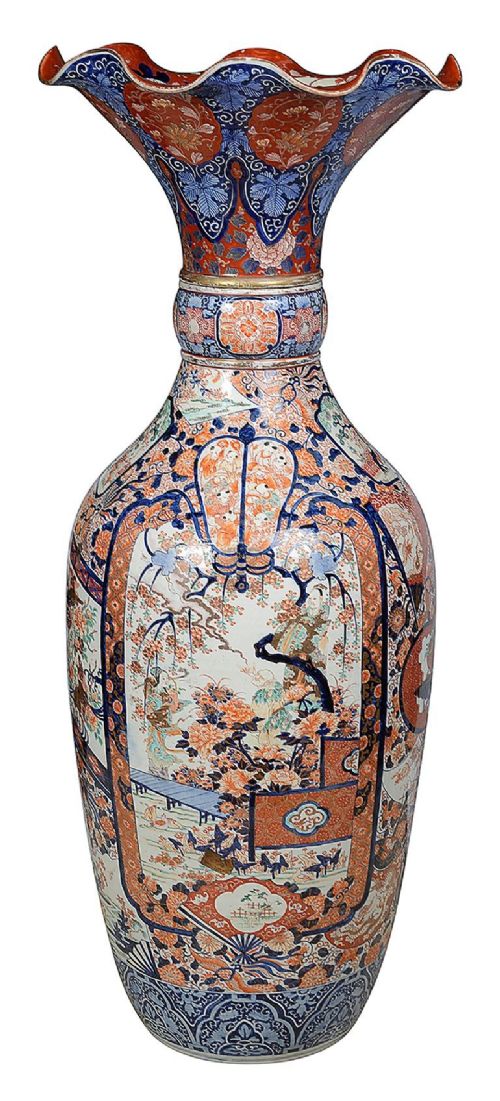
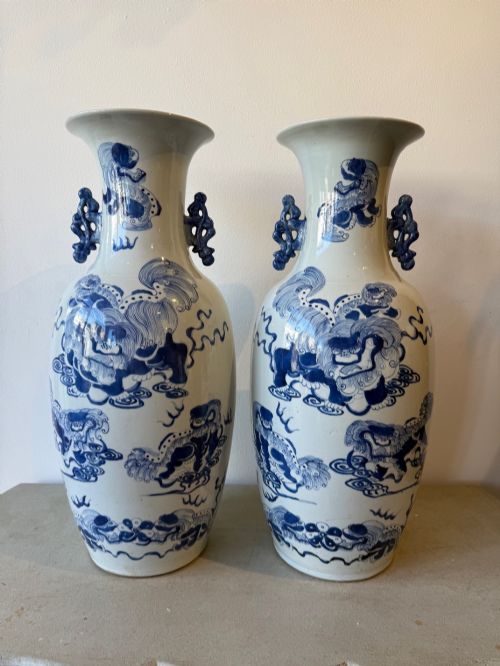
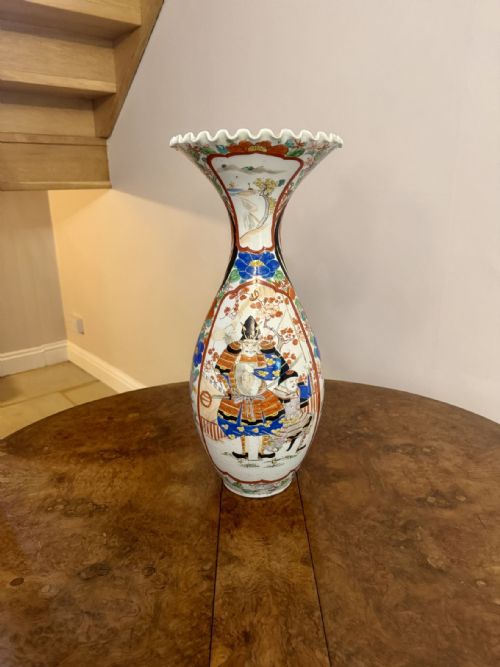
Most examples encountered here originate from the nineteenth century and the early twentieth century, spanning late Qing Dynasty Chinese production and the Japanese Meiji period. Buyers will frequently find traditional styles such as Japanese Imari, Satsuma ware, and Chinese Famille Rose.
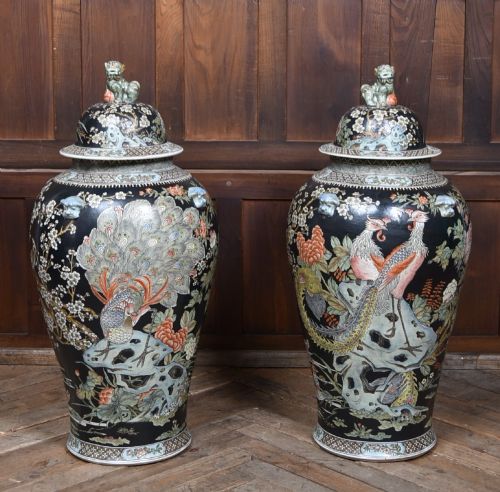
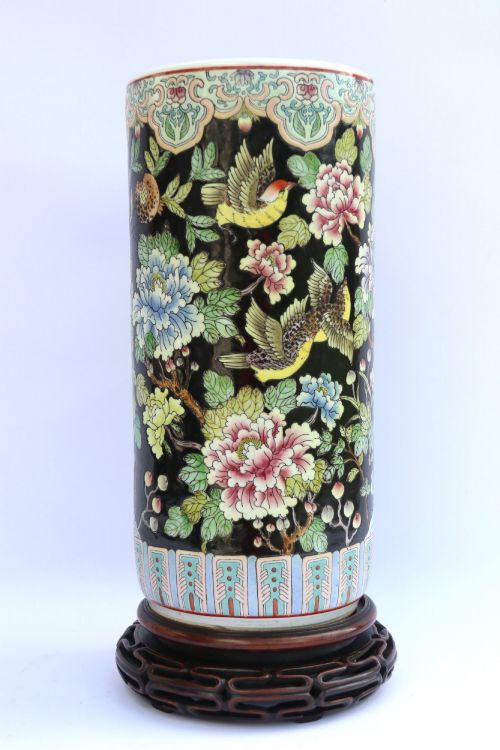
Forms range from straight-sided baluster jars and lidded vessels to broad bulbous bodies and tall palace jars. Many incorporate matching wooden stands or original porcelain bases that elevate the vessel and complete the ensemble.
Materials and construction
Potters shaped dense ceramic and porcelain bodies by hand or on large wheels before applying complex mineral glazes and underglaze blue pigments. Workshops employed specialised kilns capable of firing massive pieces to high temperatures without distortion.
Artisans applied surface decoration using polychrome enamels, gold leaf, and occasionally lacquer panels or geometric inset sections over the fired porcelain body. Skilled painters executed intricate floral, figurative, and narrative scenes across the expansive curved surfaces.
Listings feature porcelain, earthenware, and ceramic bodies decorated with gold leaf, enamel, and glaze across the nineteenth and twentieth centuries.
Defining quality and execution
Quality rests in the precision and density of the hand-painted brushwork across the large ceramic surface. Finer pieces display disciplined detail in complex borders, figures, and foliage without hasty execution or muddled pigment separation.
The weight of the porcelain body and the richness of the applied enamel and gold leaf separate standard decorative vessels from exceptional artistic output. Master workshops utilised purer clay bodies and stable glazes that survived high-temperature firing with minimal surface distortion.
Kato Sanhei·Fukagawa
The Oriental Porcelain Floor Vase Glossary
- Imari
- A traditional Japanese style of porcelain decorated in underglaze blue, iron red, and gold. This palette creates a rich, patterned surface often found on large nineteenth-century export vessels.
- Satsuma
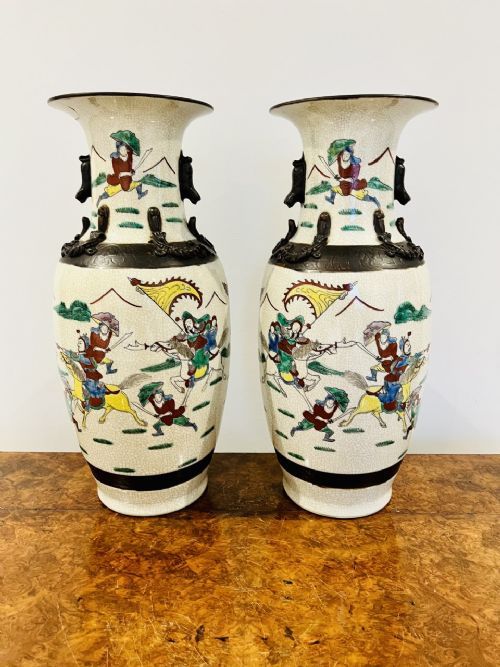
- A type of Japanese earthenware featuring a crackle-glaze finish and intricate polychrome enamel designs. These pieces frequently depict dense figurative scenes highlighted with gold leaf.
- Famille Rose
- A Chinese porcelain palette dominated by opaque pink or rose enamel colours introduced during the Qing Dynasty. Artisans used these tones to render delicate floral and narrative compositions.
- Baluster
- A vertical vase form characterised by a rounded body that tapers towards a narrow neck and flared rim. This shape provides a stable foundation for expansive painted decoration.
- Crackled glaze
- A intentional network of fine decorative fissures within the ceramic glaze layer. This surface treatment adds texture and depth to the appearance of the finished vessel.
Oriental Porcelain Floor Vase: Frequently Asked Questions
How were oriental porcelain floor vases used?
These large vessels served as grand decorative centerpieces in formal nineteenth-century interiors, often placed directly in hallways, grand reception rooms, or beside hearths.
Many functioned purely as ornamental focal points, while lidded versions occasionally stored dried botanicals or fragrant materials within wealthy households.
How do I place a floor vase safely?
Position the vessel in a low-traffic corner or alcove where it remains clear of daily movement and accidental impacts. Because of their significant height and weight, stability is key to preventing knocks.
Utilise any original wooden or porcelain stands provided with the piece to distribute the weight evenly across the floor surface.
How do I tell Imari from Satsuma ware?
Imari pieces consist of hard porcelain decorated with a distinct palette of deep underglaze blue, iron red, and abundant gold leaf. The surface feels smooth and vitreous under light.
Satsuma pieces utilise an earthenware body with a characteristic creamy, finely cracked glaze that forms a matte background for dense enamel and gilt figural painting.
What does Qing Dynasty mean for these vases?
The Qing Dynasty represents the final imperial dynasty of China, spanning from sixteen-fourteen to nineteen-twelve. Vases attributed to this era reflect the stylistic standards of imperial workshops and major export centres.
Pieces from the later decades of this period frequently exhibit the colourful Famille Rose enamels and monumental scales common in nineteenth-century export ware.