



Oriental Porcelain Display Vases
Oriental porcelain display vases bring hand-painted narrative scenes and rich ceramic glazes into a room, offering striking focal points for a mantelpiece or floor.
Oriental Porcelain Display Vases
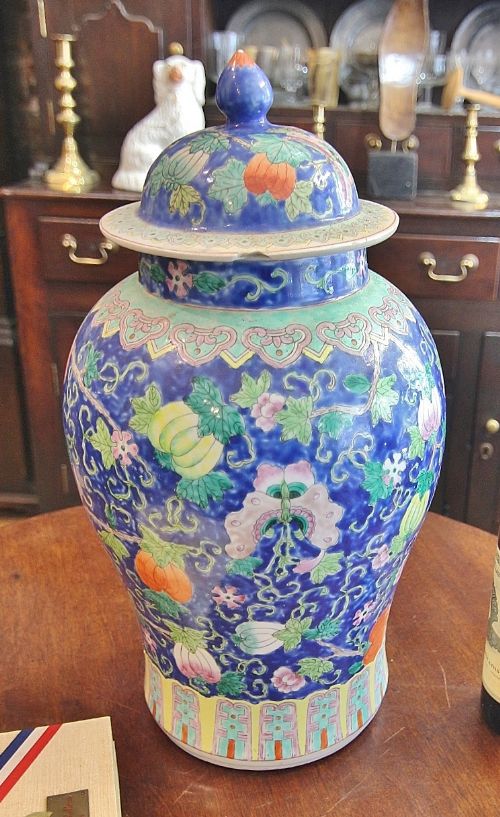
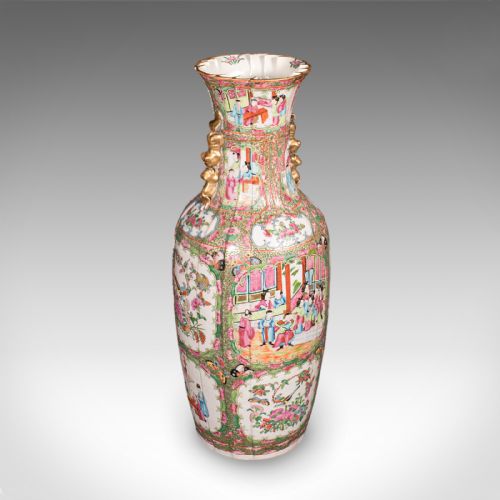
These pieces are decorative ceramic vessels originating from China and Japan, taking forms such as floor vases, ginger jars, moon flasks, and lidded urns designed primarily for interior display. You will most frequently encounter Japanese Imari and Satsuma wares from the nineteenth century alongside Chinese Qing dynasty and twentieth-century porcelain.
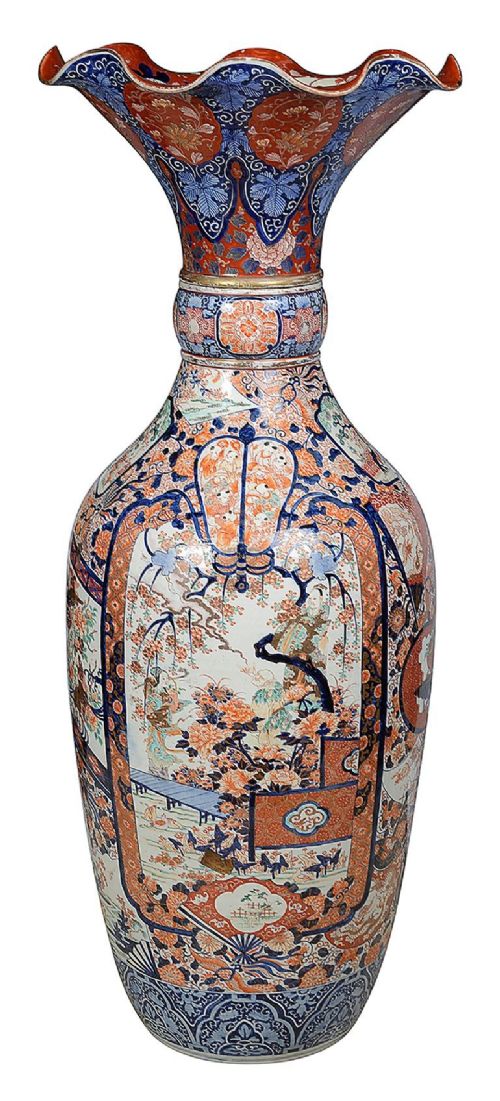
The selection ranges from small miniature vessels to monumental floor-standing pieces standing nearly five feet tall, often accompanied by carved hardwood stands. Many are paired objects, such as matching sets of lidded jars or cylindrical vases intended for symmetrical placement in a room.
How they were made
The makers formed these vessels from ceramic, porcelain, and earthenware bodies, often applying ribbed or moulded surface details before glazing and firing. Artisans then hand-painted intricate designs using enamel, gold leaf, and gilding, sometimes building up raised moriage decoration to give texture to figures and foliage.
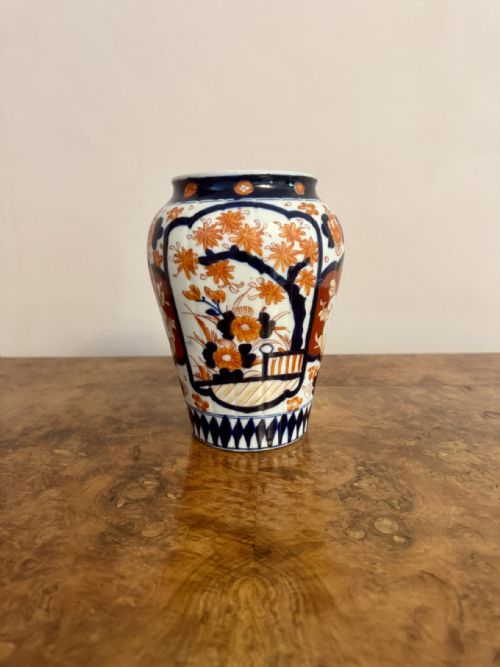
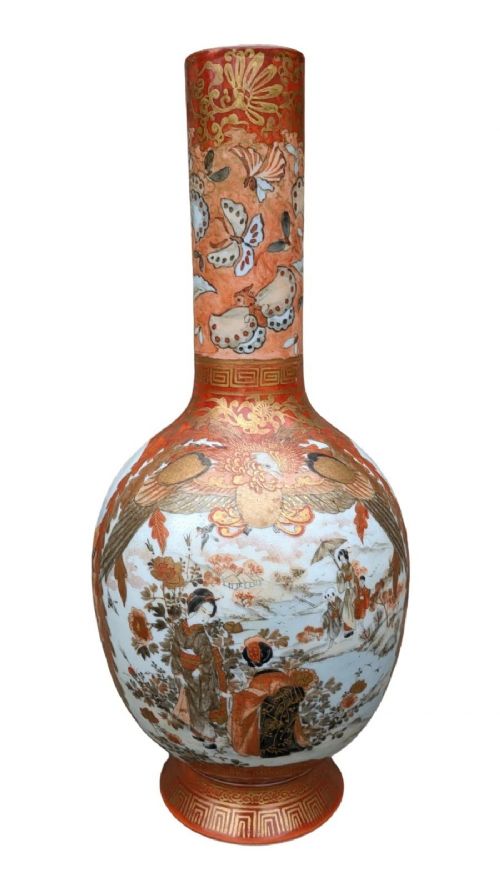
Specialised techniques varied by region, from the iron-red and cobalt blue underglaze and overglaze palette characteristic of Imari to the detailed figural processions and landscapes executed on Satsuma earthenware and porcelain.
Several vessels come complete with dragons wrapped tightly around their necks, keeping a watchful glass eye on your bookshelf.
What varies in quality
Quality rests upon the precision of the hand-painting and the complexity of the design, distinguishing standard commercial output from exhibition pieces created by named workshops and master artisans. The crispness of the enamel application, the richness of the gilding, and the delicacy of figurative detail separate ordinary vessels from superior examples.
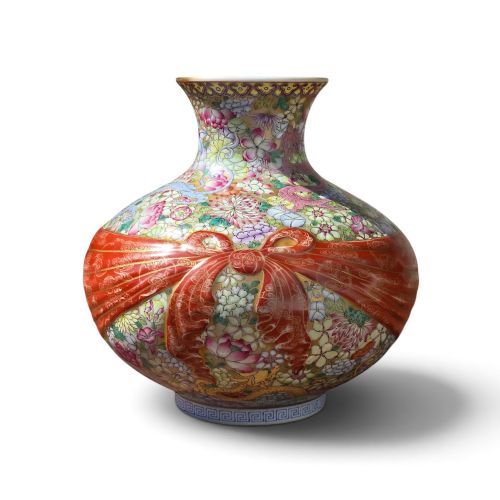
Scale and proportion also define the upper tier, where monumental height or difficult forms such as bamboo-handle shapes and ribbon-wrapped surfaces demand exceptional technical skill from the potter and painter.
The Oriental Porcelain Display Vases Glossary
- Imari
- A style of Japanese porcelain featuring a distinct palette of underglaze blue, iron-red, and gilt highlights. The style originated in the Edo period and was widely exported to Europe.
- Satsuma
- A type of Japanese earthenware or porcelain with a characteristic ivory crackle-glaze. It typically serves as a ground for elaborate hand-painted polychrome and gilt figures.
- Moriage
- A decorative ceramic technique using piped clay to create raised dots, lines, and patterns beneath or over the glaze. This adds a tangible, textured relief to robes, flowers, and borders.
- Moon flask
- A flattened circular ceramic vessel with a narrow neck and small handles, standing on a low base. It derives its shape from ancient leather water flasks.
- Famille rose
- A Chinese ceramic palette dominated by opaque pink or rose enamel introduced during the Qing dynasty. The style includes soft pinks alongside greens, yellows, and blues.
Oriental Porcelain Display Vases: Frequently Asked Questions
How do I style oriental porcelain display vases in a modern room?
Place large floor vases in empty corners or beside fireplaces where their height and painted surfaces can anchor the space without cluttering furniture.
Smaller ginger jars and miniature vessels look effective grouped on side tables or displayed on carved wooden stands to highlight their detailed enamel work.
What is the difference between Imari and Satsuma wares?
Imari wares are typically porcelain decorated in strong blues and iron-reds with gilt accents, offering a crisp and glossy appearance.
Satsuma pieces usually feature an ivory crackle-glaze earthenware or porcelain body densely painted with figures, landscapes, and raised details.
Can I use these vases for fresh flowers?
Most antique display vessels were created as ornamental objects rather than functional containers for water.
Using them for dry branches or silk flowers preserves the interior glaze and protects delicate antique ceramic bodies from moisture damage.
How do I identify the age of a Chinese or Japanese vase?
Dating relies on examining the characteristics of the ceramic body, the palette of the enamels, and any signatures or workshop marks painted on the base.
Stylistic shifts between the Edo, Meiji, and Qing periods provide clear indicators of when a piece was manufactured.