







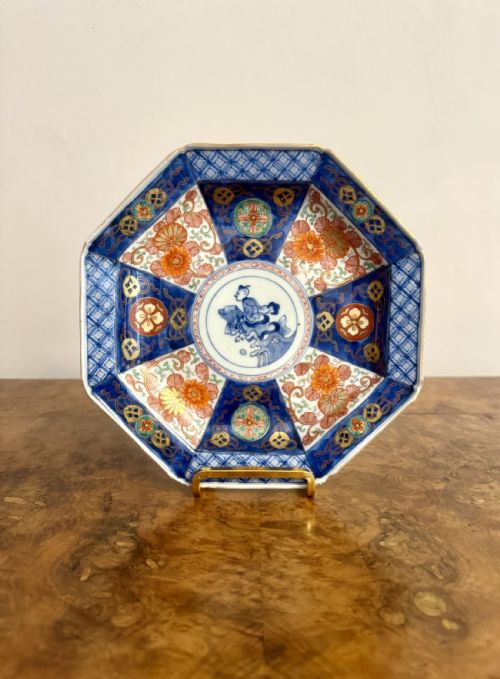
Oriental Porcelain Display Dish
An oriental porcelain display dish brings centuries of rich kiln tradition and painted detail straight to a wall or cabinet.

Oriental Porcelain Display Dish
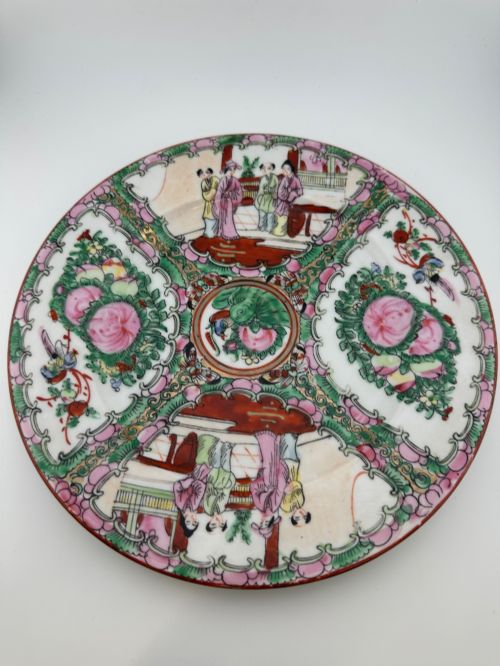
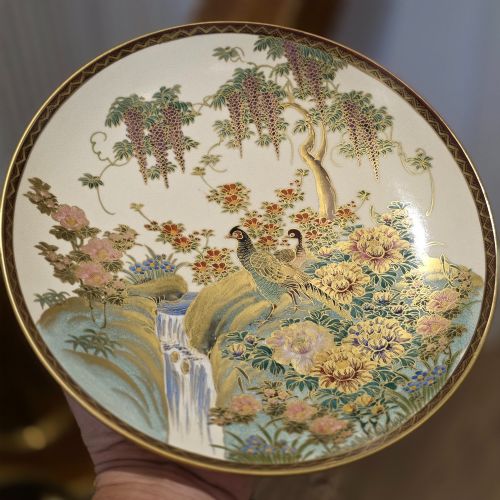
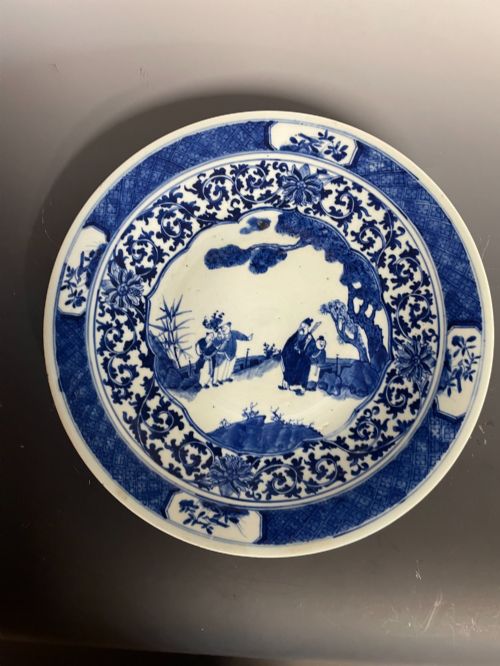
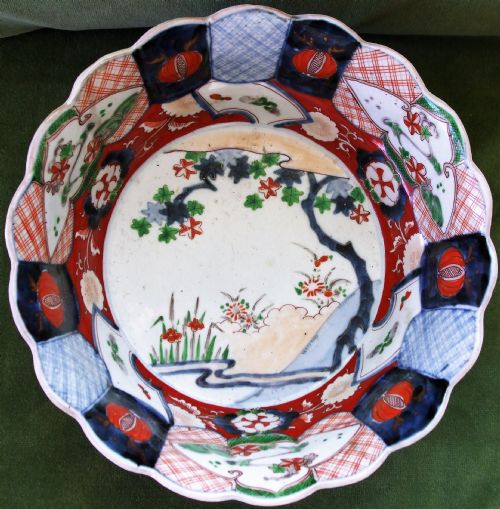
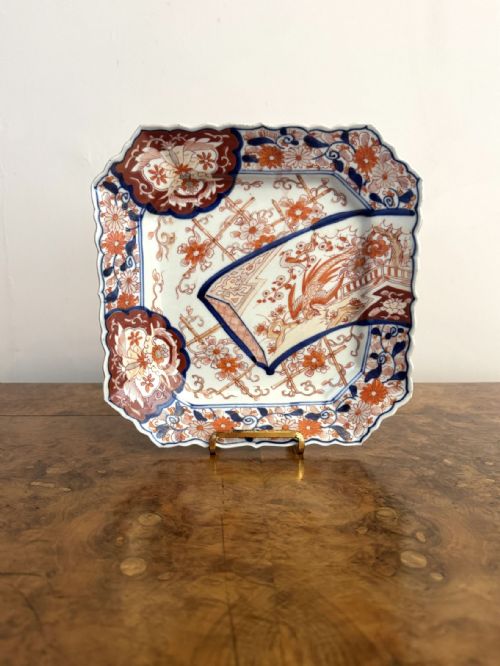
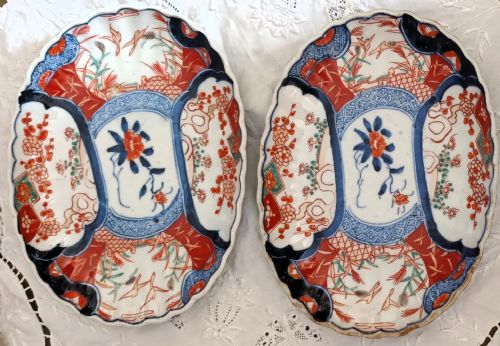
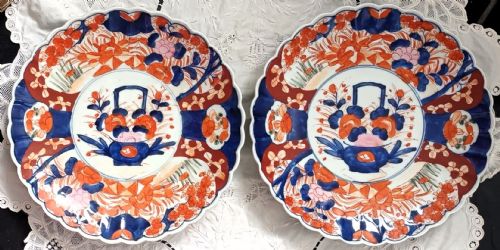
When you search for an oriental porcelain display dish, you encounter a selection spanning the eighteenth, nineteenth, and early twentieth centuries. The pieces on this page lean heavily towards Japanese Imari and Meiji period wares alongside Chinese Qing Dynasty items.
Forms vary from standard decorative plates and deep bowls to large chargers and wall platters. You will frequently find scalloped, hexagonal, and square shapes produced for both export and domestic markets.
Materials and production methods
Potters shaped these objects from fine porcelain and earthenware, applying cobalt underglaze, enamel, and glaze before firing. Artisans then added rich surface decoration utilising gold leaf, gilding, and hand-painted pigments.
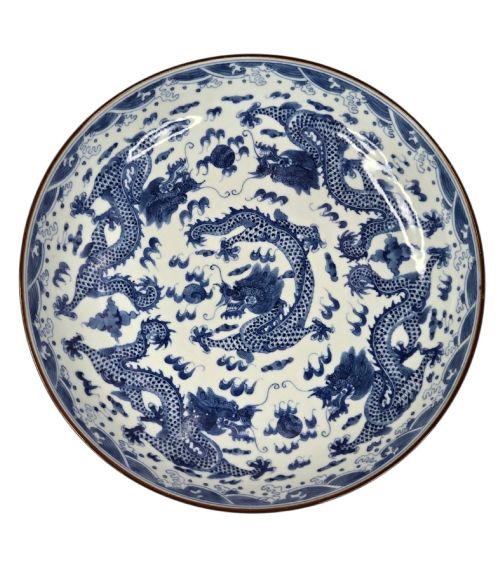
Kiln workers controlled high-temperature firings to vitrify the clay bodies, allowing intricate motifs of birds, florals, and dragons to adhere permanently to the ceramic surface.
Oriental Porcelain Display Dish Retail Price Guide 2026
Typical asking prices for oriental porcelain display dish among the pieces listed under this phrase on Sellingantiques today, from the lower quarter to the upper quarter. They describe what is for sale here now, not the wider market.
The listings span from eighteenth-century Chinese pieces to early twentieth-century Japanese Meiji and Taisho exports, using porcelain, earthenware, and gold leaf.
Assessing quality in historical ceramics
The distinction between standard items and superior pieces rests on the precision of the hand-painting and the complexity of the design. Sharper cobalt blue tones, controlled enamel layering, and intact gilding elevate a piece.
The crispness of moulded edges, such as scalloped or hexagonal rims, and the inclusion of signatures from recognised makers separate ordinary production wares from exceptional examples.
Koshida·Gyokkō·Kozan
The Oriental Porcelain Display Dish Glossary
- Imari
- A style of Japanese porcelain featuring a distinct palette of cobalt blue and iron red, often augmented with gold leaf. This aesthetic originated in Arita and became immensely popular for export.
- Satsuma
- A type of Japanese earthenware characterised by a ivory craquelure glaze and dense polychrome enamel painting. Pieces often depict figures, landscapes, or floral arrangements.
- Charger
- A large decorative plate intended primarily for display on a wall or sideboard rather than for serving food at a table.
- Cobalt Underglaze
- A blue pigment applied to the raw clay body before glazing and firing. This technique protects the pigment beneath a glossy glass layer.
- Qing Dynasty
- The final imperial dynasty of China, lasting from the seventeenth to the early twentieth century. Ceramics from this era encompass diverse monochrome and polychrome styles.
Oriental Porcelain Display Dish: Frequently Asked Questions
How do I hang a heavy charger?
Display chargers require specialist wall hooks or spring-loaded brass hangers designed to distribute weight safely across the rim.
Ensure the mounting hardware fastens securely into wall studs rather than plaster alone to prevent accidental slips.
Can I use these dishes for food?
Historical display pieces often feature surface gilding and enamel pigments that can degrade or contain trace metals. They are best reserved for visual presentation rather than culinary use.
Gentle dry dusting keeps the surface clean without risking abrasion to the delicate hand-painted glaze.
How do I date a piece of Imari?
Examinations of the base, potting weight, and vibrancy of the cobalt blue help distinguish nineteenth-century examples from later twentieth-century reproductions.
Early pieces typically display greater kiln grit on the foot ring and softer hand-mixed pigments.
What is the difference between Satsuma and Imari?
Satsuma wares are earthenware with a characteristic cracked cream glaze and detailed enamel work, whereas Imari wares are hard-paste porcelain marked by blue, red, and gold colour schemes.
Each style employs distinct firing techniques and clay bodies originating from different regions of Japan.