
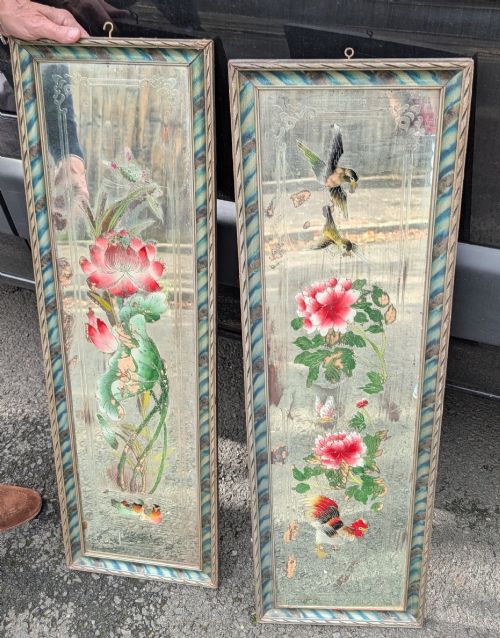
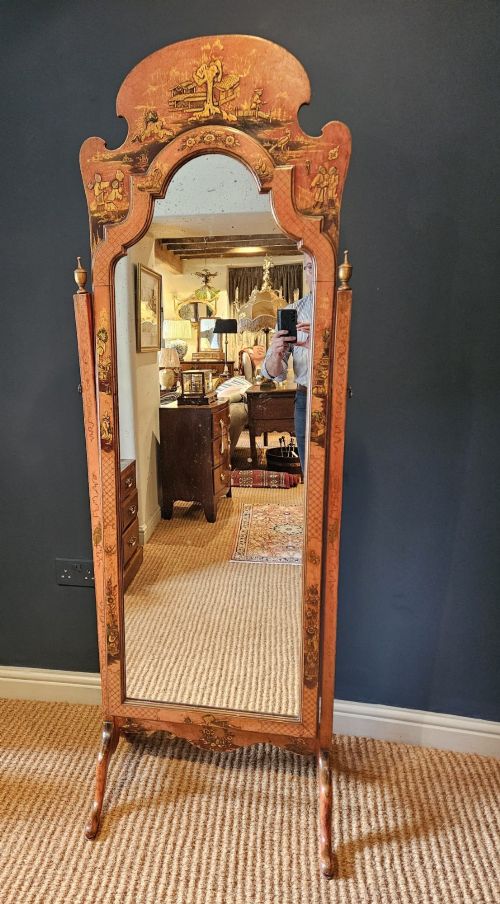
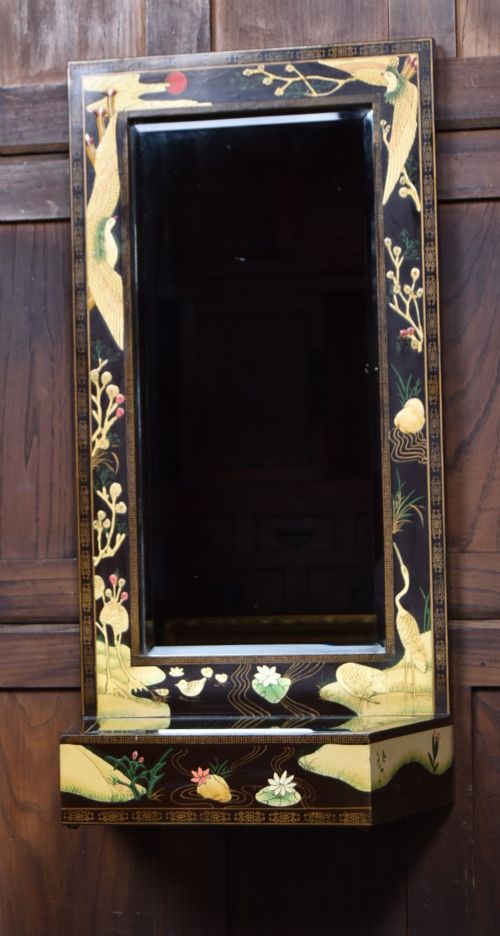
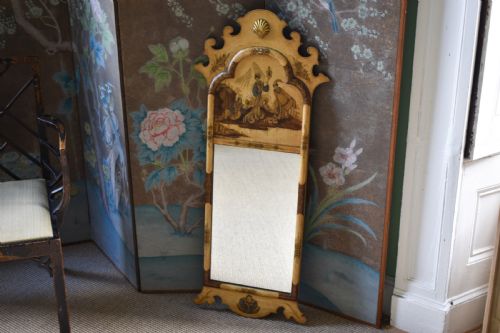


Oriental Painted Mirror
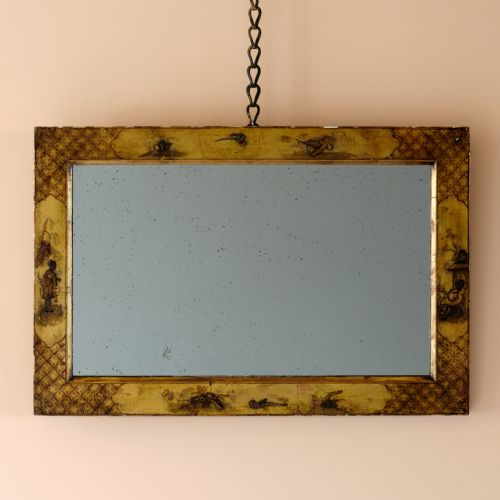
An oriental painted mirror brings rich Chinoiserie ornament and hand-painted detail into a room, offering both depth and colour.
Oriental Painted Mirror
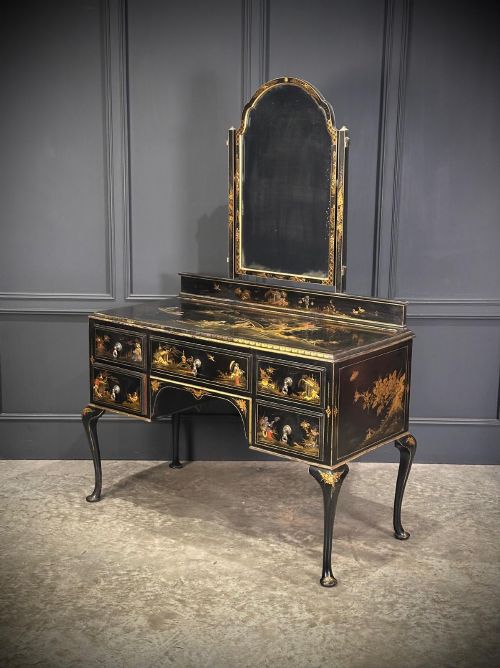
An oriental painted mirror brings together classic Chinoiserie ornament, lacquered wood, and reflective glass to create a striking focal point. When you search for an oriental painted mirror, you will encounter diverse forms ranging from wall mirrors and cheval mirrors to dressing tables and reverse glass paintings.
The pieces on this page span the 18th century, 19th century, and early 20th century, including periods such as the Georgian era, Queen Anne style, and Qing Dynasty Chinoiserie. Wall mirrors and wall hanging mirrors appear most frequently in the selection, often finished in black lacquer, cream paint, or gilt.
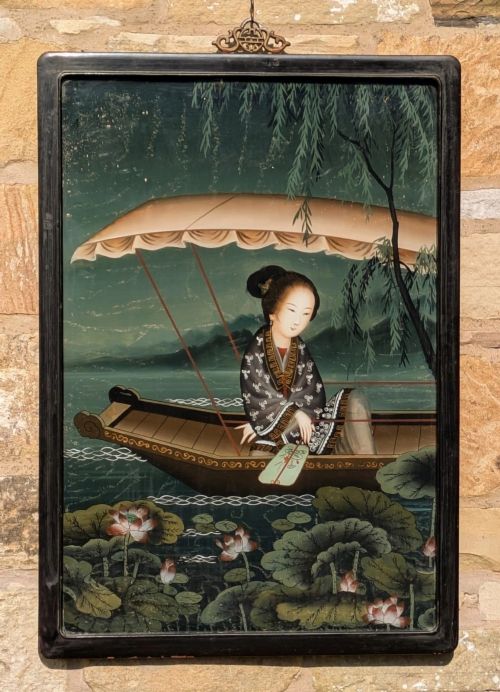
Alongside standard wall mirrors, the selection includes specialised items like Chinese export trade reverse painted mirror-glass pictures and console tables with mirrors. These objects reflect both domestic British taste for Asian aesthetics and direct Chinese export craftsmanship from earlier centuries.
How they were made
The construction of these pieces relies on wood frames prepared for lacquer, paint, and gilding. Craftsmen applied layers of lacquer to wooden bases before detailing them with hand-painted motifs characteristic of Chinese export and Chinoiserie styles.
Glass technology involves both standard mirror glass and specialised reverse glass paintings. Artisans painted directly onto the back of glass panels, creating shimmering pictorial scenes that were then framed in wood or gilt settings.
Object forms include wall hanging mirrors, cheval mirrors, dressing tables, and reverse glass paintings.
What varies in quality
Quality in these mirrors rests upon the depth of the lacquer work and the finesse of the hand-painted decoration. Finer examples display intricate brushwork and rich gilding that hold their visual clarity across the wooden frame.
The condition and age of the mirror glass itself alter the character of the piece. Older mirror glass and hand-painted reverse glass panels show distinct ageing that distinguishes artisan craft from later reproductions.
The Oriental Painted Mirror Glossary
- Chinoiserie
- European interpretation and imitation of Chinese and East Asian artistic traditions, popular in decorative arts and furniture design. This style heavily influences the painted and lacquered frames seen on these mirrors.
- Reverse Glass Painting
- A technique where artists paint an image directly onto the reverse side of a glass sheet so the picture is viewed through the front. This method creates a glossy, luminous finish found in export pieces.
- Cheval Mirror
- A freestanding full-length mirror supported in a frame that allows the glass to tilt. These larger pieces often feature elaborate lacquer and Chinoiserie decoration.
- Lacquer
- A durable clear or coloured varnish applied in multiple coats to wood and polished to a smooth finish. It serves as the primary base for many oriental painted mirror designs.
- Chinese Export
- Goods manufactured in China specifically for export to Western markets during the 18th and 19th centuries. These items blend Eastern techniques with European furniture forms.
Oriental Painted Mirror: Frequently Asked Questions
Where should I hang an oriental painted mirror?
These mirrors suit hallways, living rooms, and bedrooms where their painted frames and reflective glass can catch natural light. They work well above console tables or mantelpieces as a primary focal point.
Because many examples feature delicate lacquer or gilt work, position them away from direct, harsh sunlight to protect the painted surfaces over time.
How do I identify a Georgian Chinoiserie mirror?
Georgian Chinoiserie mirrors typically date from the 18th or early 19th century and feature traditional black or coloured lacquer frames with hand-painted Asian motifs. They often incorporate stylistic elements of the period, such as shaped wooden frames and gilt highlights.
Examining the construction of the wood and the ageing of the mirror glass helps confirm the period authenticity of these pieces.
What is the difference between wall art and a wall mirror?
Wall art in this category includes reverse glass paintings that focus entirely on pictorial scenes, such as dignitaries or traditional landscapes, without reflective mirror glass. Wall mirrors combine decorative painted frames with functional glass for reflection.
Both forms utilise similar artistic techniques and materials from the 19th century and earlier export periods.
How do I care for a lacquered wooden frame?
Dust the painted and lacquered wooden frames gently with a soft, dry cloth to prevent the accumulation of dirt. Avoid using chemical cleaners, polishes, or excess water that could damage the delicate finish.
Maintaining a stable room temperature prevents the wood underneath from expanding and contracting, which helps preserve the lacquer.