
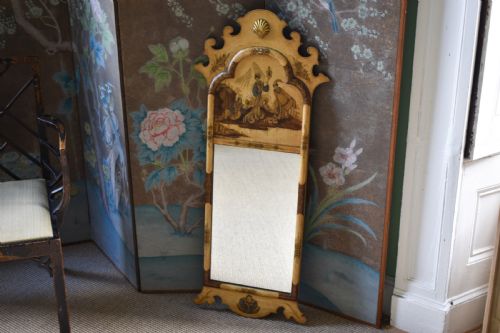
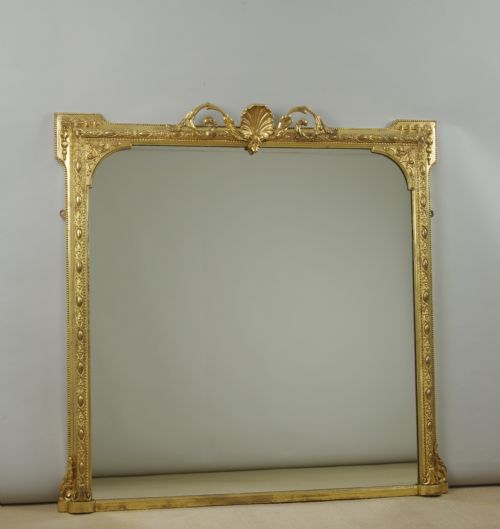


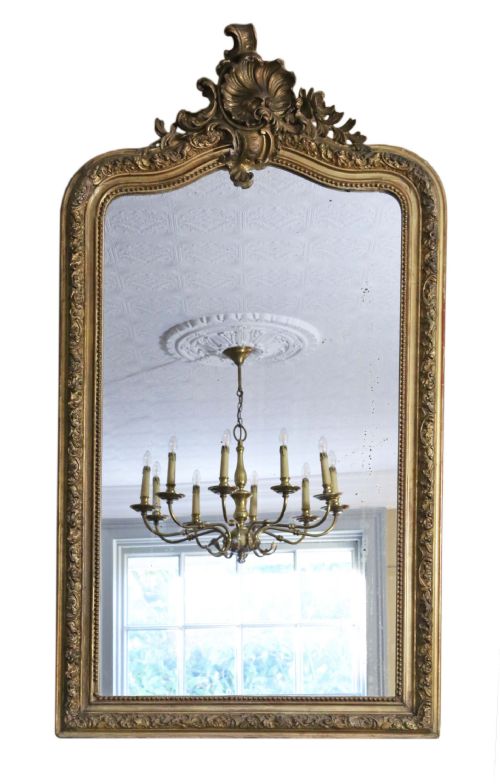


Gilt Shell Crested Mirror
A gilt shell crested mirror brings immediate warmth and classical symmetry to a room through its carved shell motif and gilded surface.
Gilt Shell Crested Mirror
A gilt shell crested mirror is a wall hanging, pier, or overmantel glass defined by its decorative shell cresting at the top. You will most frequently encounter nineteenth-century examples and revival interpretations spanning the Victorian and George I styles.
The form encompasses wall mirrors, pier glasses, and larger overmantel pieces designed to anchor a room. These objects draw on Queen Anne, Georgian, and French Rococo Revival aesthetics, incorporating walnut, paint, and tapestry elements alongside the primary gilding.
Originating in earlier centuries, the enduring popularity of the shell motif ensures that makers across the nineteenth and early twentieth centuries continuously reproduced these stately proportions. Buyers search for these pieces to add focal depth and historic character to interior spaces.
How they were made
Makers constructed the foundational frames using timber such as walnut, applying gesso to prepare the surface for gilding. Skilled artisans laid thin sheets of metal leaf onto the gesso ground to achieve the characteristic reflective golden finish.
Carving brought the signature shell crest and ornamental details to life before the application of paint, parcel gilt, or lacquer. Mirror glass was then fitted into the finished wooden rebate, occasionally accompanied by decorative elements like inset tapestry panels.
What varies in quality
The crispness and depth of the carved shell cresting distinguish finer examples from simpler production. Superior pieces show meticulous hand-tooling in the gesso and woodwork, whereas lesser versions rely on softer, less defined moulding.
The integration of the materials also dictates the standard of the piece, particularly in how cleanly the gilding adheres to the carved contours. Walnut grain selection and the preservation of original mirror glass further separate standard items from the finest examples.
The Gilt Shell Crested Mirror Glossary
- Giltwood
- Wood that has been coated with gold leaf or metal leaf. This surface treatment gives frames their characteristic bright metallic sheen.
- Gesso
- A plaster-like mixture applied to wood frames to create a smooth surface for carving and gilding. It allows artisans to shape sharp decorative details before applying gold leaf.
- Pier mirror
- A tall mirror specifically designed to hang on the wall space between windows. These pieces often coordinate with console tables placed below them.
- Overmantel mirror
- A large horizontal mirror intended to sit directly above a fireplace mantel. They visually expand the room by reflecting light from across the space.
- Trumeau mirror
- A decorative wall mirror incorporating a painted panel or artwork within the upper section of the frame. Originating in French interiors, these pieces combine reflective glass with pictorial decoration.
Gilt Shell Crested Mirror: Frequently Asked Questions
Where should I hang a gilt shell crested mirror?
These mirrors suit placement above a mantelpiece, in an entryway, or on a principal drawing room wall. Their vertical presence draws the eye upward and reflects natural light.
Ensure the wall fixings match the weight of the timber and gesso frame to support the piece securely.
How do I clean a giltwood frame?
Dust the carved surface gently with a soft, dry brush to remove particles without disturbing the delicate gold leaf. Avoid liquid cleaners and chemical sprays.
Moisture can penetrate the gesso and lift the gilding, so dry maintenance is essential for preserving the finish.
What is a pier mirror used for?
A pier mirror was traditionally hung on the narrow wall between two windows to brighten dark corners. Today, they serve a similar decorative purpose in hallways and dining rooms.
Their tall proportions make them ideal for creating an illusion of height in rooms with standard ceilings.
How can I tell an eighteenth-century mirror from a revival piece?
Examine the construction of the timber backing, the composition of the gesso, and the characteristics of the mirror glass. Earlier pieces show distinct hand-working signs and plate glass irregularities.
Revival pieces from the nineteenth and twentieth centuries often feature machine-sawn timber and more uniform glass while mimicking the earlier Queen Anne or Georgian styles.