


Queen Anne Pier Mirror
These queen anne pier mirror examples bring upright vertical presence to a room, combining walnut frames with tall glass plates designed to hang between windows.
Queen Anne Pier Mirror
A queen anne pier mirror serves as a tall, vertical wall glass designed specifically to hang on the narrow wall space between windows. The pieces seen here span genuine 18th century originals alongside later revival interpretations from the Victorian, Edwardian, and early 20th century periods.
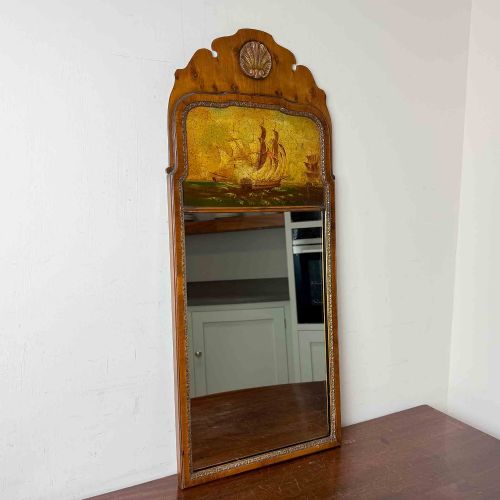
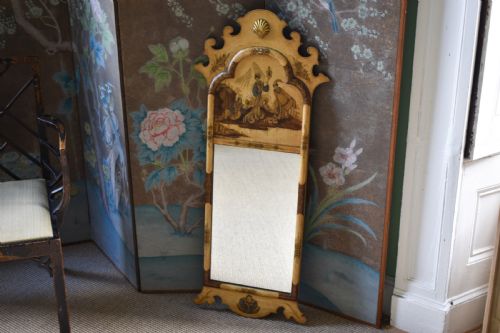
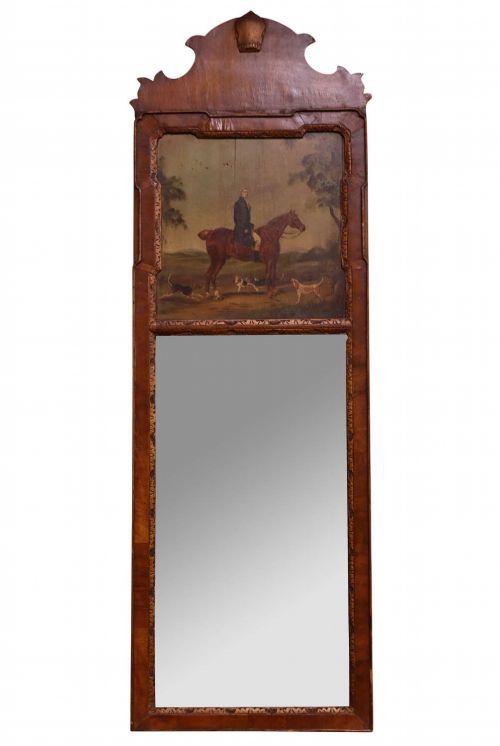
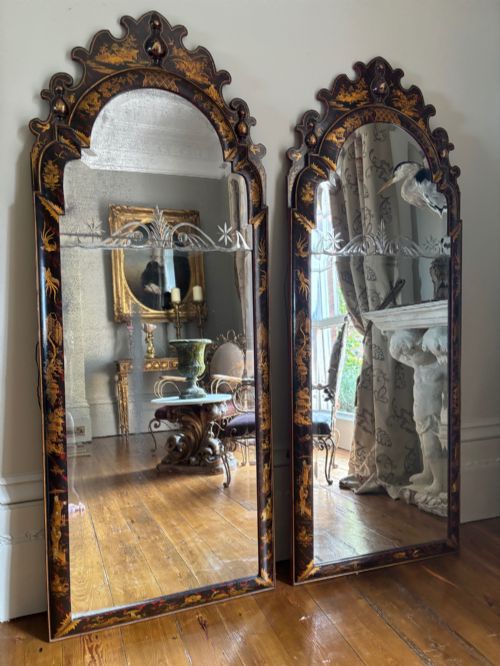
Most examples encountered on this page utilise rich walnut veneers or burr walnut, while others feature painted chinoiserie decoration, parcel gilding, or giltwood frames. Forms range from simple walnut mouldings to elaborate designs incorporating inset oil paintings, maritime scenes, and equestrian panels.
Buyers will find both authentic early pieces from the 1700s and decorative revival works produced in the 19th and early 20th centuries. These mirrors bring height and reflected light to period interiors through traditional craftsmanship.
Materials and technique
Cabinetmakers constructed the foundational carcases using timber such as walnut, yew wood, or gesso, applying finely figured walnut and burr walnut veneers to the visible surfaces. Pier mirrors often integrated hand-painted foliate panels, lacquer work, and delicate giltwood or parcel gilt details.
Glass plates were set within these wooden frames, sometimes accompanied by inset oil paintings depicting equestrian subjects or maritime scenes. The construction methods reflect both the primary 18th century aesthetic and later revival manufacturing techniques utilising paint and gold leaf.
Listings feature walnut, burr walnut, and giltwood materials across pieces dated from the 18th century through the early 20th century.
Judging quality
Quality rests in the depth of the timber figuring, the crispness of the carved or gilded details, and the integrity of the original glass plates. Superior examples display carefully matched burr walnut veneers and harmonious proportions suited to narrow architectural spaces.
The sophistication of the painted chinoiserie decoration and the integration of inset oil paintings also separate standard decorative pieces from finer works. The transition from authentic 18th century execution to revival craftsmanship shows through the handling of materials and surface finishes.
The Queen Anne Pier Mirror Glossary
- Pier glass
- A tall mirror designed to hang on the narrow pier of wall between two windows. It reflects additional light into the centre of a room.
- Chinoiserie
- European imitation and interpretation of Chinese artistic traditions and motifs, frequently featuring lacquered surfaces and painted figures. This style appears extensively on decorated wall mirrors.
- Burr walnut
- A prized timber harvested from walnut tree growths, producing highly figured, swirling grain patterns. It is sliced into thin veneers for cabinetwork.
- Parcel gilt
- Woodwork or gesso partially covered with gold leaf or gilt, leaving sections of the underlying wood or paint exposed. This technique highlights carved mouldings.
- Gesso
- A plaster-like mixture applied to a wooden substrate to provide a smooth surface for gilding and painting. It allows for intricate moulded details.
Queen Anne Pier Mirror: Frequently Asked Questions
Where should I hang a pier mirror?
These tall vertical glasses suit narrow wall spaces, traditionally positioned between two windows to maximise reflected daylight in a reception room.
Ensure the wall construction supports the weight of the timber frame and mirror glass securely at eye level.
How do I identify a true 18th century piece?
Examine the construction methods, backboards, and the characteristics of the mirror plate itself for signs of age. Authentic pieces from the 1700s display period timber joinery and hand-bevelled glass.
Revival pieces from the Victorian and Edwardian eras often utilise later hardware and machine-sawn framing timbers.
What is chinoiserie decoration?
Chinoiserie involves decorative painting and lacquer work inspired by East Asian motifs, popular on revival and period frames. These surfaces display painted figures, landscapes, and foliate patterns against lacquered backgrounds.
Such finishes add colourful narrative elements to the traditional walnut mirror frame.
Are painted panels original to these mirrors?
Many pier mirrors incorporate inset oil paintings depicting maritime scenes, equestrian subjects, or foliate panels above or within the glass. These artworks were integrated to create a combined mirror and painting composition.
Both period originals and later revival interpretations feature these decorative painted additions.