



Oriental Mihrab Rug
An oriental mihrab rug brings centuries of Anatolian, Caucasian, and Persian weaving traditions into a room through distinctive arched prayer designs.
Oriental Mihrab Rug
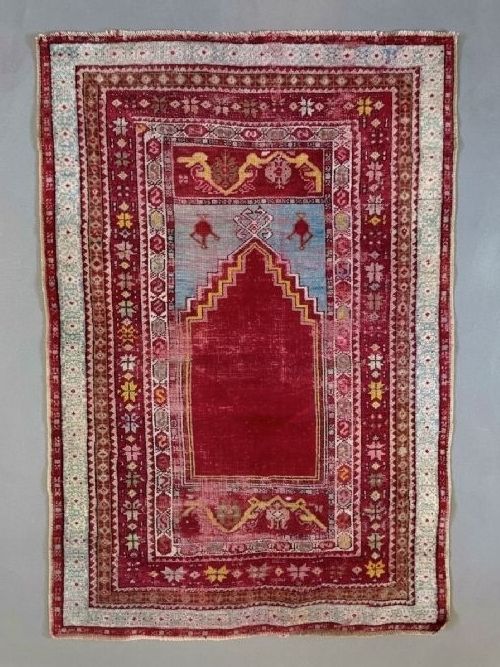
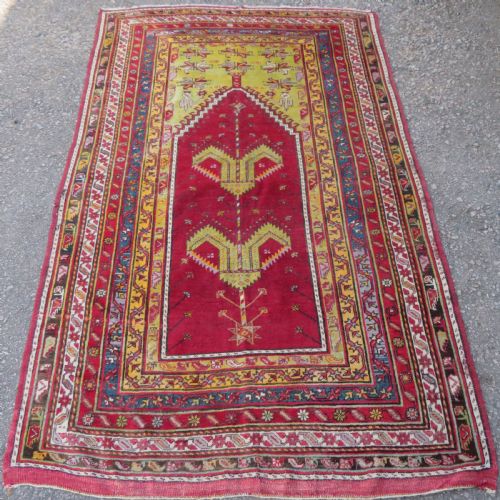
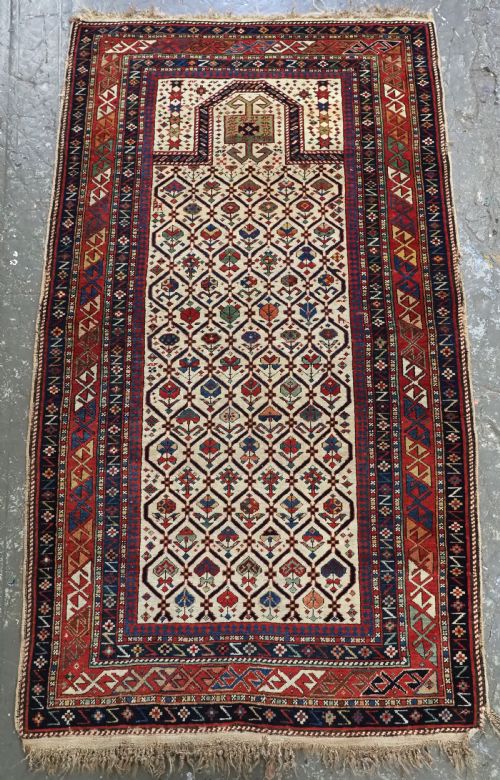
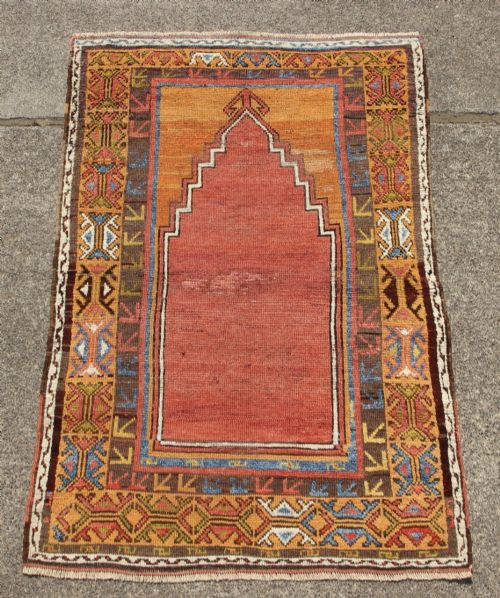
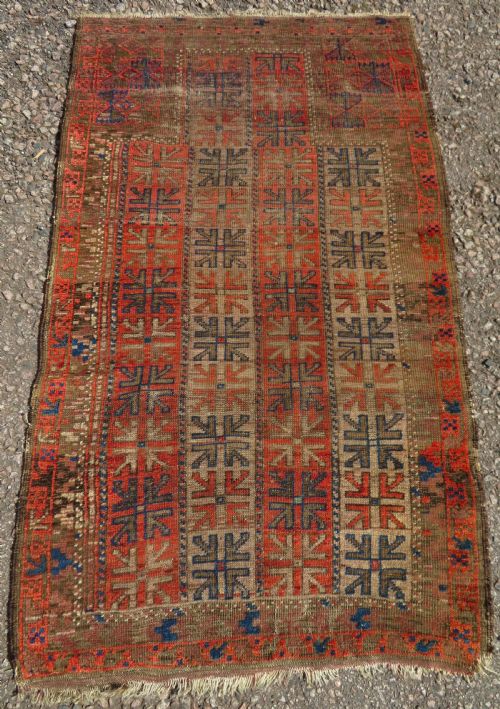
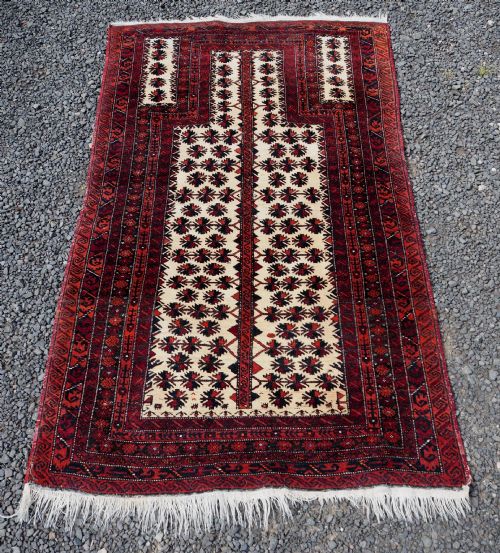
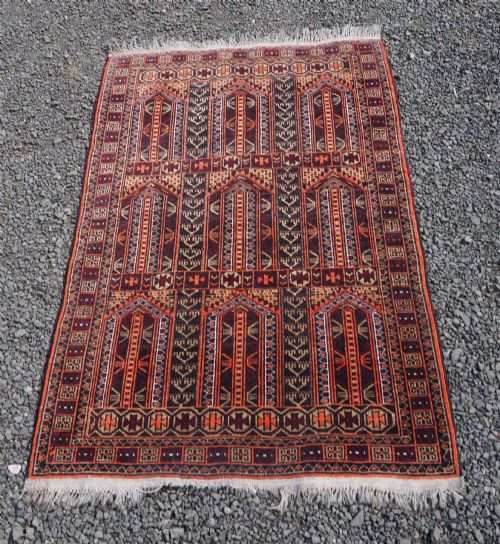
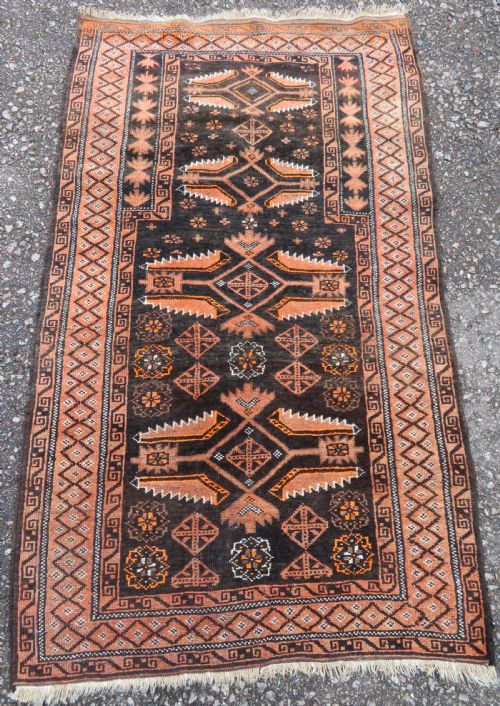
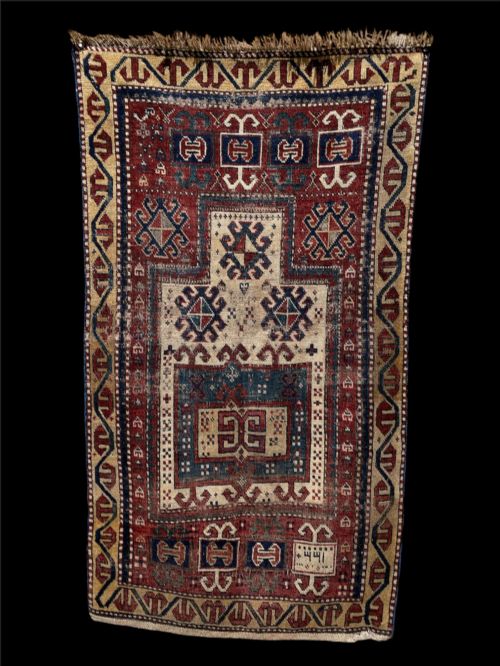
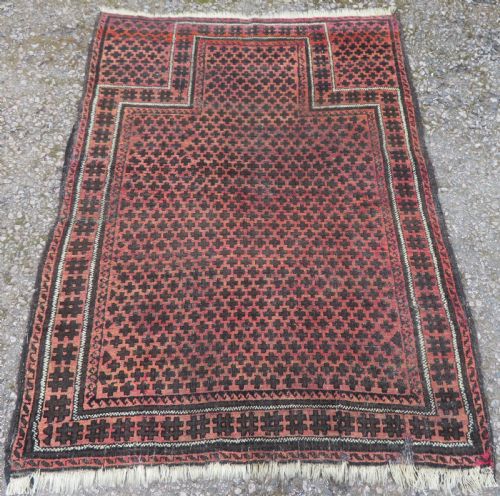
An oriental mihrab rug centres on the distinctive arch motif that represents the prayer niche of a mosque, directing the user toward Mecca. These textiles encompass tribal and village traditions originating from Anatolia, the Caucasus, Persia, and Afghanistan.
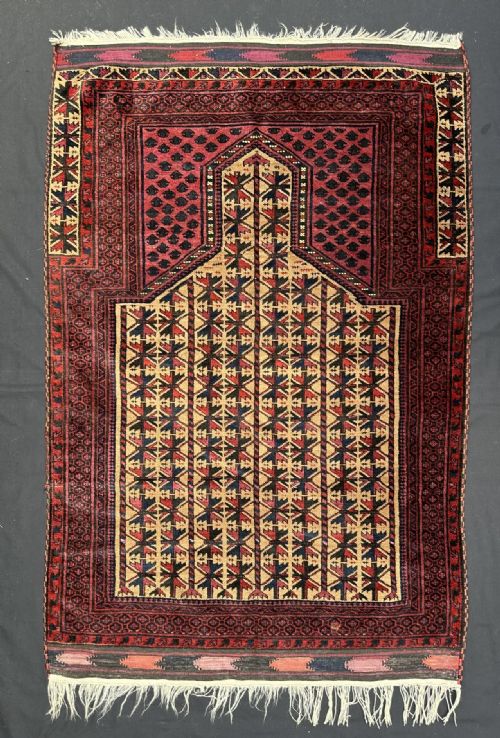
The most frequent examples encountered on this page date from the nineteenth and early twentieth centuries, spanning regions from Kirsehir and Ghiordes to Baluch and Afghan weaving communities. Formats include single arches, double mihraibs, and multi-mihrab prayer rugs created for devotional use.
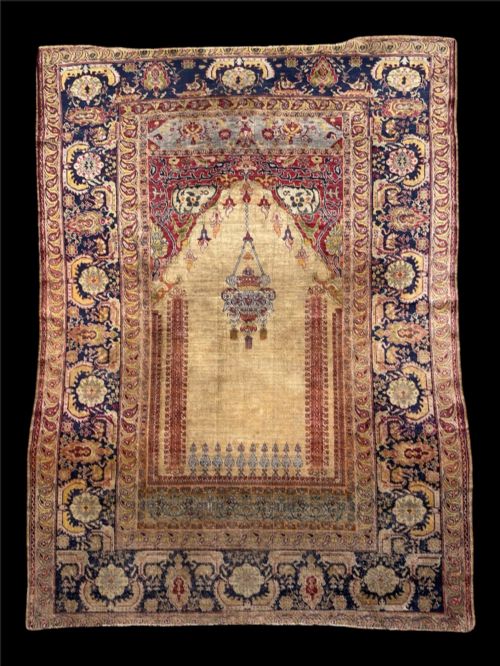
Makers utilised traditional formats ranging from geometric Caucasian lattices to curvilinear floral vases in Kashan and Konya carpets. Each piece reflects the specific regional iconography of its workshop or nomadic tribe.
How they were made
Weavers constructed these textiles using wool, hand-spun wool, cotton, silk, camel wool, and goat hair foundations and piles. Natural dyes provided the deep blue grounds, reds, and earth tones seen across Anatolian and tribal pieces.
Nomadic and village weavers employed hand-knotting techniques alongside flatwoven kilim ends on structures of varying fineness. Silk examples utilised delicate warp and weft threads to achieve intricate Ghiordes and Kashan floral designs.
Listings span periods from the eighteenth century through the 1930s, featuring wool, silk, and camel wool materials.
What varies in quality
Quality rests upon the fineness of the knotting, the stability and saturation of the natural dyes, and the crispness of the mihrab arch drawing. Superior examples maintain structural integrity in the wool or silk pile alongside balanced border proportions.
Regional adherence to classical designs, such as Marasali lattices or Ladik prayer formats, distinguishes master village works from simpler commercial outputs.
The Oriental Mihrab Rug Glossary
- Mihrab
- The arched niche design set into the field of a prayer rug, symbolising the direction of prayer. This architectural motif guides the primary composition of the textile.
- Ghiordes
- A historic Turkish weaving centre and knot type associated with classical Anatolian prayer rugs. Pieces in this tradition often feature prominent floral columns and mihrab arches.
- Kelim
- A flatwoven textile structure often found at the vertical ends of tribal prayer rugs. These woven ends protect the main knotted pile from fraying.
- Dagestan
- A Caucasian region known for geometric prayer rugs featuring crisp lattices and distinctive tribal symbolism. Rugs from this area display structured, rectilinear drawing.
Oriental Mihrab Rug: Frequently Asked Questions
What is a mihrab rug used for?
These rugs served as portable prayer spaces for individuals, directing the user toward Mecca during daily devotions. The arched niche pointed the worshipper's head during prayer.
Today, collectors use these textiles primarily as wall hangings or decorative floor coverings in low-traffic areas to preserve the antique pile.
How do I identify an Anatolian prayer rug?
Anatolian examples typically display regional design characteristics from weaving centres such as Konya, Ladik, Kirsehir, and Ghiordes. They frequently incorporate wool foundations and specific prayer arch geometries.
Examining the knot density, palette of natural dyes, and structure of the kilim ends helps distinguish Turkish village work from Persian or Caucasian pieces.
Are these rugs made of silk or wool?
The listings include both wool and silk pieces, alongside variants using hand-spun wool, camel wool, and goat hair foundations. Nomadic and village pieces lean heavily toward durable wool.
Silk was reserved for finer urban or workshop productions, such as those originating from Kashan or specialised Anatolian looms.
How do I care for an antique prayer rug?
Protect the textile from direct sunlight to prevent natural dye fading, and use a specialised underlay to prevent slipping. Gentle vacuuming without a rotating brush bar keeps dust from settling into the pile.
Professional antique textile cleaning is recommended for washing to protect the delicate hand-spun wool and natural dye foundations.