



Red Afghan Prayer Mat
These handwoven red afghan prayer mat examples bring distinctive tribal character into a room through rich woolwork and regional design motifs.
Red Afghan Prayer Mat
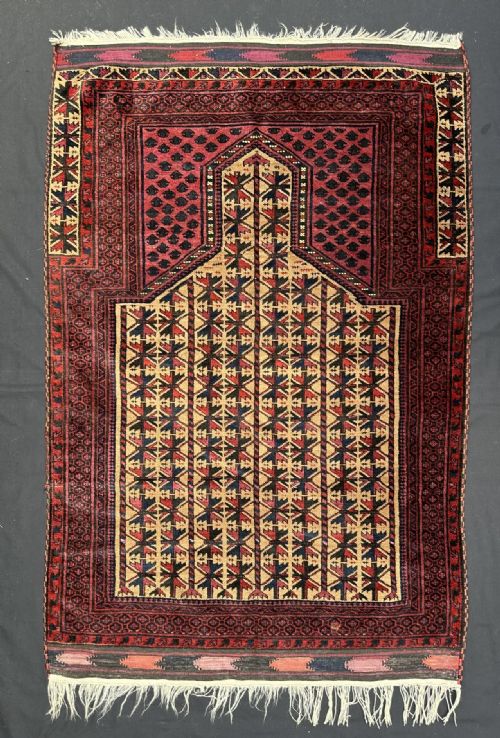
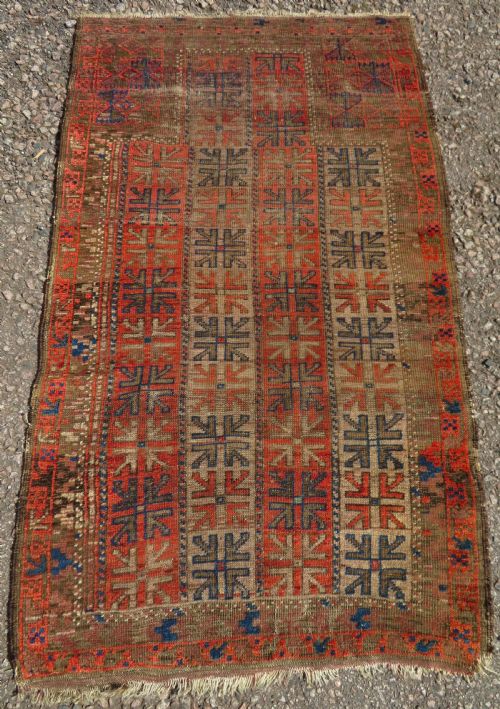
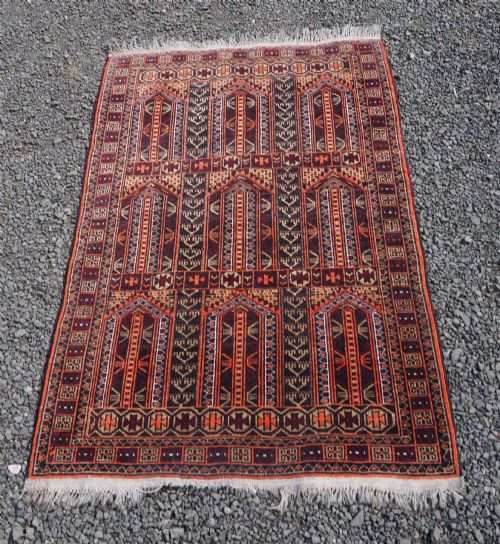
A red afghan prayer mat is a tribal textile created for devotional use, featuring specific architectural niches known as mihrabs. These pieces originate from various regional groups including Baluch, Kizil Ayak, Taimani, and Timuri makers, spanning the late nineteenth and early twentieth centuries.
The format typically centres on a single, double, or triple mihrab design, often accompanied by long kilim ends. Rugs and carpets from this category frequently incorporate traditional motifs such as rams horns, lotus leaves, and stars within village and mosque formats.
How they were made
Weavers constructed these textiles primarily using wool, complemented by cotton foundations and occasional goat hair elements. Natural dyes provided the characteristic red ground colours seen across the tribal formats.
The production relied on traditional hand knotting techniques practised by nomadic and village weavers across the Afghan borderlands and surrounding regions.
Some weavers included inscribed dates and rams horn motifs, adding personal touches to centuries of nomadic tradition.
What varies in quality
The standard of a red afghan prayer mat depends on the crispness of the woven mihrab geometry and the depth of the natural dyes used in the wool. Format rarity and regional design execution distinguish exceptional tribal examples from standard village pieces.
Condition and structural integrity, including the survival of long kilim ends and original selvedges, influence the overall calibre of each textile.
The Red Afghan Prayer Mat Glossary
- Mihrab
- The arched niche in a prayer rug that directs the orientation of worship. This architectural element forms the central focus of the field design.
- Kilim end
- The flatwoven extension at either end of a pile rug, protecting the knots from unraveling. These sections often display geometric stripes or supplementary weave patterns.
- Seh mihrab
- A design featuring three arched niches grouped together within the prayer field. This triple format appears frequently in regional tribal weaving.
- Natural dyes
- Colourants derived from plants, roots, and minerals rather than synthetic compounds. These materials yield the varied tones characteristic of older village textiles.
Red Afghan Prayer Mat: Frequently Asked Questions
What is a mihrab design?
The mihrab represents an arched prayer niche derived from mosque architecture. It serves to orient the user during daily devotions.
On these mats, the niche is rendered in various regional styles, ranging from single arches to complex multiple variants.
How do I care for wool rugs?
Regular gentle vacuuming without a rotating brush helps maintain the wool pile. Professional cleaning is recommended when necessary to protect the natural fibres.
Keeping the textile out of direct, continuous sunlight preserves the natural dye colours over time.
Where were these mats made?
They were woven by tribal and village groups across Afghanistan and adjacent border regions. Communities such as the Baluch, Taimani, and Kizil Ayak produced distinct regional variations.
Each group incorporated characteristic motifs and colour palettes into their devotional textiles.
What are kilim ends?
Kilim ends are the flatwoven sections situated at the top and bottom of the knotted pile. They provide structural stability and prevent the rug from fraying.
Surviving long kilim ends indicate a well preserved textile with minimal loss to the original length.