



Tribal Rug with Mihrab
A tribal rug with mihrab brings centuries of nomadic devotion and geometric mastery directly onto your floor.
Tribal Rug with Mihrab
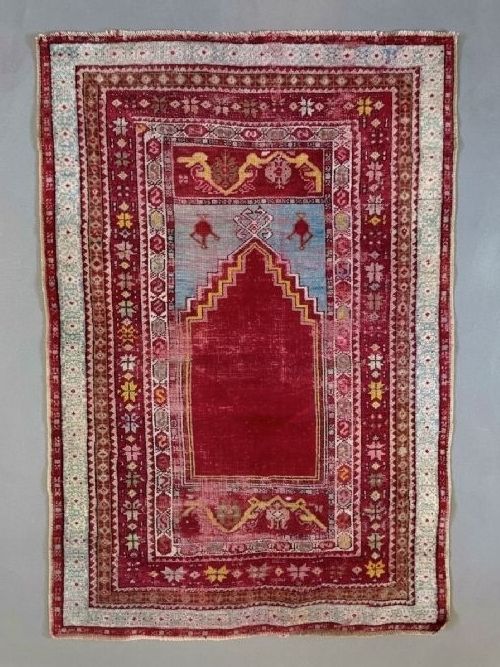
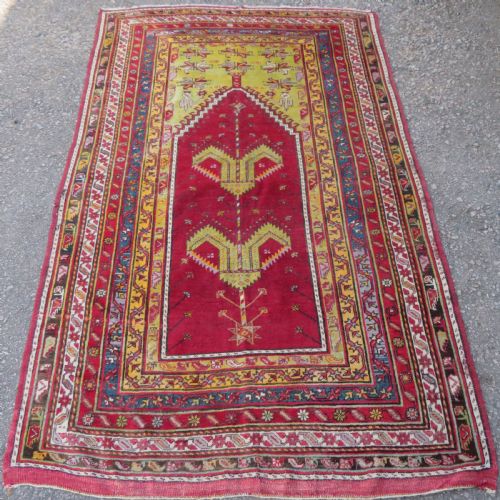
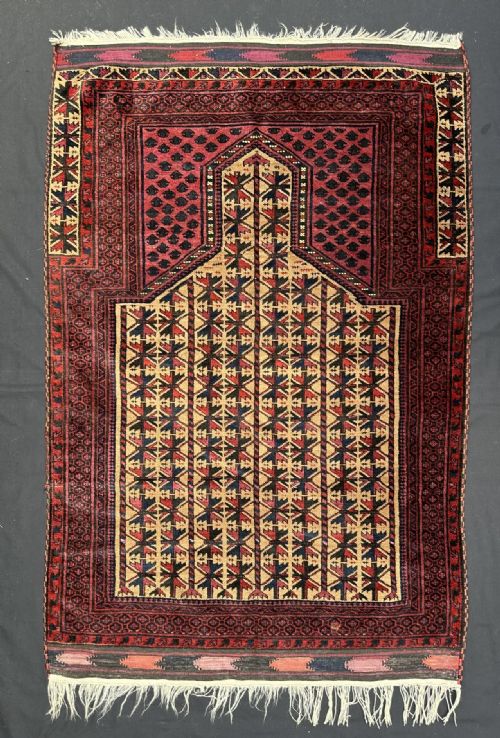
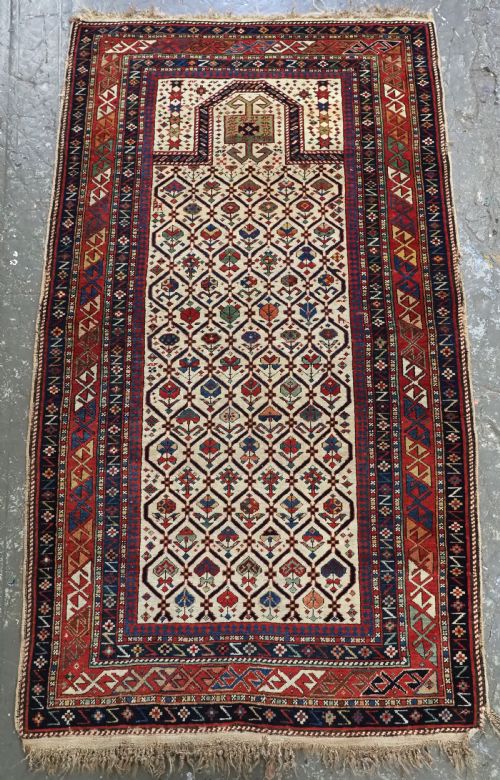
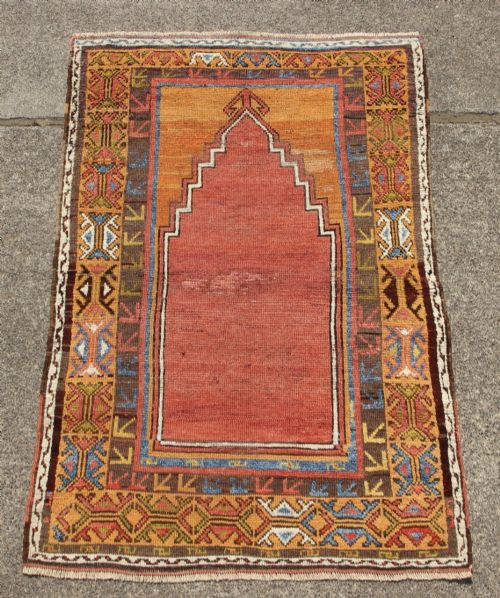
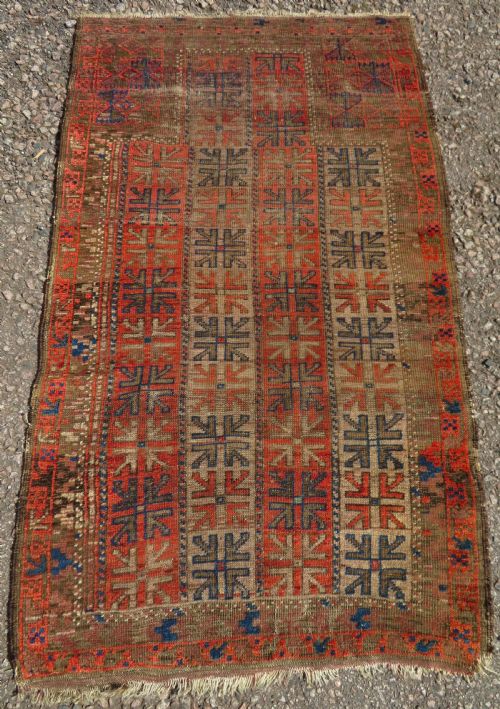
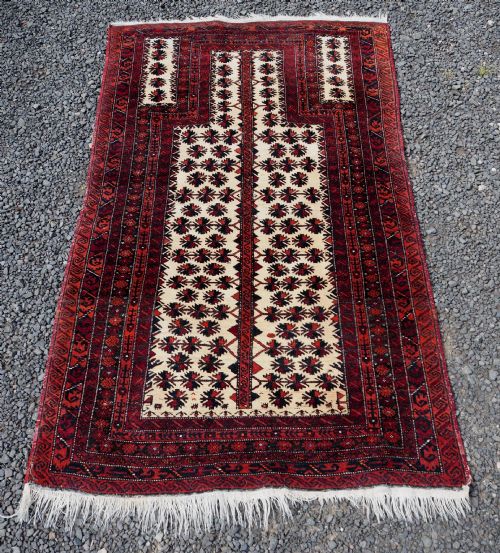
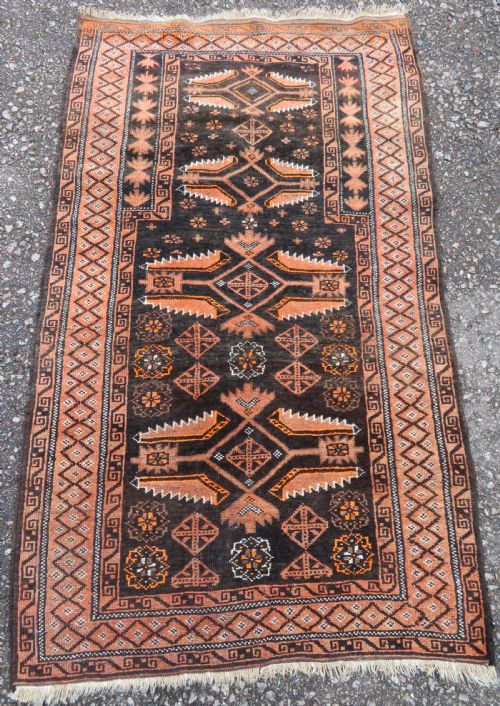
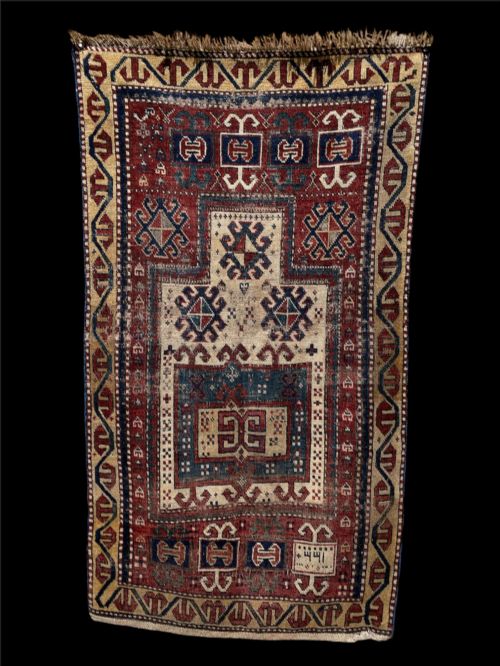
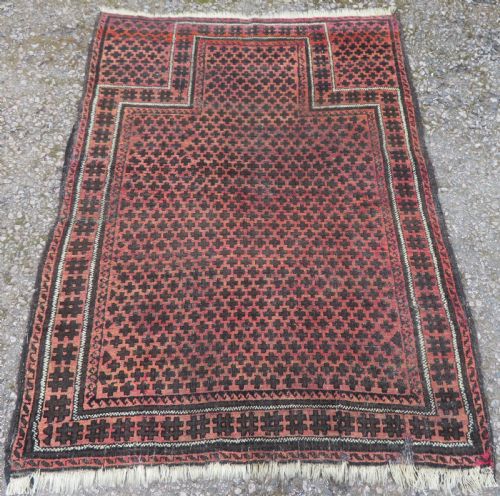
A tribal rug with mihrab centres upon the distinct arched niche designed originally for prayer, drawing the eye toward sacred or symbolic geometry. These woven artefacts span origins from Caucasian workshops to Afghan and Baluch encampments, carrying rich cultural motifs through generations.
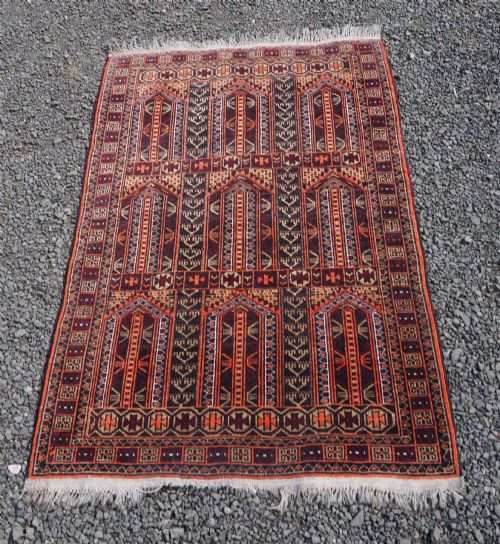
Most examples encountered here originate from the late nineteenth century and the early decades of the twentieth century. Makers structured these rugs around single, double, or triple prayer niches, frequently incorporating ram's horns, floral lattices, and lotus leaf motifs within the field.
Village and nomadic weavers utilised formats ranging from compact area rugs to dedicated prayer rugs and larger carpets. The structural layout relies heavily on traditional designs such as the seh mihrab or the tree of life, grounded in wool and natural colour palettes.
Materials and construction
Weavers constructed these pieces almost exclusively from wool, harnessing the resilience of natural animal fibres to withstand heavy daily use. Artisans incorporated camel hair in specific grounds, lending a distinct tactile warmth and a naturally varied brownish hue to the pile.
Colour palettes derived from natural dyes, producing earthy tones and striking grounds of ivory, blue, and camel. This traditional dyeing chemistry ensures that hues age with a characteristic softness, harmonising the intricate geometric borders and central prayer arches.
Listings span periods from the 1870s through the 1920s, utilising wool, natural dyes, and camel hair across Caucasian, Afghan, and Baluch traditions.
Judging quality in woven prayer rugs
Quality rests in the precision of the knotting and the crispness of the geometric rendering within the mihrab arch. Superior pieces exhibit a confident handling of complex elements like double lanterns or human figures, maintaining symmetry without losing the vital irregularity of hand-spun wool.
The choice of materials and the depth of the natural dye palette heavily influence the stature of a piece. Finer examples display harmonious contrast across ivory or scarce blue grounds, where the interaction of floral lattices and rams horn motifs reveals the weaver's true technical grasp.
The Tribal Rug with Mihrab Glossary
- Mihrab
- The arched niche found on prayer rugs that indicates the direction of prayer. It forms the visual and spiritual focal point of the textile.
- Seh Mihrab
- A design layout featuring three distinct prayer arches grouped within the field. This format appears frequently in traditional Afghan village weavings.
- Boteh
- A traditional teardrop or almond-shaped motif with a curved upper end. It is commonly arranged in rows across Caucasian and village rugs.
- Camel Hair
- Un-dyed fleece gathered from camels, used to create durable golden-brown grounds in nomadic pieces. It offers a softer handle and distinct warmth.
- Tree of Life
- A symbolic vertical motif representing the path from earth to heaven. It is often flanked by floral elements in Baluch and Caucasian formats.
Tribal Rug with Mihrab: Frequently Asked Questions
How do I use a prayer rug at home?
These textiles function wonderfully as small statement floor coverings in low-traffic areas, or they can be mounted securely on a wall as textile art. Their concentrated symbolic geometry draws the eye, making them ideal focal points for studies or hallways.
Because they were built for daily use, wool prayer rugs handle normal foot traffic well. Keep them out of direct, harsh sunlight to protect the natural dyes over time.
What does the mihrab arch represent?
The mihrab is the architectural niche in a mosque wall indicating the direction of Mecca. In nomadic and village rugs, the woven arch serves the same devotional purpose for the weaver on the move.
Mastering this arched form required careful planning on the loom. Weavers often filled the niche with ram's horns, stars, or floral lattices to imbue the prayer space with protective symbolism.
How do I tell Caucasian from Afghan rugs?
Caucasian rugs typically showcase crisper geometric precision, stiffer wool handling, and striking colour grounds such as ivory or saturated blue. They frequently employ structured floral lattices and orderly borders.
Afghan and Baluch tribal pieces tend to feature softer wool handling, camel hair grounds, and earthy palettes. Their designs often incorporate prayer variations like the seh mihrab or distinctive double lanterns.
Are these rugs made from natural materials?
Authentic pieces from these periods rely entirely on sheep's wool for the foundation and pile. Artisans also utilised camel hair for specific un-dyed brown grounds, adding unique texture and natural durability.
All colours stem from natural dye sources rather than modern synthetics. This traditional chemistry allows the wool to age gracefully, developing a subtle patina across decades of exposure.