
Oriental Low Table
An oriental low table brings low-slung proportion and rich timber grain to a room, drawing on traditions from Chinese rosewood opium beds to English Chinoiserie lacquer.
Oriental Low Table
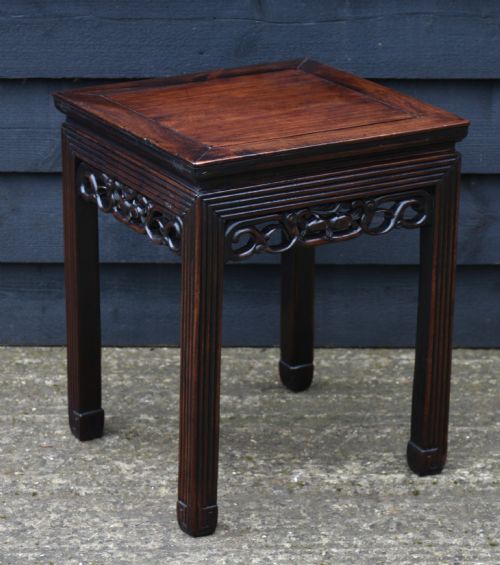
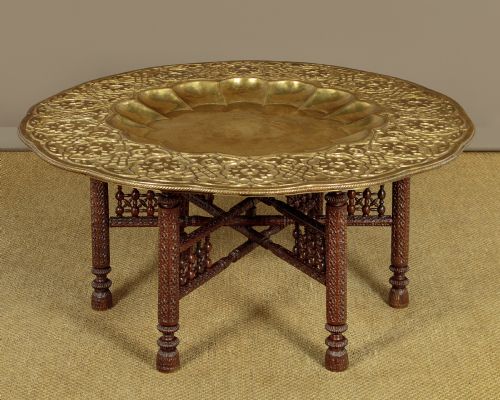
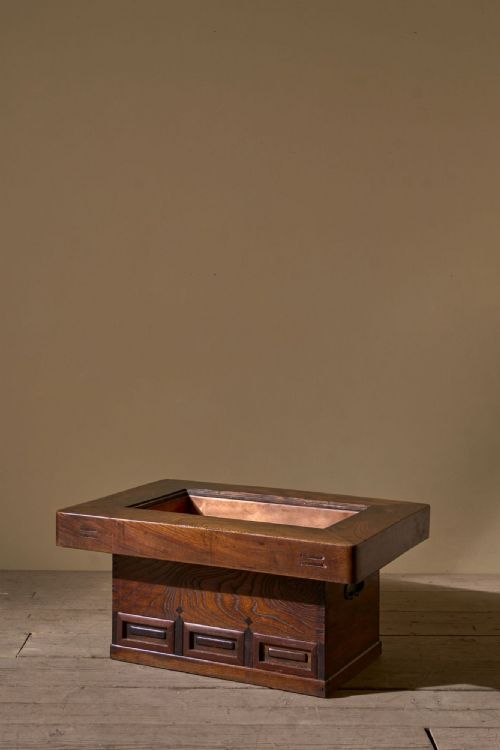
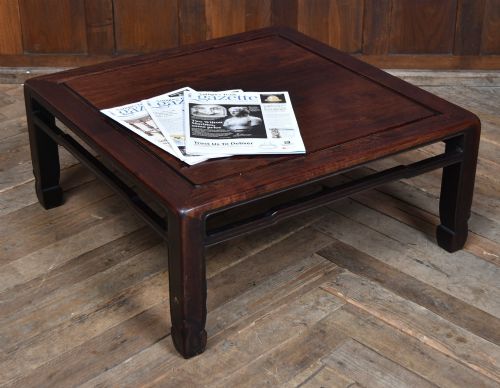
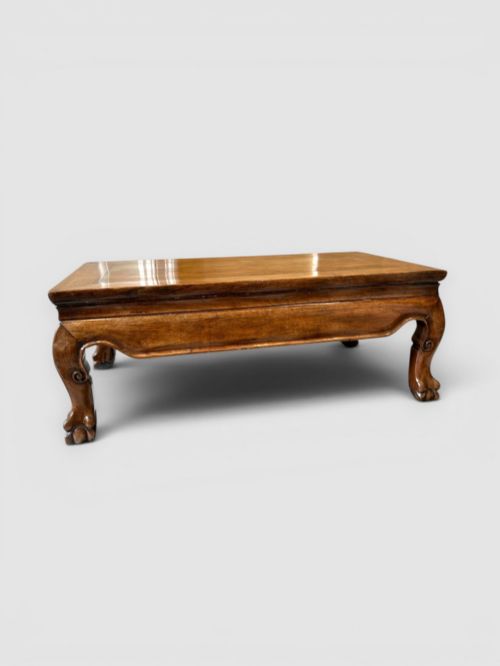
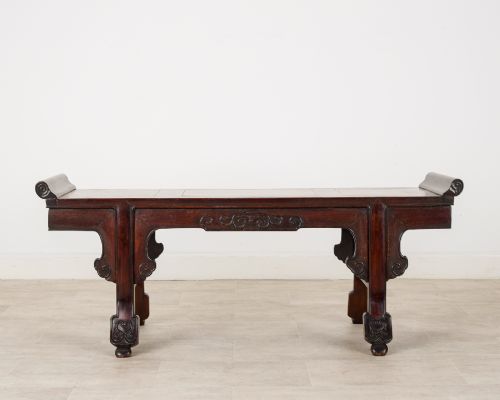
An oriental low table encompasses a variety of low-slung furniture forms, from traditional Chinese rosewood opium tables and elm tea benches to Edwardian Chinoiserie tray tables and Japanese hibachi stands. These pieces are typically designed for low seating or display, sitting near the floor with substantial presence.
The versions most commonly met on this page span the nineteenth century through the early twentieth century, featuring styles influenced by Qing Dynasty carving, Chinese export workshops, and European Chinoiserie taste. Hardwoods and lacquered finishes dominate the selection, appearing as coffee tables, plant stands, and low occasional surfaces.
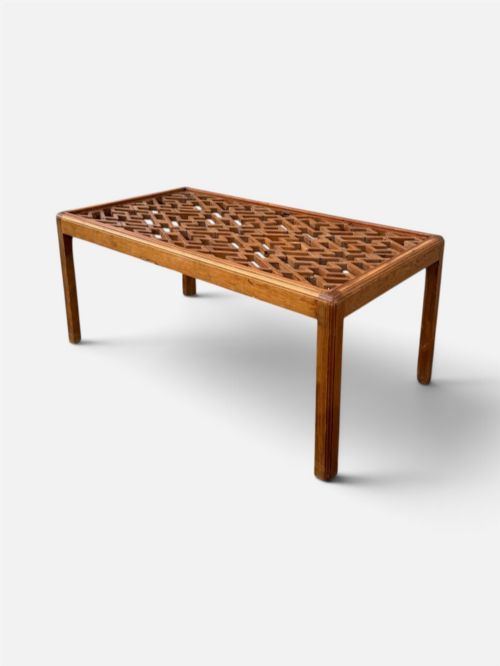
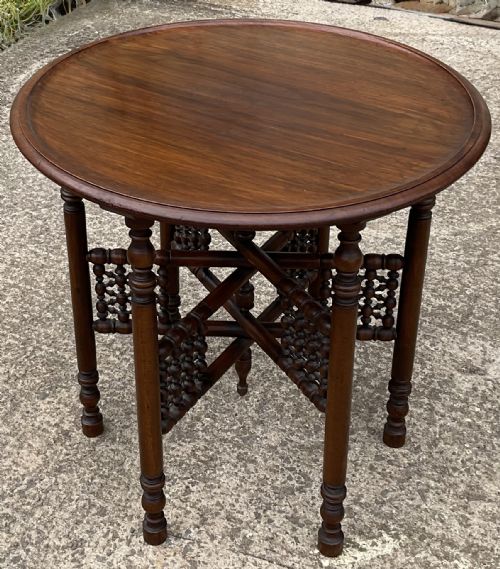
Makers and workshops across Britain, Europe, and Asia produced these low tables to suit changing domestic interiors, incorporating fretwork panels, marble inserts, or brass details. Buyers encounter everything from rustic elm country furniture to finely carved rosewood meant for formal reception rooms.
How they were made
Cabinetmakers utilised dense timbers such as rosewood, padouk, and elm, constructing frames with traditional joinery that accommodated intricate carved decoration and pierced fretwork panels. Heavy hardwoods provided the structural stability needed for low-slung surfaces subjected to daily use.
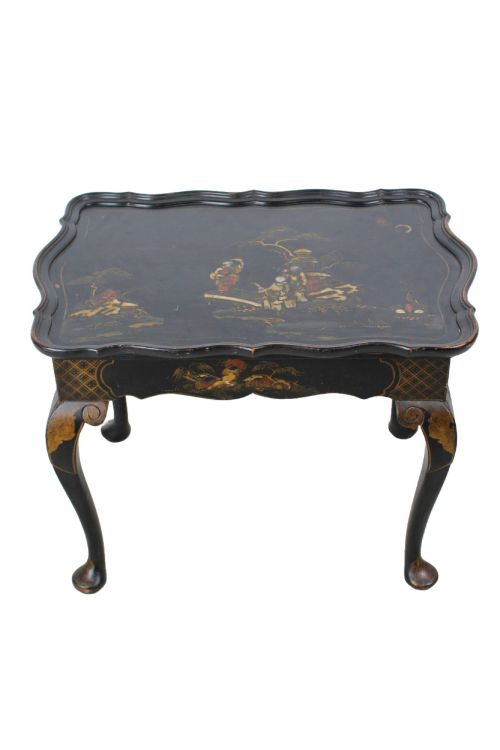
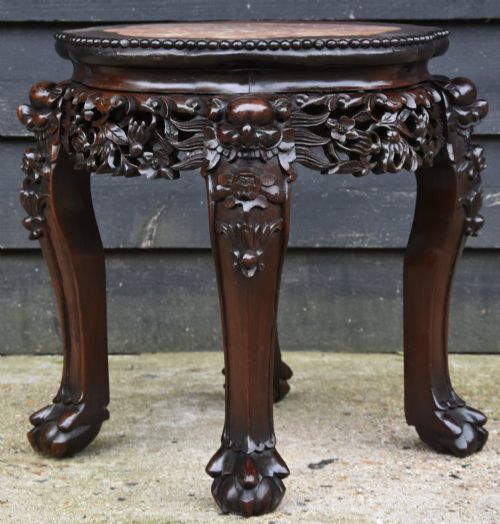
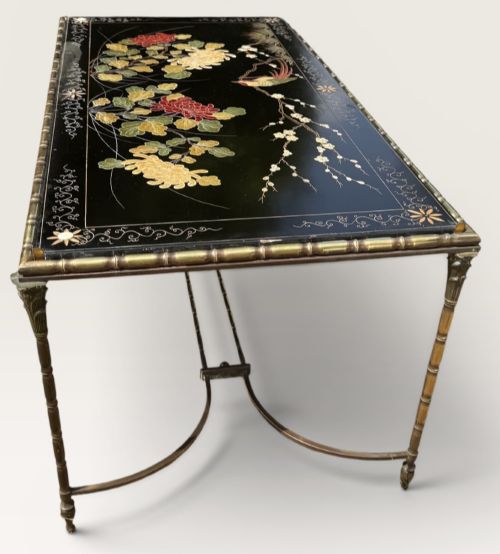
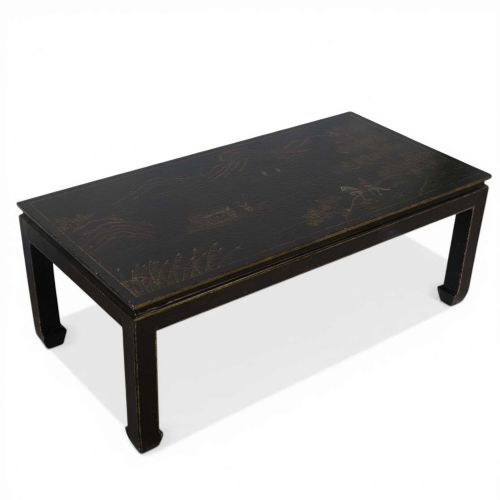
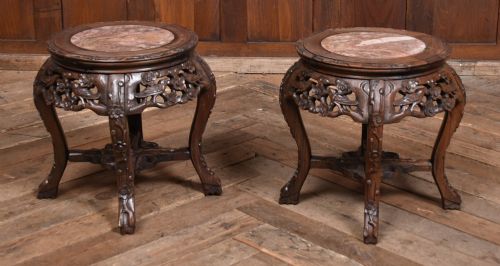
Surfaces often received layers of lacquer, gilt, or painted scenes, particularly in English and European Chinoiserie interpretations dating from the Edwardian era. Inlaid materials such as variegated marble, porcelain panels, and stone added contrasting textures and visual weight to the tops of jardiniere stands and coffee tables.
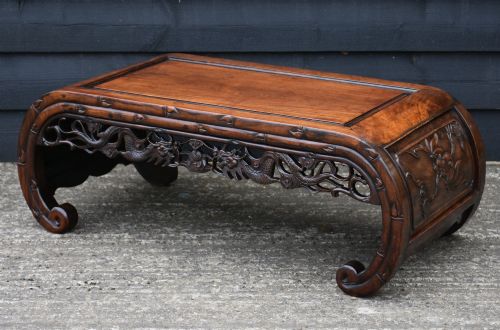
Brass fittings, dragon details, and raised relief work enriched the frames, requiring precise hand-carving skills passed down through regional workshops. Artisans balanced structural utility with decorative motifs drawn from traditional iconography.
Several low tables originally designed for opium smoking or tea ceremonies now hold coffee mugs and TV remotes.
What varies in quality
The quality of an oriental low table rests primarily on the selection and seasoning of the timber, with dense rosewood and well-figured elm sitting at the upper end of the scale. Superior pieces display crisp, deep hand-carving that retains sharp edges along dragon details and fretwork panels, rather than soft or mechanical moulding.
Construction methods also dictate grade, where tight traditional joinery without excessive modern intervention preserves the integrity of the frame. The integration of inset elements, such as fitted marble slabs or porcelain plaques, requires exact masonry and carpentry to sit flush with the surrounding wood.
The finesse of the finish separates standard production from exceptional work, whether through multiple polished coats of clear lacquer on hardwood or meticulously hand-painted scenes on Chinoiserie surfaces. Attention to proportion and the subtlety of carved relief work indicate the skill of the original workshop.
Liberty and Co·Maison Bagues
The Oriental Low Table Glossary
- Opium table
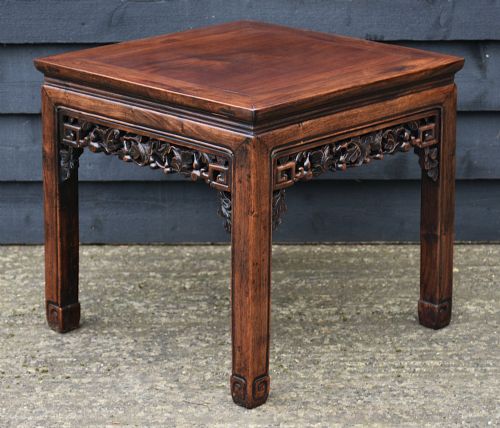
- A low rectangular or square table originating in China, traditionally used for resting items near a low couch or bed. These tables frequently feature recessed legs and subtle carved aprons.
- Chinoiserie
- European decorative style reflecting Chinese artistic influences, popular during the eighteenth, nineteenth, and early twentieth centuries. It often incorporates lacquerwork, gilt motifs, and painted landscape scenes.
- Jardiniere stand
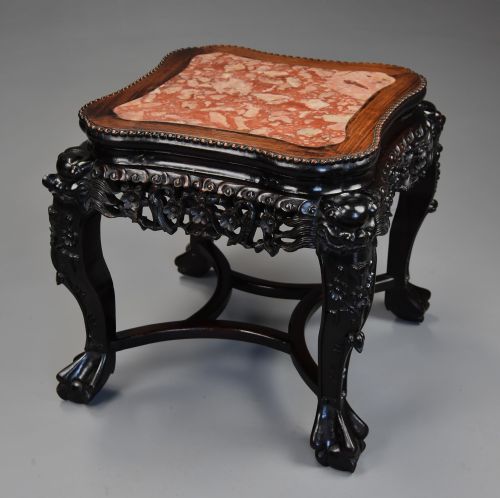
- A tall or low decorative table specifically designed to hold a plant pot or floral arrangement. They frequently feature inset marble tops to protect the wood from moisture.
- Hongmu
- A generic Chinese term applied to dense, heavy hardwoods prized for furniture, including various species of rosewood. The wood is valued for its deep natural colour and ability to take a high polish.
- Fretwork
- Openwork ornamentation carved or pierced in geometric or scrolling patterns across panels and aprons. This technique lightens the visual mass of heavy hardwood frames.
Oriental Low Table: Frequently Asked Questions
What is an oriental low table used for today?
These low-slung pieces function naturally as coffee tables in contemporary sitting rooms, providing a sturdy surface for books and everyday objects while keeping sightlines open across a space. Smaller variations serve effectively as bedside tables, plant stands, or display surfaces for ceramics.
The modest height allows them to anchor seating areas without dominating the room visually, bringing historic timber texture and carved detail into modern interiors.
How do I distinguish Chinese rosewood from elm?
Chinese rosewood, often referred to as hongmu, is exceptionally heavy and dense with a dark, rich grain that polishes to a smooth finish. It typically accommodates crisp, intricate carving without splintering.
Elm, by contrast, is a native timber with a pronounced, sweeping grain pattern and a lighter, more rustic appearance. Elm tables frequently lean towards country furniture styles with simpler lines and warm, honeyed tones.
What is an Edwardian Chinoiserie table?
An Edwardian Chinoiserie table is a British-made piece from the early twentieth century that reflects a revival of interest in Asian design motifs. These tables usually feature lacquered surfaces painted with decorative oriental scenes, figures, or landscapes, often in gilt and black.
They combine European furniture forms, such as tray-top coffee tables or occasional stands, with whimsical painted ornamentation inspired by trade imports.
Why do some tables have marble inset tops?
Marble inset tops were utilised on pot stands, jardiniere tables, and certain low tables to provide a durable, water-resistant surface. Placing damp plant pots or hot teacups on the stone protected the surrounding hardwood frame from staining and warping.
These variegated marble slabs also introduced a contrasting colour and cool texture to the carved timber design.