
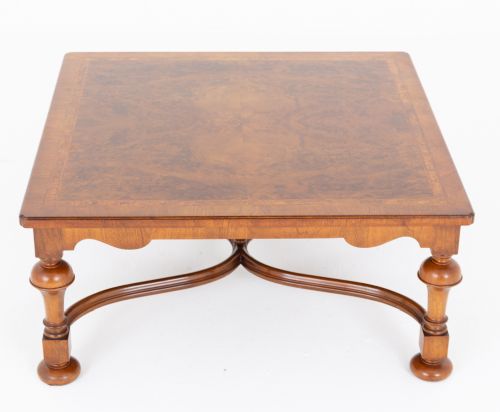
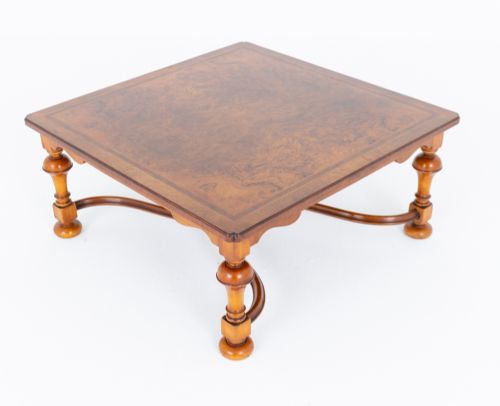
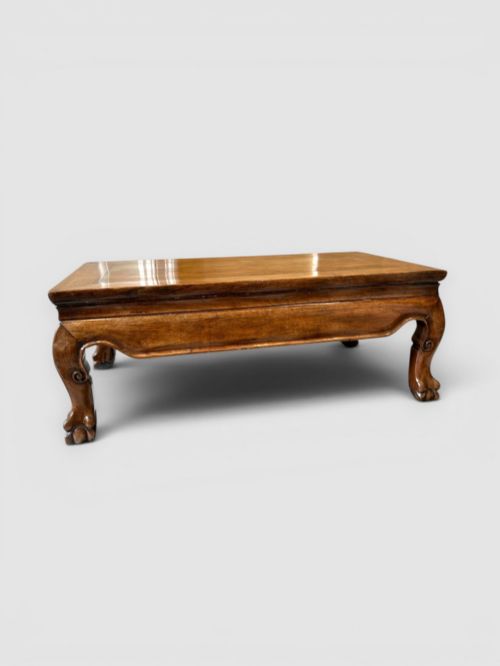


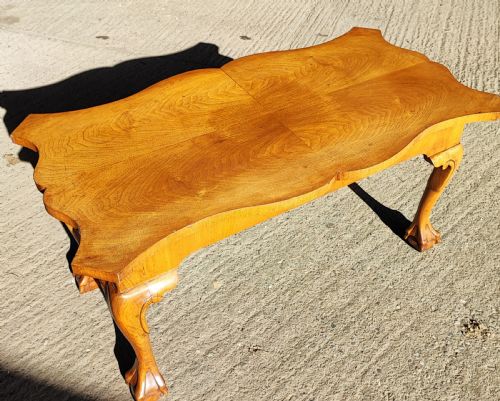


Curved Leg Low Table
A curved leg low table brings warmth and low-slung utility to a room, drawing the eye down through walnut, oak, and elm.
Curved Leg Low Table
When you search for a curved leg low table, you encounter coffee tables, occasional tables, and stools spanning from the nineteenth century into the middle of the twentieth century. These low forms serve sitting areas with surface space close to the floor, drawing from diverse traditions and revival styles.
You are most likely to meet coffee tables executed in walnut, burr walnut, and oak, alongside traditional Chinese opium tables and Kang tables. The periods represented stretch from the eighteen-eighties through the nineteen-forties, offering both British revival designs and oriental forms.
The assortment includes Carolean style walnut pieces, Art Deco blonde oak examples, and Liberty style stools, showing how makers adapted curved supports to low furniture over several decades. Each piece relies on timber and iron to create a stable, low profile.
How they were made
Carpenters utilised solid timber and veneers, shaping walnut, burr walnut, oak, elm, and general hardwood into low frames. Walnut veneer added decorative grain patterns across table tops, whilst solid oak and elm provided sturdy structural support.
Wrought iron appears alongside timber in the construction of these low tables, providing alternative material contrast for supports and framing. Woodworkers shaped legs with curves reflecting Carolean, Queen Anne, Art Deco, and traditional Chinese design idioms.
Listings span from eighteen-eighty to nineteen-forty, featuring walnut, oak, elm, and wrought iron across three distinct object types.
What varies in quality
The selection of timber grain dictates much of the visual appeal, particularly where burr walnut veneer or figured walnut is chosen over plain hardwood. Finer examples display meticulous matching of wood veneers across the surface.
The execution of the curved leg design separates standard production from finer work, depending on the fluidity of the carving and the integrity of the joinery. Coherence between the tabletop form and the supporting legs marks the distinction in design success.
The Curved Leg Low Table Glossary
- Carolean Style
- A seventeenth-century revival style notable for scrolled legs, rich carving, and walnut construction. It reappeared in twentieth-century seating and tables.
- Burr Walnut
- Timber taken from the warted growth on a walnut tree, yielding complex swirling grain patterns. Cabinet makers prized it for decorative veneering.
- Opium Table
- A traditional low Chinese table originally used for dining or smoking whilst seated on cushions or mats. These tables often feature recessed legs or subtle hoof feet.
- Occasional Table
- A small, light table designed to be moved around a room as needed. They function beside seating for resting drinks or books.
Curved Leg Low Table: Frequently Asked Questions
What is an opium table?
An opium table is a traditional low Chinese form designed for use near the floor. These pieces served domestic living spaces for dining and social gatherings.
In modern rooms, they function well as low coffee tables that sit beneath the standard eye line, anchoring a seating arrangement with historical presence.
How do I date a low table?
Dating relies on identifying timber choices, construction techniques, and stylistic markers such as Art Deco geometry or Carolean scrollwork. Materials like burr walnut or blonde oak often point to specific decades.
Comparing the turned or carved leg profiles against known revival periods helps narrow down the year of manufacture.
Where should I place a low table?
These tables suit placement centrally in a living room before a sofa or beside low armchairs. Their reduced height keeps sightlines open across the room.
They also work in smaller spaces where standard coffee tables would overwhelm the proportions of the room.
What woods were used?
Makers relied heavily on walnut, burr walnut, oak, elm, and general hardwoods for these low tables. Timber selection often defines the aesthetic character of the piece.
Some examples also incorporate wrought iron to construct the frame and support the low wooden top.