

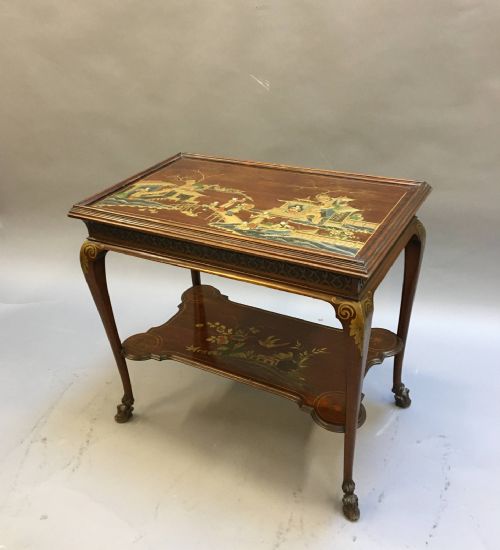


Oriental Lacquered Coffee Table
An oriental lacquered coffee table brings deep black or red surfaces, gilt figures, and a low, grounded presence to a room.
Oriental Lacquered Coffee Table
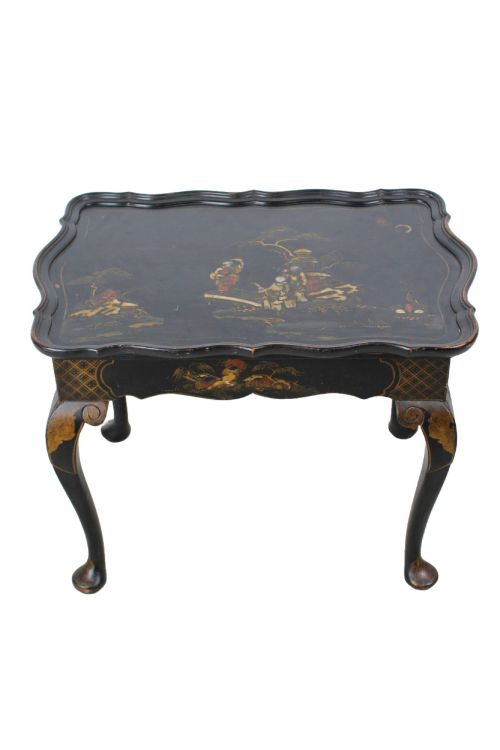
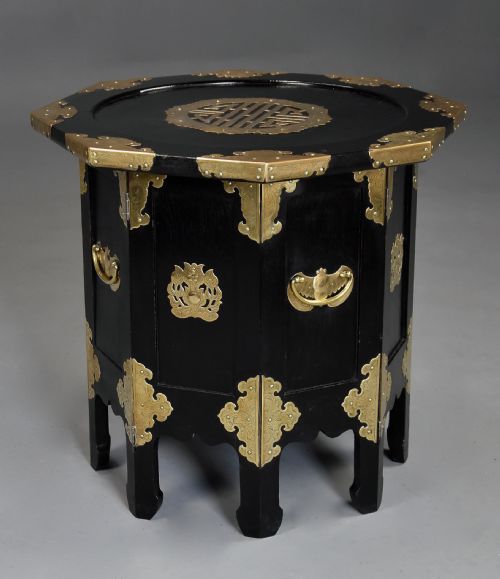
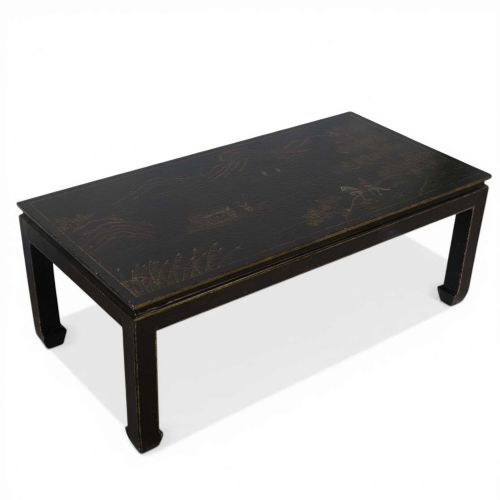
An oriental lacquered coffee table brings distinctive Chinoiserie decoration, Japanese elements, and Asian forms into domestic interiors. When buyers search this phrase, they encounter low coffee tables, nests of tables, and occasional tables adapted from traditional chests, drums, or tray tables.
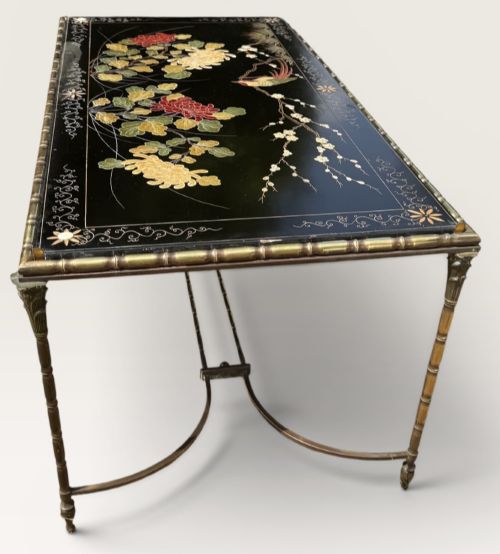
The pieces appearing here span the nineteenth century through the early twentieth century, including Edwardian interpretations and Mid-Century French designs. English Japanned pieces and Chinese export works sit alongside Burmese and Kashmiri examples, offering varied regional interpretations of lacquerwork.
Materials and construction
Lacquered wood forms the foundation of these pieces, often utilising ebonised timber, elm, or papier-mâché beneath layers of polished finish. Craftsmen applied black, red, or deep dark grounds to construct the primary surfaces of coffee tables and nests.
Gold leaf, paint, and gilt details build up the raised relief scenes and pictorial motifs characteristic of Chinoiserie styles. Brass hardware, bamboo framing, and occasionally glass tops or inlaid elements complete the construction of these low tables and chests.
A nineteenth-century red lacquered temple drum found a second life repurposed as a low table.
Distinctions in quality
Quality rests in the depth of the lacquer finish and the precision of the hand-painted or gilt scenes decorating the surface. Superior examples display crisp raised relief detail and durable craftsmanship across tray tops and nest frames.
The execution of the decorative narrative and the integrity of the underlying wood separate standard commercial production from finer artistic output. Finer pieces maintain stable joints and rich, undisturbed colour across the black or red grounds.
Maison Bagues
The Oriental Lacquered Coffee Table Glossary
- Chinoiserie
- European decorative style imitating Chinese artistic traditions. It relies heavily on motifs of landscapes, figures, and pavilions rendered in gilt upon lacquered grounds.
- Japanned
- European imitation of Japanese and Chinese lacquered finishing techniques. Artisans built up multiple coats of varnish and paint to simulate oriental export wares.
- Nest of tables
- A set of graduated tables designed to fit neatly beneath one another. They appear frequently in nineteenth-century and Edwardian lacquerwork.
- Tray table
- A piece featuring a removable or fixed tray top with raised edges. These tables often utilise folding or low support stands.
- Ebonised wood
- Timber treated to resemble ebony through staining or painting. This dark finish provides a high-contrast background for gold leaf and painted scenes.
Oriental Lacquered Coffee Table: Frequently Asked Questions
How do I care for a lacquered coffee table?
Keep these surfaces away from direct sunlight and excessive heat to prevent the lacquer from drying or cracking. Dust gently with a dry, soft cloth and avoid chemical polishes that can damage the delicate gilt scenes.
Use coasters under all glasses and mugs to protect the finish from moisture and heat rings. Regular, gentle maintenance preserves the depth and shine of the black or red lacquer.
Are these tables sturdy enough for daily use?
Most antique oriental low tables and coffee tables are structurally sound for everyday living. Their solid wood and lacquered construction handles normal placement of books and decorative items.
However, delicate nests of tables or antique tray tables benefit from gentle handling when moving them about a room. Treat them with the respect due to older decorative furniture while enjoying them in daily life.
How do I distinguish Edwardian Chinoiserie from 19th-century pieces?
Edwardian interpretations often exhibit lighter internal framing and brighter gilt highlights tailored to early twentieth-century domestic interiors. Nineteenth-century pieces frequently employ heavier timber grounds, deeper patination, and traditional Chinese export motifs.
Examining the construction methods and the wear patterns on the lacquer helps reveal the age of the piece. Regional variations, such as Burmese or Kashmiri work, also carry distinct decorative palettes.
What is the difference between a low table and a coffee table?
Traditional low tables, such as Japanese Chabudai or Chinese scholars' tables, were originally designed for kneeling or floor-level use. Modern adaptations and twentieth-century interpretations lowered or reconfigured these forms to serve alongside Western seating.
Both types function effectively as coffee tables in contemporary settings, offering a grounded profile and rich decorative surfaces. The primary distinction lies in their historical origins rather than their current utility.