





Oriental Lacquer Sideboard
An oriental lacquer sideboard brings striking colour, gilt detail and low storage to a room through centuries of Asian and European craft.
Oriental Lacquer Sideboard
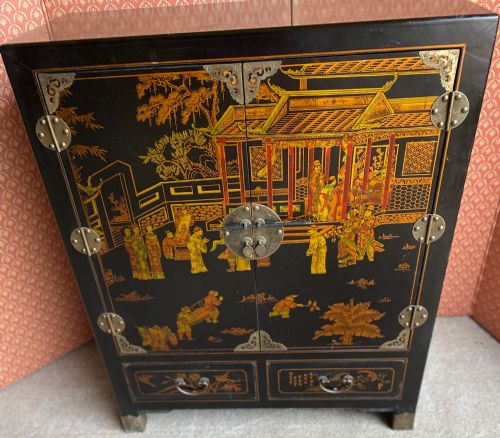
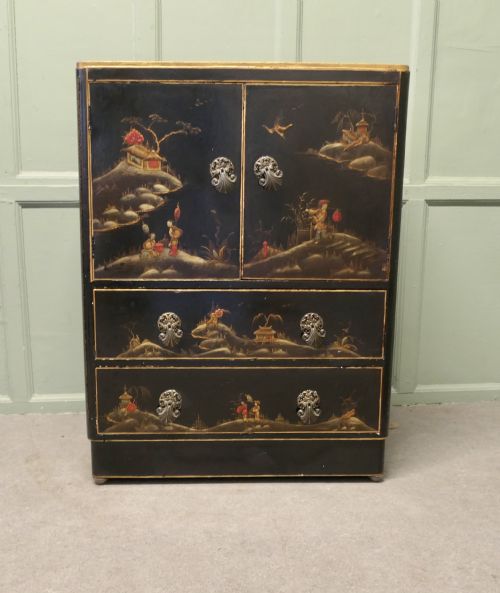
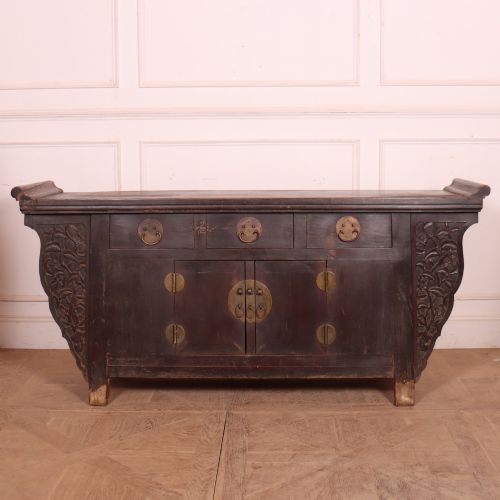
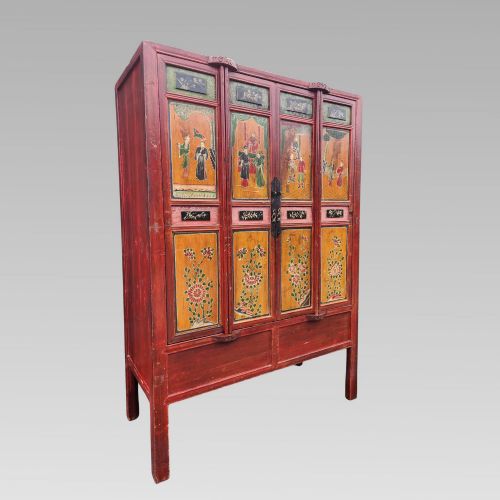
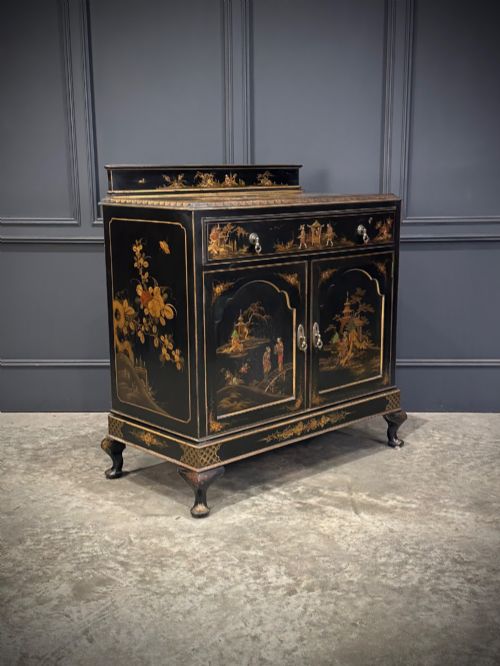
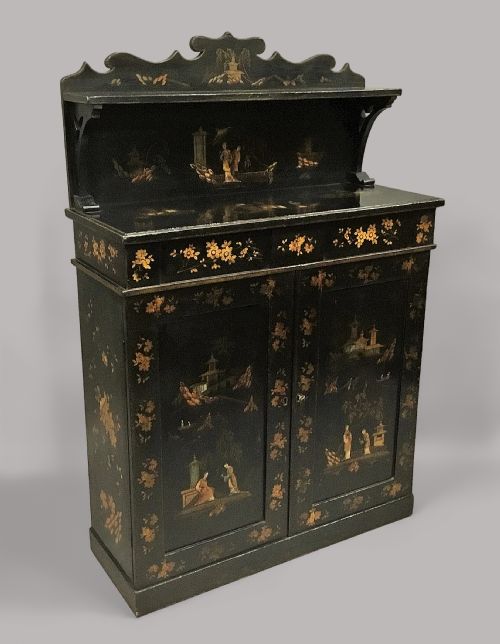
An oriental lacquer sideboard gathers low storage pieces, console tables, and cabinets from Chinese provincial workshops and Regency revival rooms alike. These surfaces range from deep red marriage chests to black lacquered side cabinets decorated with birds and flowers.
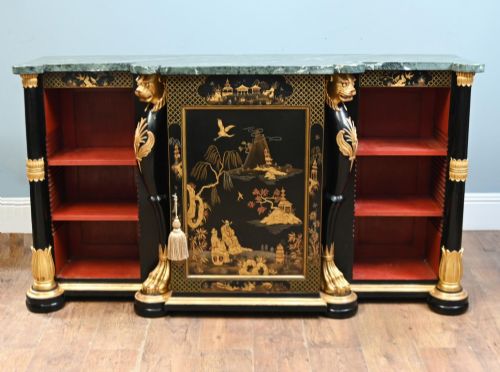
Most examples found here date from the nineteenth and early twentieth centuries, spanning periods from the eighteenth century to nineteen-thirty. Forms include console tables with marble tops, altar tables of earlier design, and breakfront bookcases.
Buyers choose these pieces for their rich painted and lacquered surfaces, which bring focal weight and historical depth to a dining room or hallway. Each item serves practical storage needs while displaying intricate Chinoiserie or regional Chinese decoration.
How they were made
Constructed primarily from wood such as elm, pine, and general lacquered timber, these pieces rely on traditional joinery to form stable frames. Artisans built up multiple coats of lacquer to create smooth, durable finishes in black, red, or multi-coloured palettes.
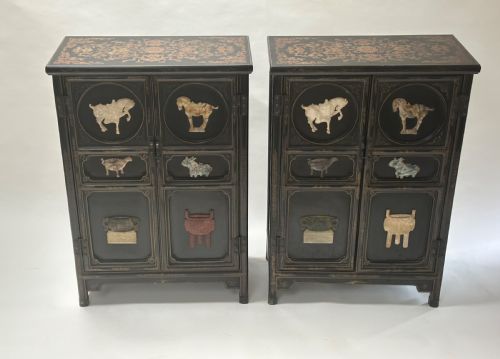
Surface decoration frequently incorporates gilt highlights, inlaid elements, and hand-painted motifs depicting birds, flowers, and narrative scenes. Selected tables and cabinets incorporate contrasting materials like marble tops and brass fittings to complete the design.
Oriental Lacquer Sideboard Retail Price Guide 2026
Typical asking prices for oriental lacquer sideboard among the pieces listed under this phrase on Sellingantiques today, from the lower quarter to the upper quarter. They describe what is for sale here now, not the wider market.
Listings feature periods from the eighteenth century through to nineteen-thirty, including Regency and Qing Dynasty stylistic influences.
What varies in quality
Quality rests upon the depth of the lacquer finish and the intricacy of the hand-painted or gilt decoration applied to the wood. Pieces with well-preserved pictorial scenes and crisp detailing command greater visual presence in a room.
The integrity of the underlying timber frame and the survival of original stands or brass mounts determine the structural merit of each sideboard. Finer examples maintain cohesive proportions and harmonious colour application across every visible panel.
The Oriental Lacquer Sideboard Glossary
- Chinoiserie
- European theatrical interpretation of Chinese and East Asian artistic traditions. This style dominated British decoration during revival periods.
- Japanned
- European imitation of East Asian lacquerwork using layered varnishes and metallic powders. Craftsmen applied this technique extensively on British furniture.
- Altar table
- Long, narrow ritual table featuring upturned ends or carved aprons. These forms were adapted for domestic display in both China and the West.
- Breakfront
- Cabinet design featuring a central section that projects forward from the flanking wings. This architectural arrangement adds depth to large sideboards.
- Marriage cabinet
- Large storage chest traditionally given as a wedding gift in China. These pieces often feature bright red finishes and elaborate brass hardware.
Oriental Lacquer Sideboard: Frequently Asked Questions
How do I clean an oriental lacquer sideboard?
Dust the surface regularly with a soft, dry cloth to prevent particle accumulation. Avoid chemical sprays or excess water that might damage the aged lacquer finish.
Maintain stable humidity levels in the room to protect the underlying wood and prevent the lacquer from cracking over time.
Are these sideboards authentic Chinese pieces?
The selection includes both authentic Chinese export pieces from the nineteenth century and British Regency revival furniture decorated in the Chinoiserie taste.
Examining the structural timber, construction methods, and lacquer composition helps distinguish between regional Asian workshop pieces and European interpretations.
Where should I place a lacquer sideboard?
These cabinets suit dining rooms, hallways, and living spaces where their bold colours and painted surfaces can act as focal points. Position them away from direct sunlight to preserve the vibrant red and black lacquer tones.
Ensure the room has moderate temperature control to protect both the wooden carcass and the delicate surface decoration.
What is the difference between black and red lacquer?
Black lacquer finishes often incorporate detailed gilt painting and inlaid elements to create contrasting pictorial scenes of birds and flowers. Red lacquer variants frequently denote celebratory marriage furniture or export pieces designed for striking visual impact.
Both finishes required multiple layers of resin and drying time in traditional workshops before receiving their final decoration.