


Black Gilt Credenza
A black gilt credenza brings dramatic dark surfaces and metallic flash to a room, offering grand storage and display.
Black Gilt Credenza
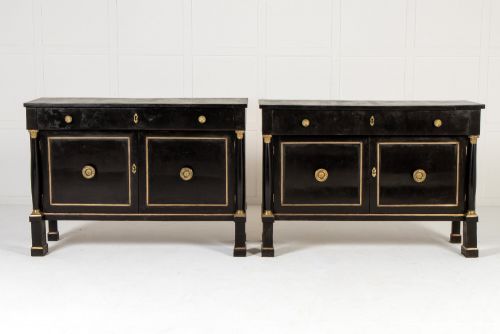
A black gilt credenza combines dark ebonised or lacquered wooden bodies with striking metallic gilding, creating a formal presence suited to a grand dining room or drawing room. These pieces span the nineteenth century and earlier, drawing heavily on Victorian, French Napoleon III, and Italian Neoclassical tastes.
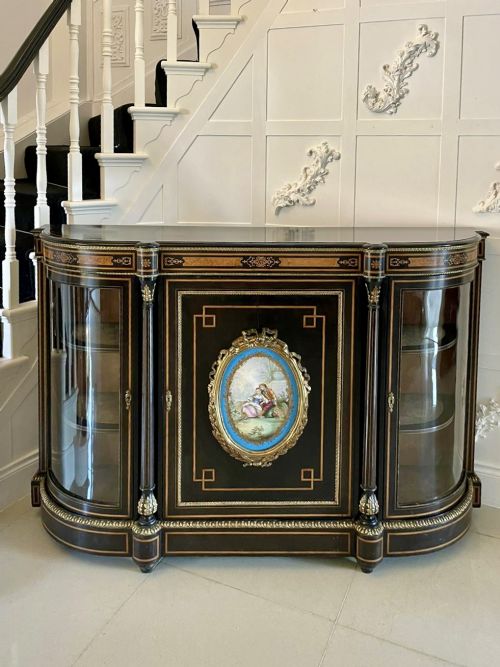
The form frequently appears as a breakfront or pier cabinet featuring glazed doors, brass mounts, and inlaid porcelain panels. Buyers encounter variations ranging from compact single-door pier cabinets to substantial multi-door sideboards and credenzas.
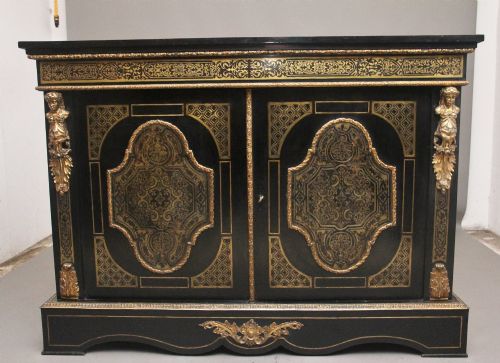
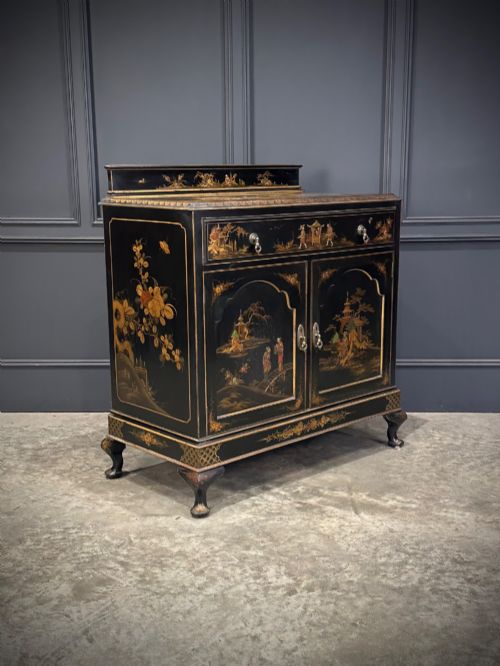
Origins stretch across English, French, and Italian workshops, incorporating distinct regional decorative vocabularies from Chinoiserie japanning to Boulle marquetry. This variety means each cabinet solves storage and display requirements through slightly different proportions and internal shelving arrangements.
Materials and construction
Cabinetmakers utilised dense timbers like ebony or ebonised wood to create the signature dark ground, often applying lacquer or japanning for a glossy, reflective finish. This deep black surface provided the necessary contrast for applied ornament.
Decoration relied on cast or gilt-metal, ormolu, and gilt bronze mounts screwed or pinned to the timber framework to highlight architectural breaks and door surrounds. Glazed panels and ceramic plaques were frequently integrated into the facade to offer colourful relief against the dark woodwork.
Listings feature pieces from the eighteenth, nineteenth, and early twentieth centuries, spanning Victorian, Regency, and Chinoiserie styles.
Assessing craftsmanship
Superior examples distinguish themselves through the precision of their gilt-metal mounts and the depth of the ebonised finish. Finer pieces employ chased ormolu and detailed Pietra Dura or Sevres porcelain plaques rather than simpler stamped brass fittings.
The structural integrity of the timber carcass and the quality of the glass panes dictate the overall standard of manufacture. Well-executed marquetry, precise boullework, and tightly fitted doors demonstrate the higher tier of cabinetmaking found within these periods.
The Black Gilt Credenza Glossary
- Ebonised
- Wood treated to imitate the dark, heavy appearance of ebony. This finish is achieved through staining or painting the timber base.
- Ormolu
- Gilded bronze used for decorative mounts and fittings. The technique involves applying a gold amalgam to a bronze base and firing it.
- Boulle
- Marquetry technique incorporating tortoiseshell and brass inlay. Named after French cabinetmaker André-Charles Boulle, it creates intricate patterns.
- Japanning
- European imitation of East Asian lacquerwork. Craftsmen build up layers of varnish and paint, frequently finishing with gold decoration.
- Pietra Dura
- Inlay work using polished coloured stones to create pictorial designs. Artisans fit hardstones tightly into a marble or slate matrix.
Black Gilt Credenza: Frequently Asked Questions
Where should I place a black gilt credenza?
These cabinets work well against a substantial living room or dining room wall where their dark surfaces can contrast with lighter decor. They provide both surface display area and enclosed storage for china or books.
Position them away from direct sunlight to protect the ebonised finish and any delicate porcelain or gilt mounts from fading or thermal stress over time.
How do I care for ebonised wood and gilt mounts?
Dust the surfaces regularly with a soft, dry cloth to prevent particulate accumulation in the carved details and around the metal mounts. Avoid using harsh chemical sprays or abrasive furniture polishes.
For the gilt bronze or ormolu, gentle dusting is generally sufficient, as moisture can damage the underlying wood or compromise applied finishes.
What is the difference between a credenza and a pier cabinet?
A credenza typically presents a wide, low profile with multiple doors, often featuring a breakfront configuration designed for central placement against a wall. They offer generous interior storage and display space.
By contrast, a pier cabinet is usually a taller, narrower single-door case built specifically to fit the narrow wall space between windows, known as the pier.
How do I identify a Victorian piece from an 18th century one?
Victorian examples often display eclectic revival styles, combining ebonised timber with gilt-metal mounts, Sevres porcelain plaques, or Aesthetic movement painted decoration. Construction methods typically show nineteenth-century machine assistance alongside hand finishing.
Eighteenth-century pieces generally rely on simpler structural proportions, earlier lacquering traditions, and distinct regional Italian or French joinery techniques without nineteenth-century industrial innovations.