



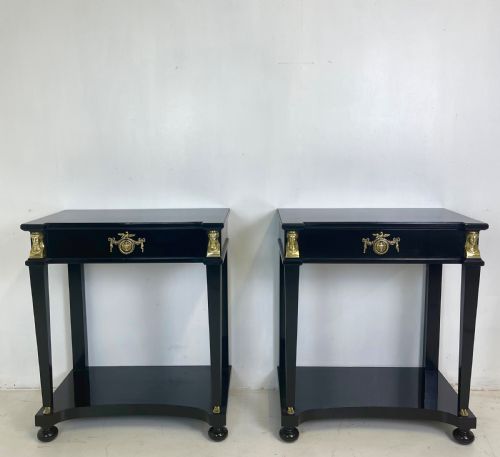


Black Lacquer Side Cabinet
These black lacquer side cabinet pieces bring layered depth and gilt detail to a room, offering functional storage with striking decorative presence.
Black Lacquer Side Cabinet
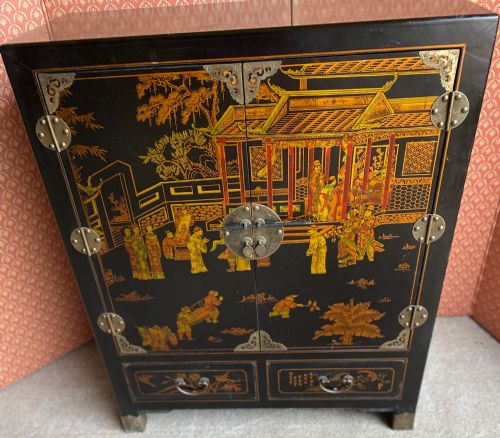
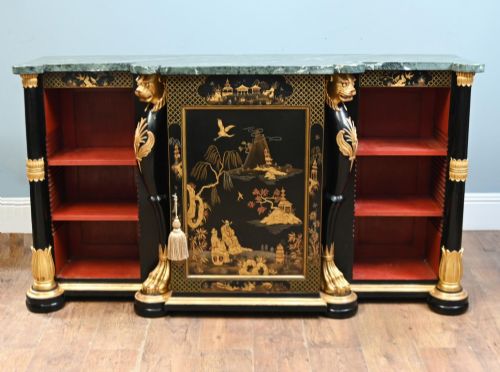
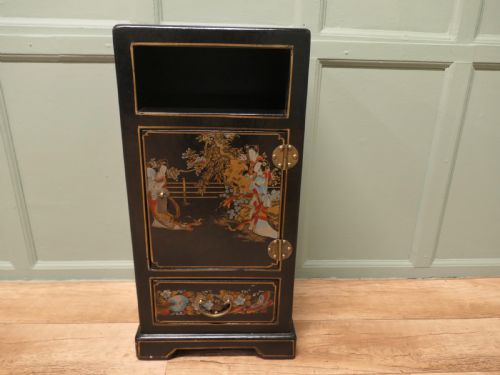
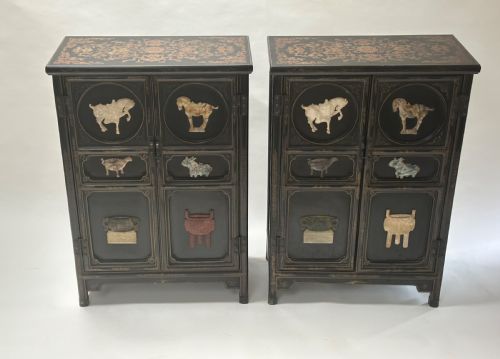
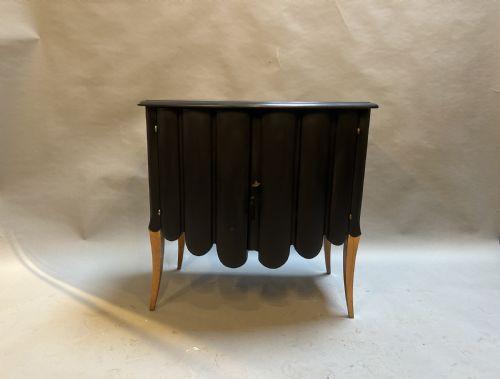
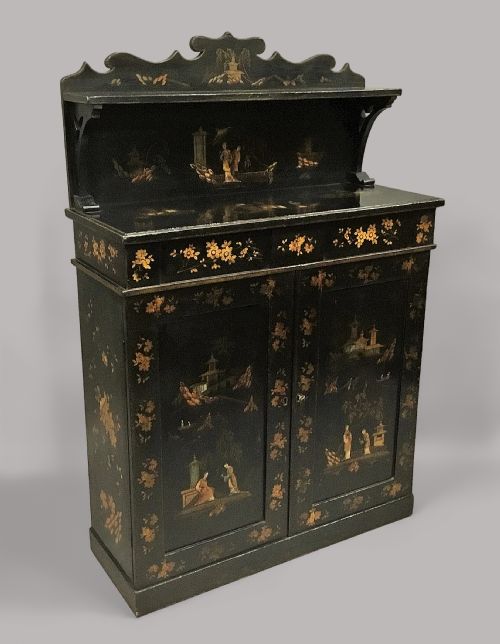
A black lacquer side cabinet brings dark surfaces and intricate ornament into a room, serving as a functional storage piece with a strong visual presence. When searching for a black lacquer side cabinet, buyers encounter diverse forms ranging from twentieth-century cocktail cabinets to nineteenth-century japanned chiffoniers.
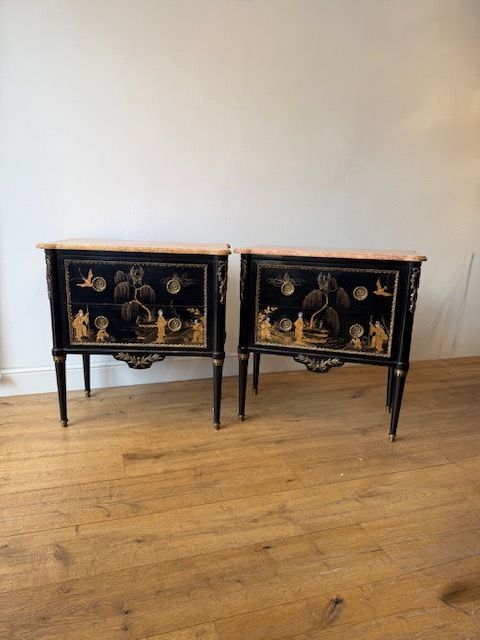
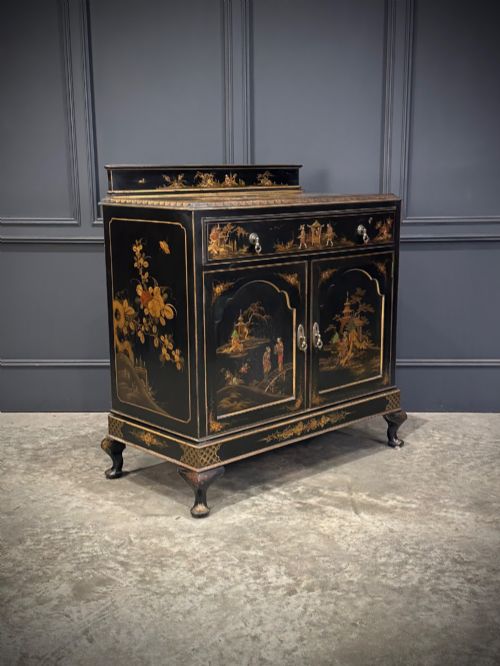
The selection on this page draws heavily from early twentieth-century production alongside nineteenth-century examples and Regency pieces. Chinoiserie and Art Deco styles dominate the visual language, frequently paired with raised gold motifs and structural timber frames.
Materials and Construction
Construction relies on timber frames treated with successive layers of lacquer to build a deep, reflective surface. Artisans then applied gold leaf and hand-painted details, often depicting traditional landscape scenes and figurative motifs.
Hardware elements such as brass mounts, locks, and hinges provide structural contrast against the dark lacquer finish. Certain pieces incorporate marble tops or decorative ceramic plaques to add weight and texture to the design.
Black Lacquer Side Cabinet Retail Price Guide 2026
Typical asking prices for black lacquer side cabinet among the pieces listed under this phrase on Sellingantiques today, from the lower quarter to the upper quarter. They describe what is for sale here now, not the wider market.
Object types include side cabinets, cocktail cabinets, commodes, and display bookcases decorated in Chinoiserie and Regency styles.
Distinguishing Quality
Quality rests in the depth of the lacquer finish and the precision of the hand-painted detailing. Superior examples display smooth, layered surfaces where gold leaf application remains crisp and securely bonded to the timber base.
The integrity of the underlying woodwork and the original state of the brass fittings dictate the structural merit of each piece. Finer cabinets retain intact decorative schemes without excessive crazing or loss to the pictorial panels.
The Black Lacquer Side Cabinet Glossary
- Japanned
- European imitation of East Asian lacquerwork. Craftsmen built up layers of varnish and resin, often heat-cured and polished, before applying gilt decoration.
- Chiffonier
- A small sideboard or low cabinet equipped with drawers and shelves. This form gained popularity during the Regency and Victorian periods for domestic storage.
- Ormolu
- Gilded bronze mountings applied to furniture corners, feet, and keyholes. These cast metal ornaments provide decorative contrast and structural reinforcement.
Black Lacquer Side Cabinet: Frequently Asked Questions
Where should I place a side cabinet?
These cabinets suit dining rooms, hallways, or living spaces where surface area and enclosed storage are both required. Their decorative front panels make them effective focal points against neutral walls.
Ensure the room has stable humidity levels to protect the delicate lacquer surfaces and wooden frames from environmental stress over time.
How do I clean a lacquered surface?
Dust the cabinet gently with a soft, dry microfiber cloth to remove everyday particles. Avoid using harsh chemical sprays, abrasive pads, or excessive water on the finish.
Professional furniture wax formulated for antique surfaces can be applied sparingly if the maker's finish requires nourishment, but consult a conservator for valuable pieces.
Are these cabinets purely decorative?
While their visual impact is significant, these pieces provide practical storage through internal shelves, cupboards, or drawers. Cocktail cabinets specifically include fitted interiors designed for glassware and bottles.
Weight distribution should be considered when storing items inside, particularly with older hinges and joinery from the nineteenth and early twentieth centuries.
How do I identify a Regency piece?
Regency cabinets often feature classical architectural proportions, restrained brass inlay, or japanned finishes influenced by nineteenth-century taste. Look at the joinery style and hardware for period consistency.
True pieces from this era show structural ageing patterns in the timber and hand-forged elements that differ from later twentieth-century revivals.