
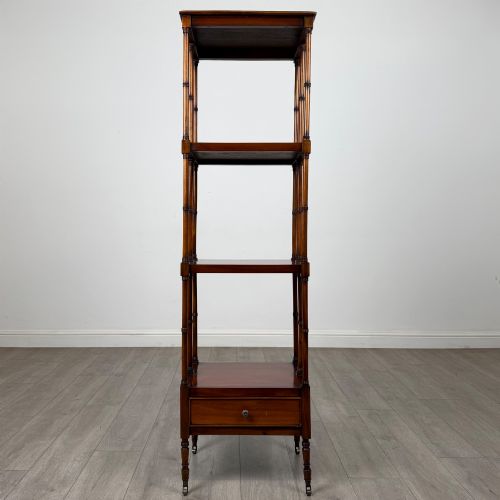
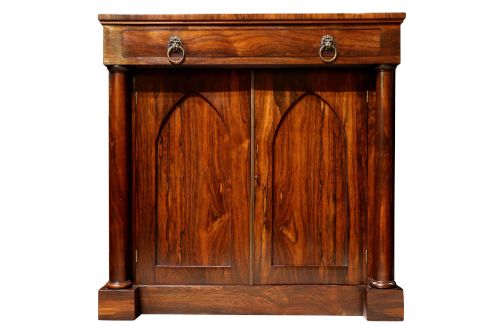
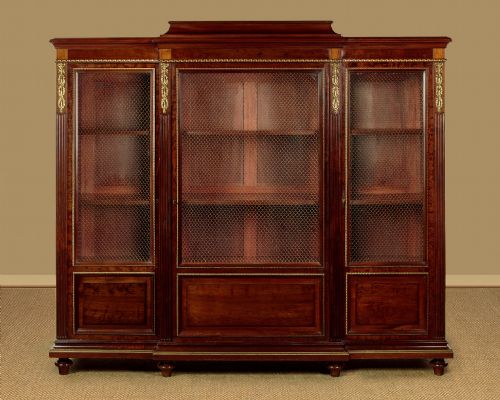
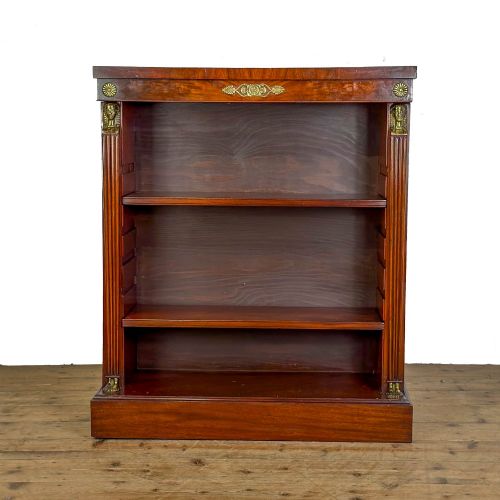


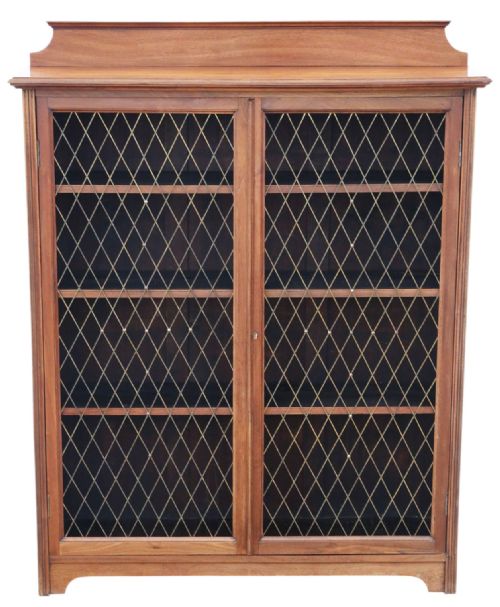
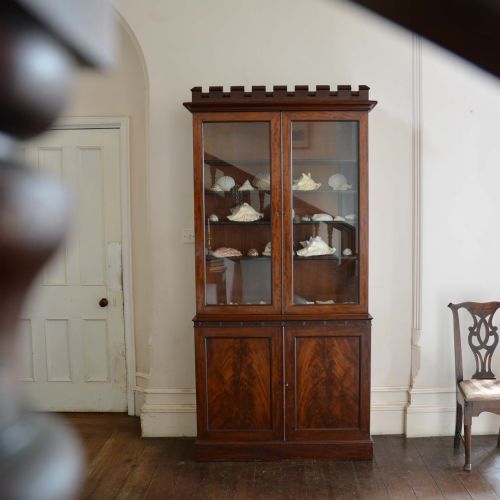


Regency Revival Bookcase
Regency revival bookcase pieces bring classic proportion and rich timbers into modern rooms with effortless grace.
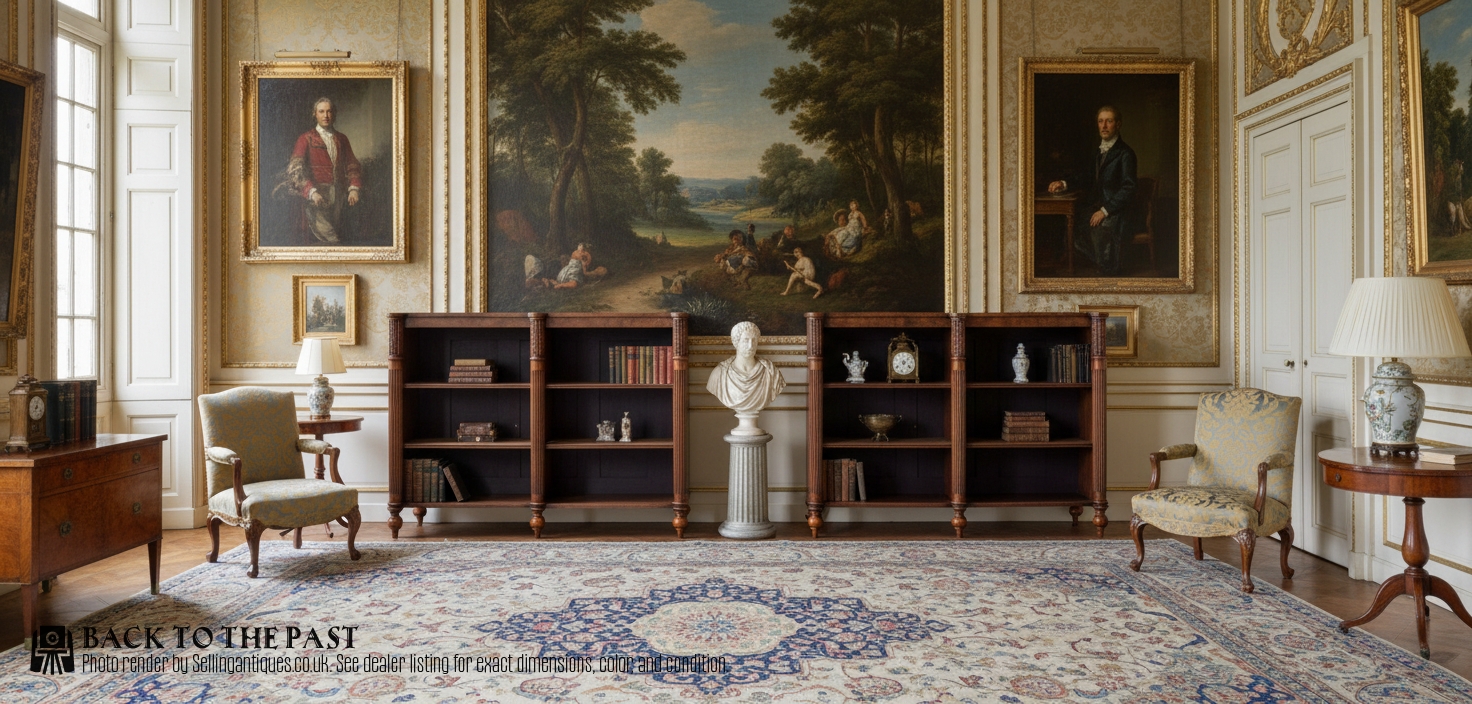
Regency Revival Bookcase
A regency revival bookcase brings classical architectural lines and rich timber tones into domestic interiors, drawing on the design vocabulary of the early nineteenth century. Buyers seek these pieces for their ability to organise libraries while adding genuine warmth and formal presence to a room.
The pieces listed on this page span open shelf formats, breakfront library cabinets with glazed doors, and compact waterfall designs. Mahogany and rosewood predominate, frequently enhanced by brass mounts or wire mesh panels that echo original Regency models.
While true Regency examples date from the early eighteen-hundreds, revival interpretations extend from the Edwardian era into the twentieth century. These later adaptations capture the classical dignity of the Regency period while serving contemporary domestic storage needs.
What varies in quality
The selection of timber veneer dictates much of the visual depth, with carefully matched flame mahogany or burr walnut marking the upper tier of production. Inferior examples rely on plain, unfigured timbers that lack the optical movement and rich contrast prized by collectors.
Attention to architectural detail separates standard production from superior cabinet work, particularly in the carving of classical motifs and the precision of brass fittings. The integration of functional elements such as smoothly operating adjustable shelves and well-fitted doors reveals the maker's underlying skill.
Some revolving bookcases let readers consult an entire encyclopedia shelf without moving from the armchair.
James Winter & Sons·George Oakley
The Regency Revival Bookcase Glossary
- Breakfront
- A cabinet design where the central section projects forward from the flanking wings. This classical arrangement creates visual depth and breaks the linear expanse of a large library wall.
- Waterfall bookcase
- A tiered shelving unit where each successive shelf is set back from the one below, creating a stepped profile. The form gained popularity during the nineteenth century for display and lighter reading material.
- Chiffonier
- A low sideboard or cabinet featuring enclosed lower doors and often upper shelving or a mirrored back. These versatile pieces developed during the Regency period for dining and drawing rooms.
- Gothic Revival
- An architectural and decorative style drawing inspiration from medieval design, characterised by pointed arches and crenellated cornices. Makers incorporated these romantic elements into nineteenth-century library furniture.
- Veneer
- A thin layer of figured wood applied over a secondary timber base to create a decorative surface. Skilled application ensures the grain flows naturally across doors and drawer fronts.
Regency Revival Bookcase: Frequently Asked Questions
What is a regency revival bookcase?
A regency revival bookcase is a piece of furniture manufactured after the original Regency period that imitates the classical proportions, restrained ornamentation, and dark timbers of early nineteenth-century design.
These cabinets often combine open shelving with glazed doors, incorporating brass mounts or Gothic motifs to recreate the refined aesthetic of the Regency era for later homes.
How do I spot a revival piece?
Identifying a revival piece involves examining secondary timbers, construction marks, and the ageing of the materials used in the carcase and backing boards.
While the styling references the early eighteen-hundreds, secondary woods and machine-cut elements often point to Edwardian or later twentieth-century manufacturing methods.
Where should I place a breakfront bookcase?
A breakfront bookcase requires a principal wall with adequate width and height to accommodate its projecting central section and generous proportions without crowding the room.
Placing the cabinet away from direct sunlight and heat sources protects sensitive rosewood and mahogany veneers from drying and fading over time.
How are adjustable shelves supported?
Adjustable shelves in these bookcases typically rest on wooden tooth-racks, brass studs, or metal pins inserted into vertical slots inside the cabinet walls.
This system allows owners to reposition shelves easily to fit diverse book sizes, a practical feature common in nineteenth-century and revival library furniture.