




Oriental Hardwood Pedestal Table
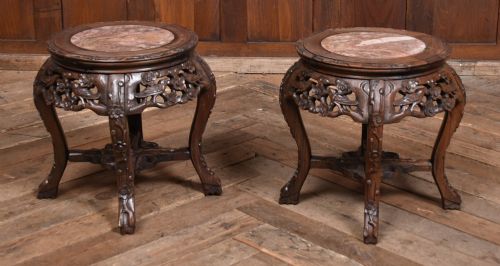
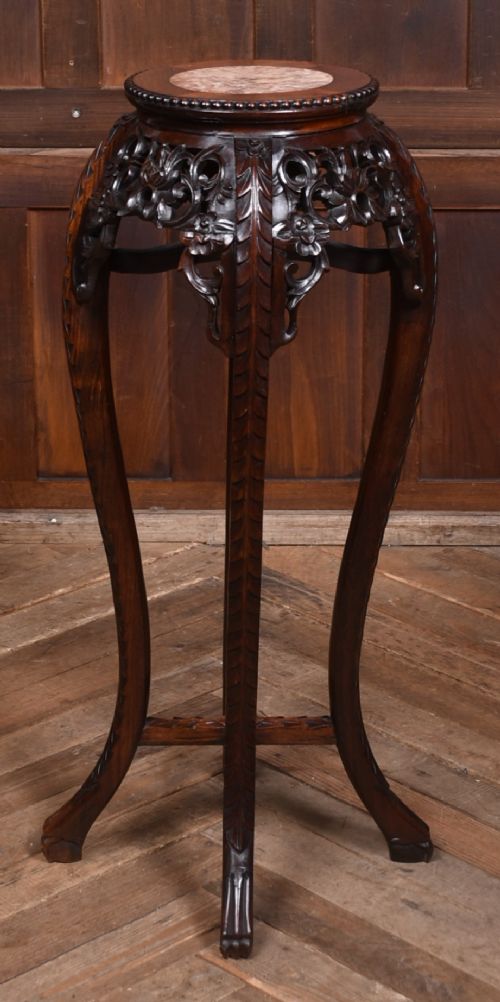
Oriental hardwood pedestal table choices combine carved timber frames with inset stone surfaces, serving as plant stands and occasional display surfaces.
Oriental Hardwood Pedestal Table
When you search for an oriental hardwood pedestal table, you encounter plant stands, jardiniere stands, and occasional tables originating from Chinese workshops and Japanese makers during the nineteenth and early twentieth centuries. These forms span Victorian and Edwardian periods, reflecting extensive trade and aesthetic exchange between Britain and East Asia.
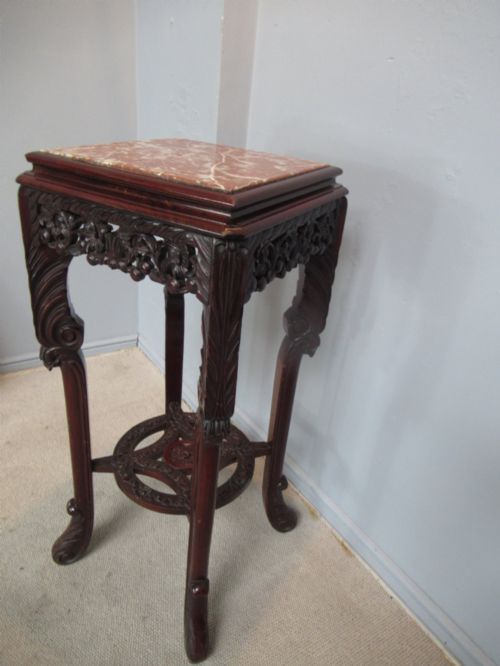
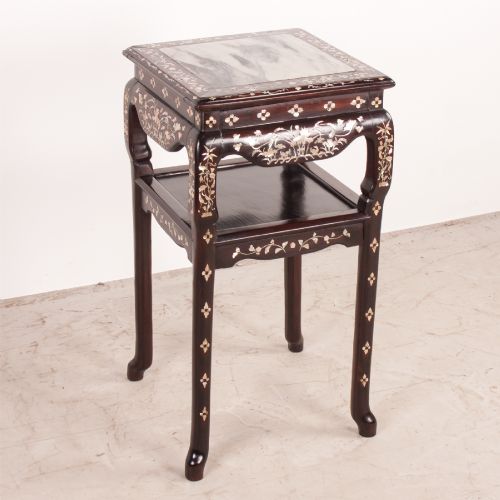
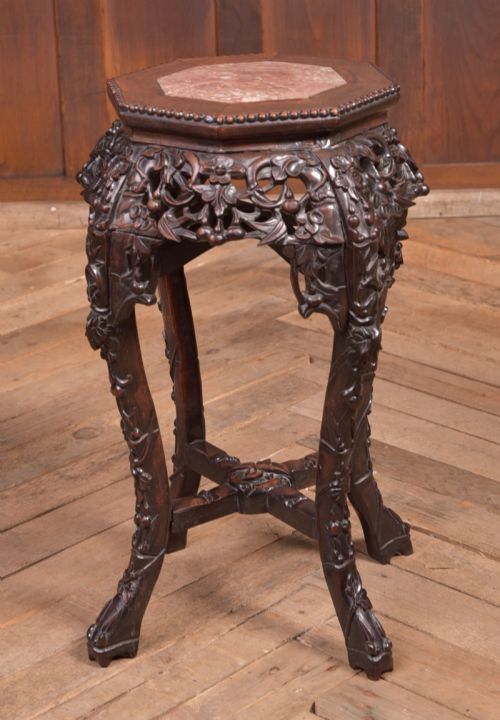
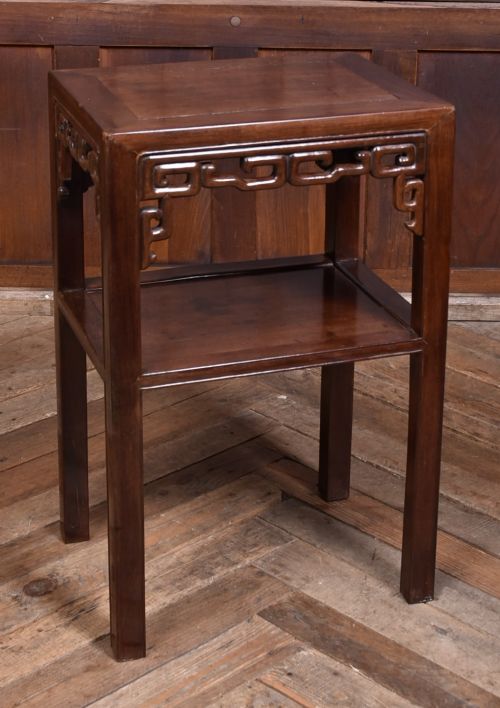
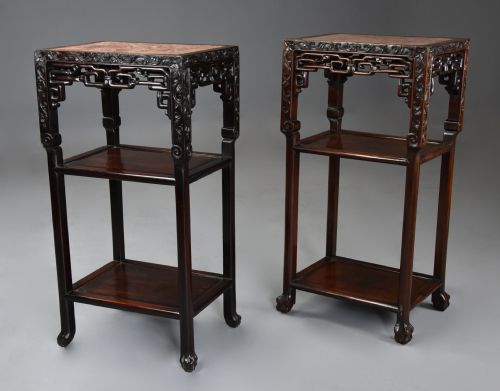
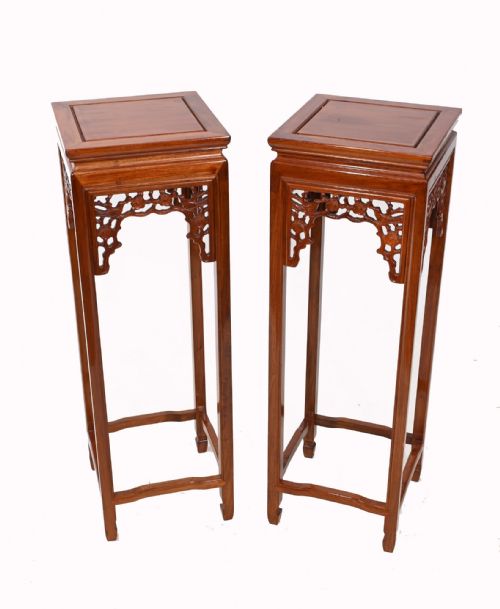
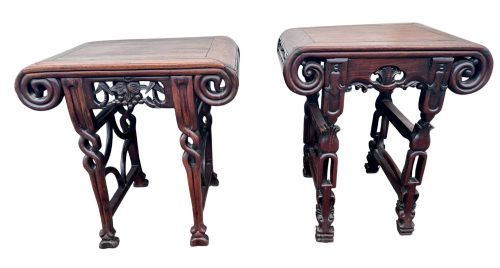
The pieces on this page appear most frequently as small circular or rectangular stands designed to elevate vases, planters, and lamps within a room. Many examples originate from the Qing Dynasty and Chinese Export traditions, utilising dense timbers suited to intricate carving.
Materials and construction methods
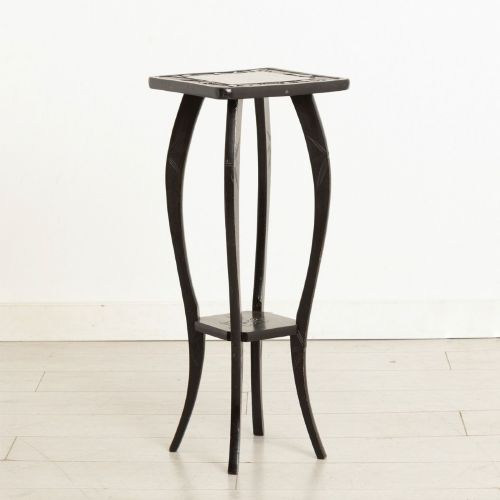
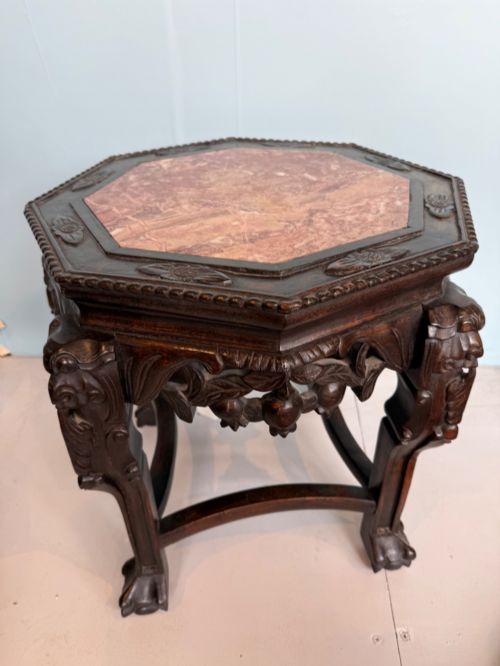
Maker workshops built these items from dense timbers such as rosewood, padouk, and huali hardwood, often paired with inset rouge or white marble tops. Ebonised wood and teak also appear, carved by hand with floral motifs, dragons, and traditional scrollwork.
Joinery techniques relied on rigid frame construction to support heavy stone inserts without warping. Surface finishes emphasise the natural grain of the timber or apply dark lacquer to highlight the carved details.
Dragons occasionally peer out from beneath table tops, keeping a watchful eye on stray flower pots.
Distinctions in craftsmanship
The standard of carving defines the upper tier of these stands, showing crisp depth, undercut foliage, and balanced symmetry rather than shallow, mechanical stamping. Timber selection also dictates longevity, with dense rosewood and padouk holding fine detail far better than softer substitute woods.
Integration of the marble top into the wooden frame separates ambitious pieces from standard production. A well-fitted stone rests flush within a dedicated rebate, whereas lesser examples show uneven gaps or crude stabilization beneath the surface.
Liberty of London
The Oriental Hardwood Pedestal Table Glossary
- Jardiniere stand
- A tall small table specifically designed to hold a ceramic flower pot or plant bowl. These pieces usually feature a circular or square top raised on slender legs.
- Padouk
- A heavy, durable tropical timber with a reddish hue used extensively in traditional Chinese furniture making. It accepts fine carving without splintering.
- Huali
- A traditional Chinese hardwood prized for its rich grain and density. It frequently appears in Qing Dynasty export furniture.
- Ebonised wood
- Timber treated with a dark stain or finish to imitate ebony. This technique was popular in nineteenth-century workshops to create high-contrast decorative surfaces.
- Tilt top table
- A folding table mechanism allowing the surface to tip vertically when not in use. This form saves space in smaller rooms.
Oriental Hardwood Pedestal Table: Frequently Asked Questions
What is an oriental hardwood pedestal table used for?
These pieces serve primarily to elevate items such as ceramic planters, decorative vases, and table lamps within domestic interiors. Their compact footprint allows them to occupy corners or narrow wall spaces where larger furniture does not fit.
Historically, households utilised them to display prized ornaments at eye level. Today, they function effectively as standalone display surfaces or bedside tables.
How do I identify a Qing Dynasty stand?
Qing Dynasty stands display traditional Chinese carving motifs, such as prunus blossom, key fret borders, and scrolling dragons. They utilise dense regional hardwoods like huali and rosewood.
Construction methods often incorporate traditional joinery without modern metal fasteners. The presence of inset marble panels further points toward traditional workshop practices of the period.
Can these tables hold heavy plant pots?
The sturdy timber frames and stone inserts are structurally engineered to bear considerable vertical weight. Hardwoods like padouk and rosewood provide the necessary rigidity to support damp ceramic planters.
Care should be taken to protect the wood and marble surfaces from standing water. Using a protective saucer underneath plant pots prevents moisture damage to the finish.
Are Japanese and Chinese stands different?
Japanese stands from the Meiji period often incorporate ebonised finishes and distinct carving styles compared to their Chinese counterparts. Both traditions share an emphasis on floral motifs and heavy hardwood construction.
Export pieces from Japan frequently retailed through British department stores like Liberty. Examining the specific carving motifs and timber types helps distinguish the origin of each piece.