




Chinese Tripod Side Table
A chinese tripod side table brings functional poise to a room, offering compact surface space atop three supporting legs.
Chinese Tripod Side Table
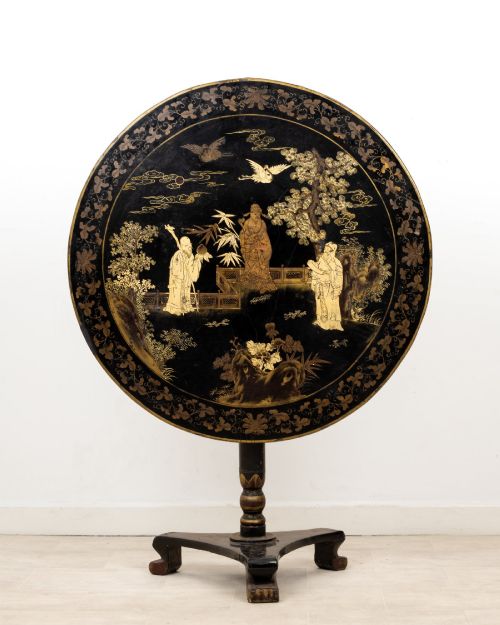
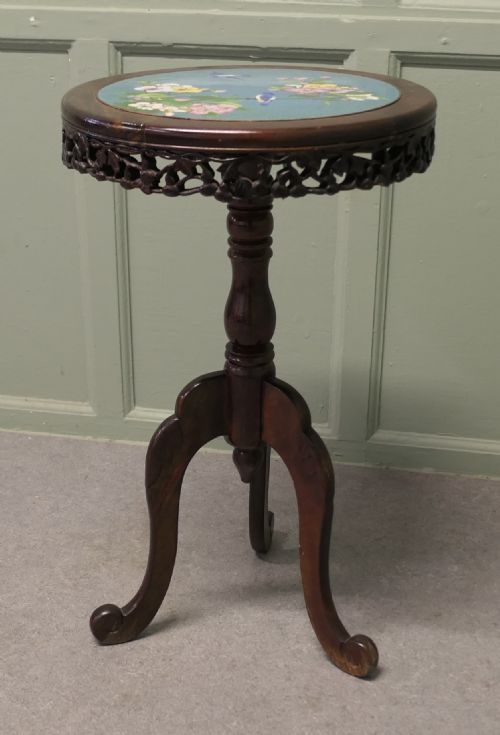
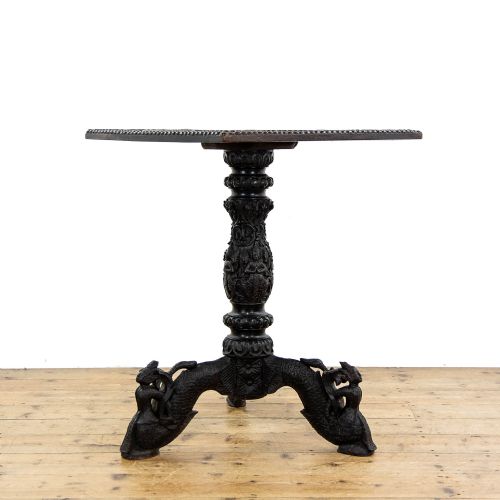
When you search for a chinese tripod side table, you are looking at small-scale furniture designed for occasional use, supported by three legs rather than four. The pieces appearing here span the eighteenth century, the nineteenth century, and the Edwardian era, taking forms such as wine tables, tilt-top occasional tables, and round side tables.
The aesthetic vocabulary encompasses Qing Dynasty work, Chinese export pieces, Chinoiserie, and Chinese vernacular styles. You will frequently encounter carved hardwood structures, alongside lacquer finishes and pieces incorporating inset marble tops.
Originating for practical utility, these tables function well beside a chair or sofa as a compact resting place for objects. They combine structural simplicity with distinct regional ornament.
How They Were Made
Cabinetmakers utilised dense hardwoods, including rosewood, to construct the frames of these tables, often employing intricate hand carving to render dragons, foliage, and figural scenes. Where timber was not left exposed, artisans applied layers of black or cinnabar lacquer to the surfaces.
Some examples incorporate specialised decorative elements such as cloisonné enamel work depicting birds and flowers, or brass components. Tops occasionally feature inset marble panels fitted precisely into the wooden framework.
Tilt-top mechanisms on specific occasional tables allowed the surface to pivot vertically when not in use, demonstrating practical mechanical ingenuity alongside decorative carving.
Some tables tilt their heads upward when tired of holding wine glasses, folding flat against the wall like polite guests.
What Varies in Quality
The distinction between standard examples and finer works rests upon the depth and crispness of the carving. Superior hardwood tables exhibit deeply undercut relief work where details remain sharp rather than soft.
Material selection dictates much of the inherent quality, distinguishing simple stained woods from heavy, dense rosewood or meticulously applied lacquer and cloisonné enamel. The integration of inset marble panels further separates standard production from elevated pieces.
Proportion and stability in the three-legged base dictate the structural success of the design, ensuring the piece balances correctly without clumsy joinery.
The Chinese Tripod Side Table Glossary
- Tripod table
- A small freestanding table supported by three legs radiating from a central pillar or directly from the underside. This configuration prevents wobbling on uneven floors.
- Tilt-top table
- An occasional table featuring a hinged mechanism that allows the top surface to rotate to a vertical position. This saved floor space in historic interiors.
- Cloisonné enamel
- A metalwork technique where compartments are created on a surface using soldered wires and filled with coloured glass paste before firing. It yields vibrant patterns of birds and flowers.
- Cinnabar lacquer
- A decorative finish built from numerous layers of red resin derived from the lacquer tree, which is subsequently carved in deep relief. It provides a tactile, ruby-hued surface.
- Chinoiserie
- European interpretation and imitation of Chinese artistic traditions and motifs, prevalent in eighteenth-century and later design. It blended Western furniture forms with Asian decorative tropes.
Chinese Tripod Side Table: Frequently Asked Questions
What is a chinese tripod side table used for?
These tables serve as small, movable surfaces positioned beside seating for holding drinks, books, or decorative objects. Their compact footprint makes them adaptable for tight spaces.
Historically, specific versions like wine tables functioned during social gatherings for holding glassware, while tilt-top formats stored flat against walls.
How do I date a chinese tripod side table?
Dating relies on examining the wood type, carving style, and construction methods. Eighteenth-century export pieces show different joinery nuances compared to late nineteenth-century Qing Dynasty hardwoods.
Turn of the century pieces often reflect Edwardian or 1900s aesthetic preferences, combining traditional Asian motifs with Western parlor requirements.
Are these tables sturdy?
The three-legged design provides natural stability on level floors by distributing weight evenly across three points of contact. Dense hardwoods add substantial weight to keep the base grounded.
Care should be taken with tilt-top variants to ensure the locking mechanism is engaged securely when the surface is horizontal.
What materials should I expect?
The listings show a prevalence of solid hardwoods, including rosewood, shaped into frames and legs. Surfaces frequently feature black lacquer, cinnabar lacquer, or carved wood.
Additional decorative elements include inset marble panels, cloisonné enamel panels depicting birds and flowers, and occasional brass fittings.
How do I care for lacquer surfaces?
Lacquer requires gentle dusting with a soft, dry cloth and protection from direct sunlight and extreme humidity changes. Avoid chemical polishes that can degrade the historic resin finish.
Keeping the environment stable prevents the wood beneath the lacquer from expanding and contracting.