
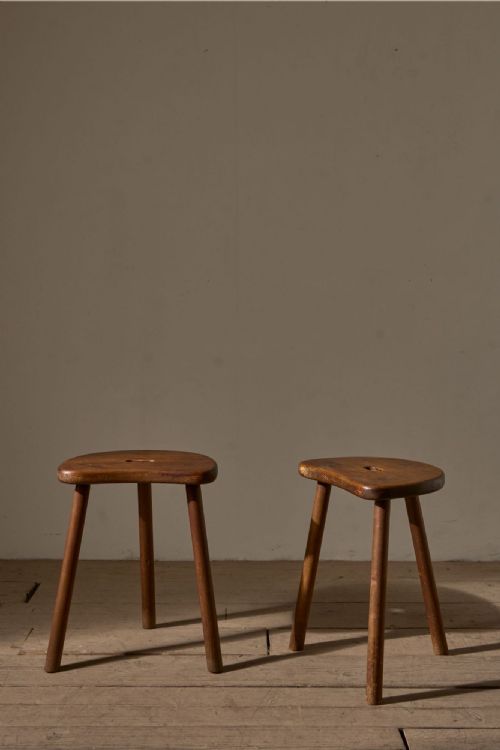
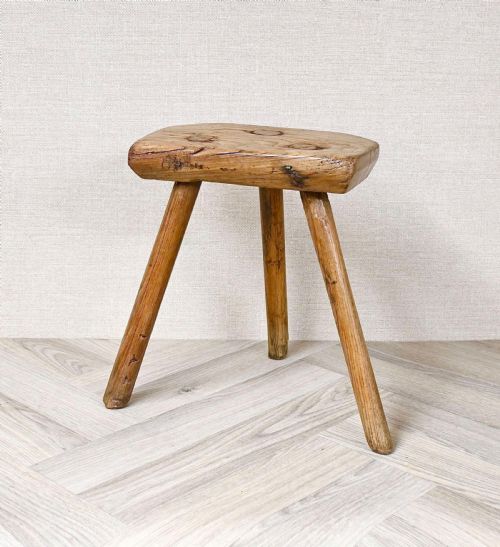


Three Legged Wooden Stool
A three legged wooden stool offers simple utility and honest construction, prized by collectors for its vernacular character.
Three Legged Wooden Stool
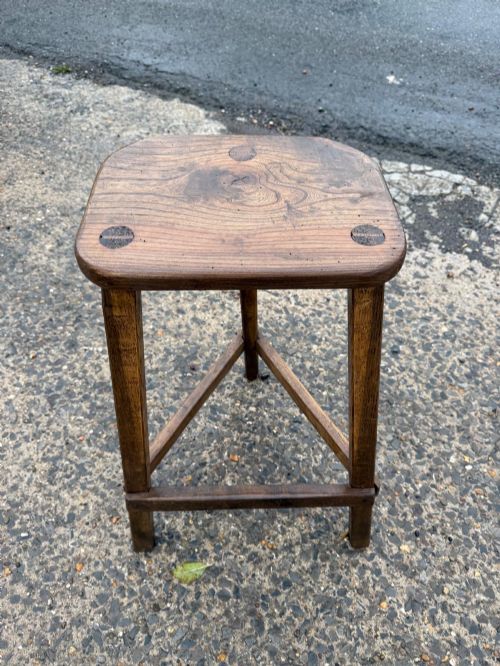
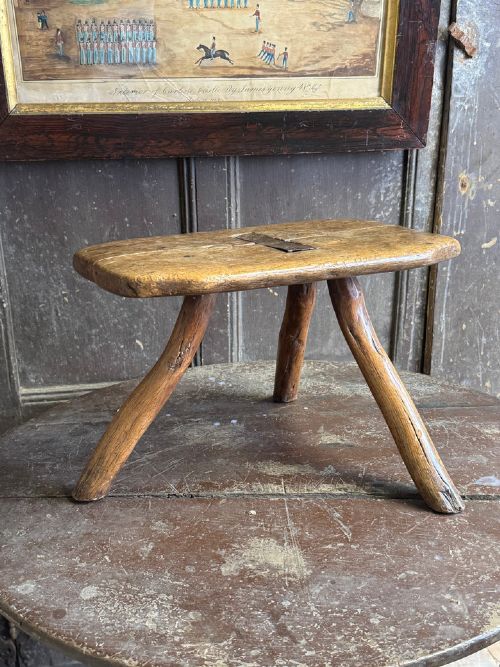
A three legged wooden stool represents a practical form found across domestic, agricultural and workshop settings. These pieces range from simple milking stools to specialist artisan seating such as jeweller's, cutler's and machinist stools.
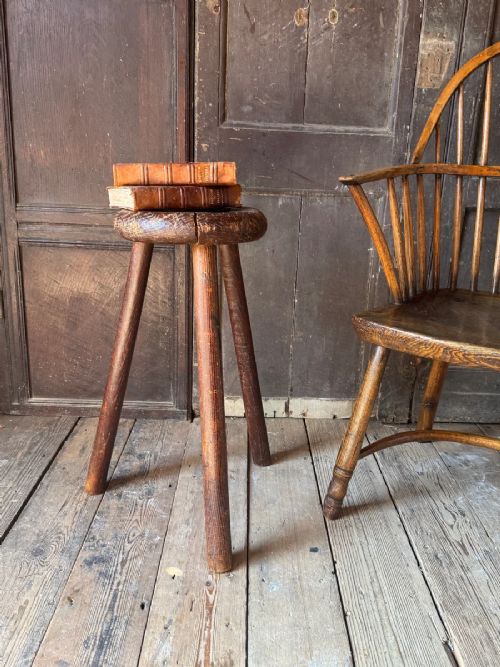
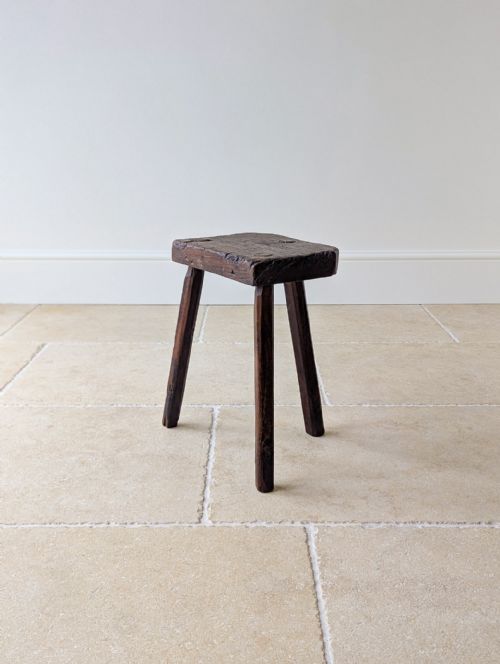
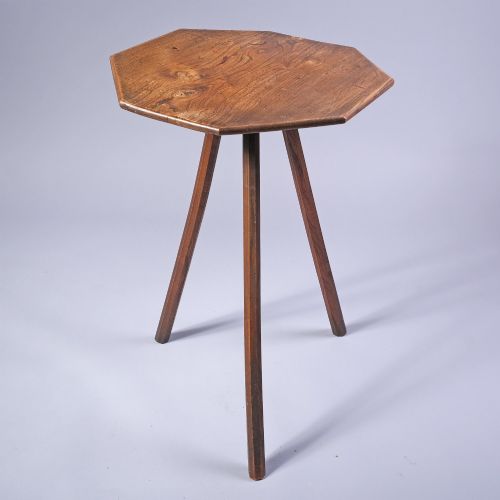
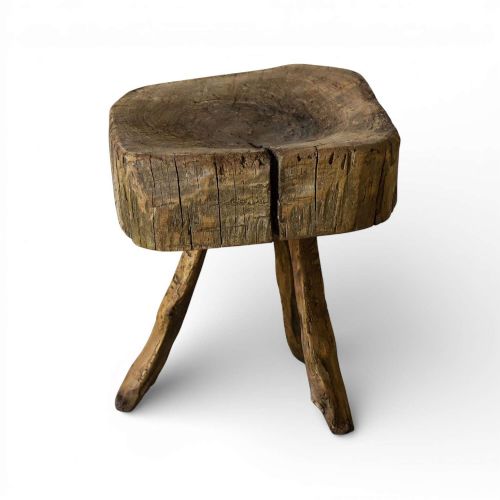
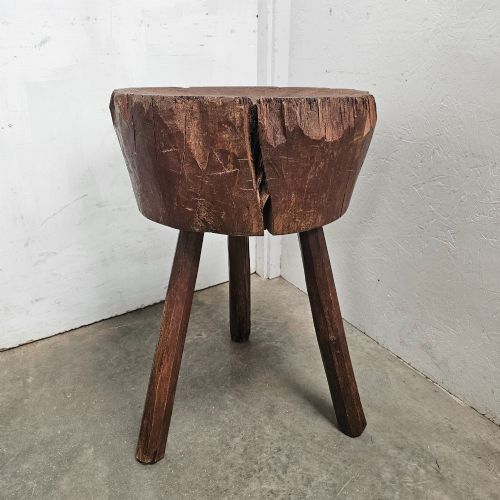
Most examples encountered here belong to the nineteenth and eighteenth centuries, bearing the marks of rural vernacular and utilitarian design. Forms include solid timber tops raised on splayed hedgerow legs, alongside occasional tables and chopping blocks.
Makers produced these functional items to suit specific trades and rural life, resulting in diverse configurations from primitive dairy seats to sophisticated Arts and Crafts interpretations.
Materials and construction methods
Craftsmen utilised native hardwoods and softwoods including oak, elm, ash, beech, pine and fruitwood. Solid timber tops often feature thick slabs of elm or ash paired with turned or gnarled legs.
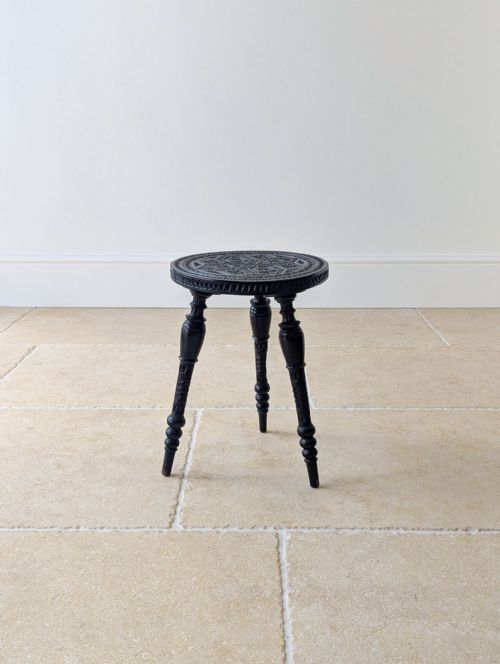
Joinery relied on traditional methods such as wedged tenons and splayed legs inserted directly into bored seats to ensure stability on uneven floors. Blacksmith repairs and chip-carved decoration sometimes appear alongside ebonised finishes.
Makers shaped seats using adzes or lathes, creating saddle or circular forms suited to long hours of manual labour in workshops and farmyards.
Three Legged Wooden Stool Retail Price Guide 2026
Typical asking prices for three legged wooden stool among the pieces listed under this phrase on Sellingantiques today, from the lower quarter to the upper quarter. They describe what is for sale here now, not the wider market.
Listings feature woods including oak, elm, pine, ash, beech and ebonised hardwood across periods spanning the eighteenth to early twentieth centuries.
Evaluating quality and character
Quality in a three legged wooden stool rests upon the integration of materials, timber figure and evidence of age. Pieces fashioned from heavily figured live-edge elm or retaining original patination stand apart from plainer utilitarian variants.
The integrity of the construction dictates value, particularly where blacksmith repairs or early peg joints remain undisturbed. Maker attribution to known firms adds distinction, while straightforward vernacular pieces rely entirely on proportions and wear.
J. Shoolbred·James Shoolbred·Thonet
The Three Legged Wooden Stool Glossary
- Vernacular
- Everyday objects built by local craftspeople for practical utility rather than following formal academic design. These pieces often employ regional styles and readily available local timbers.
- Splayed legs
- Angled supports extending outward from the centre to provide stability on uneven ground. This arrangement is typical of milking stools and rural work seats.
- Joint stool
- A rigid wooden seat constructed with mortise and tenon joints pegged together. They pre-date chairs as common household seating.
- Ebonised
- Wood finished with a dark stain or polish to imitate expensive ebony. This treatment appears frequently on nineteenth-century decorative and occasional furniture.
- Pokerwork
- A decorative technique using a heated metal point to burn designs into wood surfaces. Scottish pieces occasionally showcase this method with regional inscriptions.
Three Legged Wooden Stool: Frequently Asked Questions
What were three legged wooden stools used for?
These versatile seats served domestic, agricultural and trade purposes across farms and workshops. Dairy workers used low versions for milking, while artisans such as cutlers, jewellers and silversmiths utilised specialised forms.
Their three-legged design prevented rocking on uneven flagstone floors or packed earth surfaces. Many also doubled as low side tables or chopping blocks in rural kitchens.
How do I tell an 18th-century stool from a Victorian one?
Early pieces from the eighteenth century typically exhibit heavier tool marks, pegged joinery and simpler, more primitive profiles born of necessity. Hedgerow splayed legs and black-smith iron repairs often indicate considerable age.
Victorian examples frequently introduce turned components, ebonised finishes or specific trade adaptations like machinist and jeweller seats. Stylistic revivals also emerge in the later nineteenth century, reflecting interest in vernacular and Arts and Crafts design.
Where should I place a wooden stool in my home?
Their compact footprint allows these stools to function as flexible seating next to firesides or low tables. They also serve well as bedside stands or plant pedestals.
Placing them away from direct heat sources helps preserve historic timber and original surface patination. Allow space around live-edge or carved forms so the silhouette remains visible.
How do I care for antique wooden seating?
Maintain stable indoor humidity levels to prevent the timber from splitting or joints from loosening. Avoid harsh chemical cleaners that strip historic wax and dry out the grain.
Apply a traditional beeswax polish occasionally to nourish the wood and enhance the existing surface finish. Handle the piece by its seat rather than its legs when moving it.