


Chinese Wooden Stool
A Chinese wooden stool brings tactile warmth and sculptural form to a room, offering versatile seating or display space built from dense timbers.
Chinese Wooden Stool
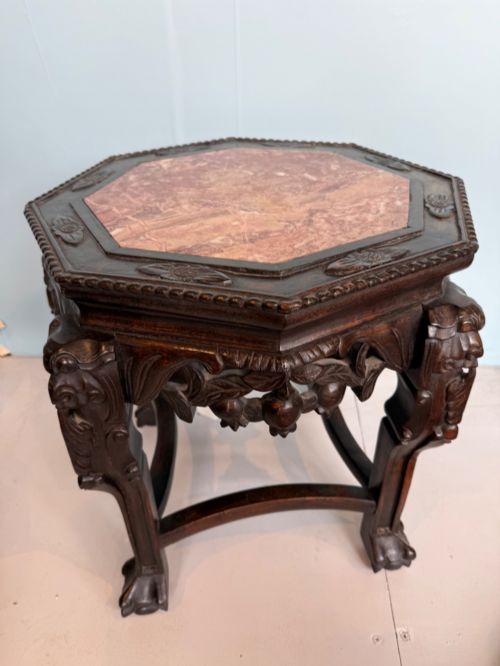
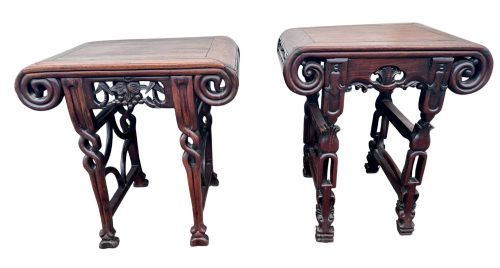
A chinese wooden stool encompasses forms ranging from rustic vernacular seats to refined Qing Dynasty hongmu stands, often doubling as side tables or plant stands. Pieces from the nineteenth century and the early twentieth century dominate this selection, frequently appearing in matched pairs or individual configurations.
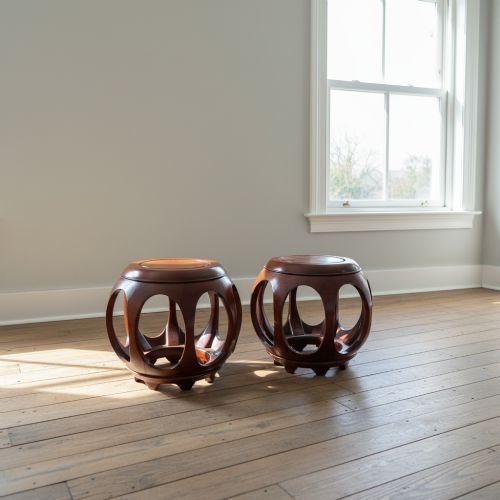
Makers utilised various heavy woods alongside inset marble and lacquer, shaping them into barrel drums, window seats, and occasional tables. These seating and display objects bridge utilitarian domestic use and decorative display across diverse provincial and traditional styles.
Construction and Materials
Carpenters constructed these pieces using dense hardwoods like hongmu and huali, alongside resilient elm and teak. Joinery methods relied on precise framing to accommodate seasonal wood movement without metal fasteners.
Surfaces received treatments ranging from clear lacquering and ebonising to mother-of-pearl inlay and carved marble top inserts. This combination of dense timber and careful finishing yielded durable furniture capable of withstanding decades of daily weight and handling.
Some nineteenth-century barrel stools cleverly mimic ceramic garden seats in solid wood, fooling the eye until you lift them.
Assessing Quality
Quality rests on the density of the chosen timber, such as heavy hongmu versus simpler elm, and the crispness of any carved detailing. Finer examples display tight joinery and well-fitted marble inserts that sit flush within the wooden frame.
The integrity of the original surface finish, whether lacquered, ebonised, or polished wood, distinguishes superior items. Subtle variations in proportions and the depth of relief carving separate standard provincial work from more ambitious workshop pieces.
The Chinese Wooden Stool Glossary
- Hongmu
- A category of dense, dark tropical hardwoods prized in Chinese furniture making. It provides exceptional weight and takes a fine polished finish.
- Huali
- A fragrant and highly figured rosewood utilised for formal seating and display stands. Craftsmen valued its distinct grain patterns.
- Elm
- A resilient native timber common in rustic Chinese vernacular furniture. It offers fibrous strength well suited to sturdy domestic stools.
- Ebonised
- Wood treated with a chemical or pigment finish to imitate expensive ebony. This dark surface was popular during the nineteenth and Victorian periods.
- Barrel stool
- A cylindrical seating form inspired by garden ceramics, featuring curved staves and structural banding. These pieces function as seats or occasional tables.
Chinese Wooden Stool: Frequently Asked Questions
Where should I place a chinese wooden stool?
These pieces suit living spaces as flexible side tables, bedside surfaces, or plant stands. Their compact footprints allow them to fit easily beside armchairs or in hallways.
Heavier marble-topped variants work well as display pedestals for lamps or ceramics, while lower rustic elm versions serve as functional seats or window benches.
How do I care for antique hardwood furniture?
Maintain the timber by dusting with a soft cloth and avoiding placement near direct heat sources or strong sunlight. These precautions protect the historic polish and prevent wood splitting.
Apply occasional appropriate wax feeds only when the surface appears dry, preserving the natural patina accumulated over the centuries.
Are these items strictly for seating?
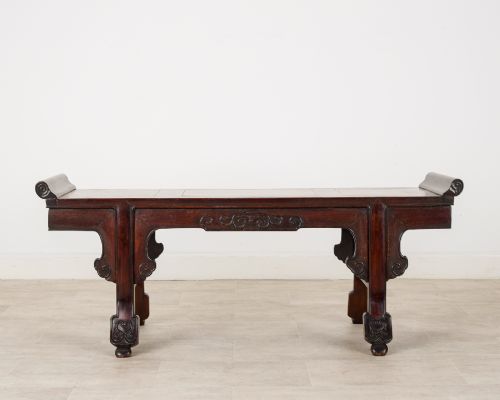
Historical evidence shows many of these objects functioned equally as plant stands, occasional tables, altar benches, and display pedestals. The flat tops and sturdy frames accommodated diverse household tasks.
When buying, consider the height and surface material to determine whether a piece suits sitting, supporting lamps, or holding decorative objects.
How do I distinguish provincial styles from formal pieces?
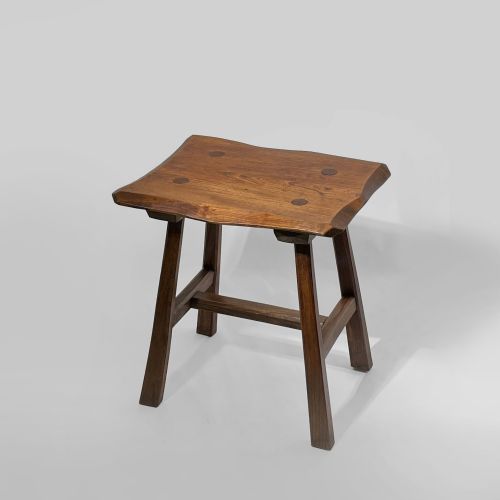
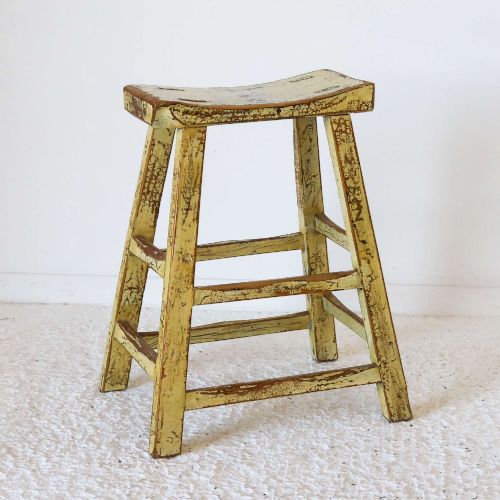
Provincial and rustic pieces often utilise simpler woods like elm and feature unadorned surfaces designed for everyday utility. They display straightforward joinery and practical proportions.
Formal examples employ dense hardwoods like hongmu or huali, incorporating intricate carvings, mother-of-pearl inlay, or inset marble tops intended for reception rooms.