


Chinese Hardwood Urn Stand
These heavy, carved items provide a stable display surface for heavy ceramic vessels, and a chinese hardwood urn stand remains a robust choice for interiors.
Chinese Hardwood Urn Stand
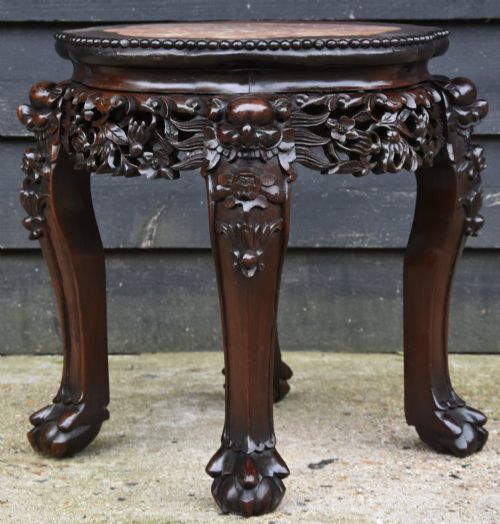
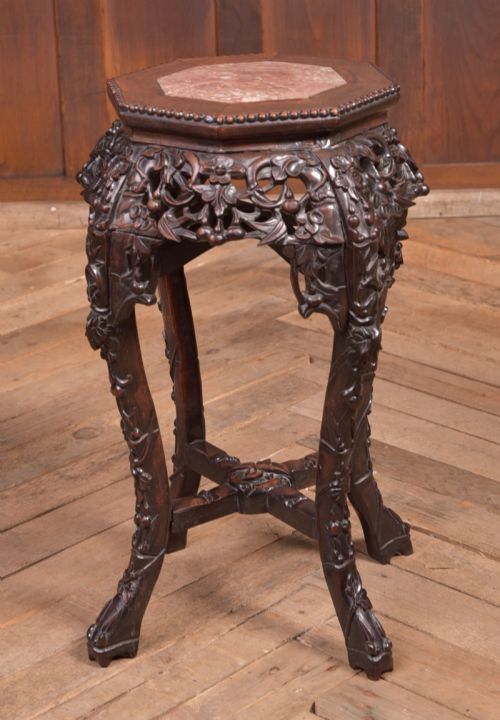
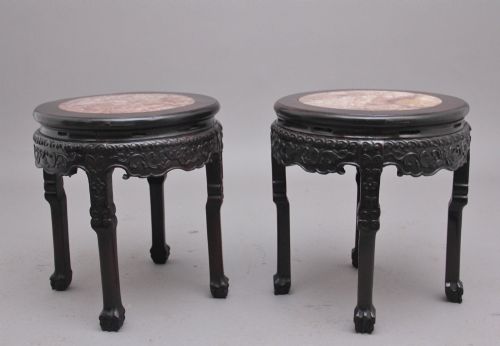
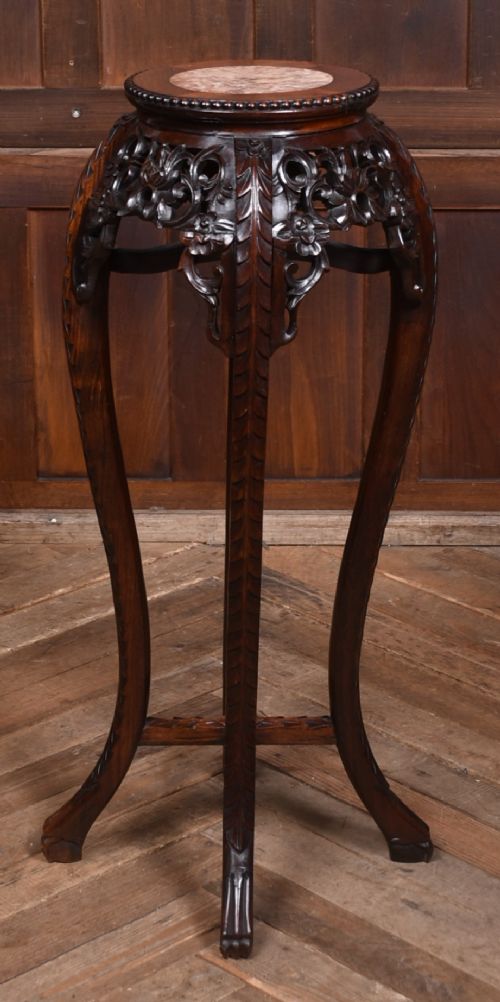
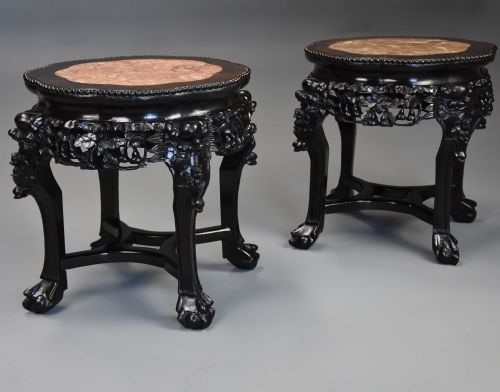
A chinese hardwood urn stand is a small, sturdy table designed to elevate heavy vessels, plants, or decorative items within a room. Most examples found here originate from the nineteenth century, including the Victorian and Edwardian eras, aligning with Qing dynasty and Chinese export traditions.
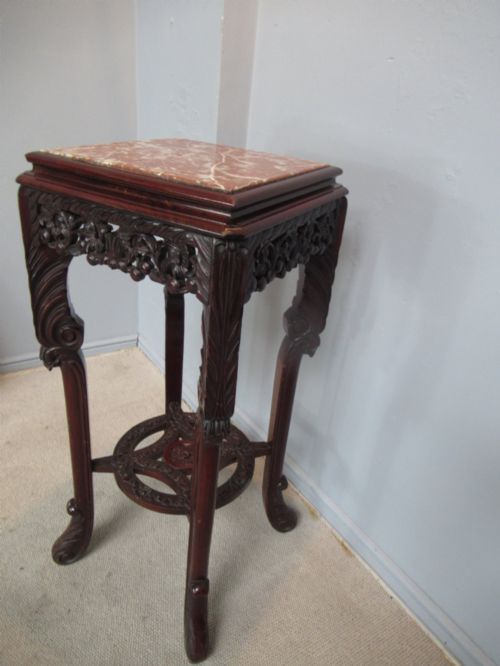
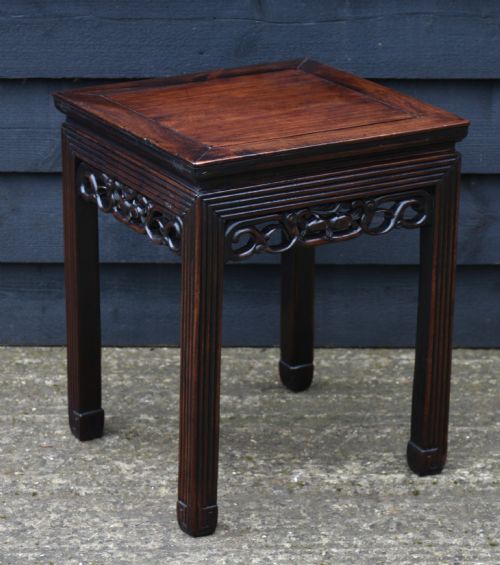
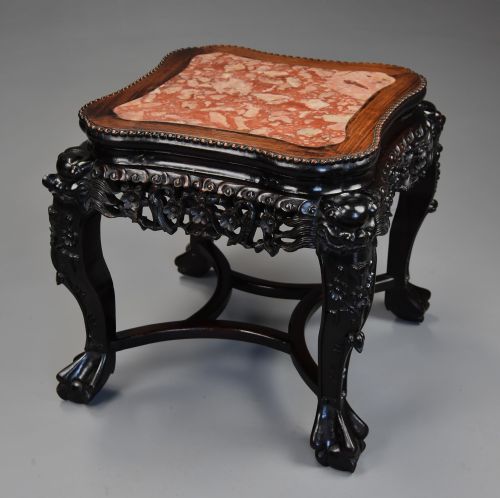
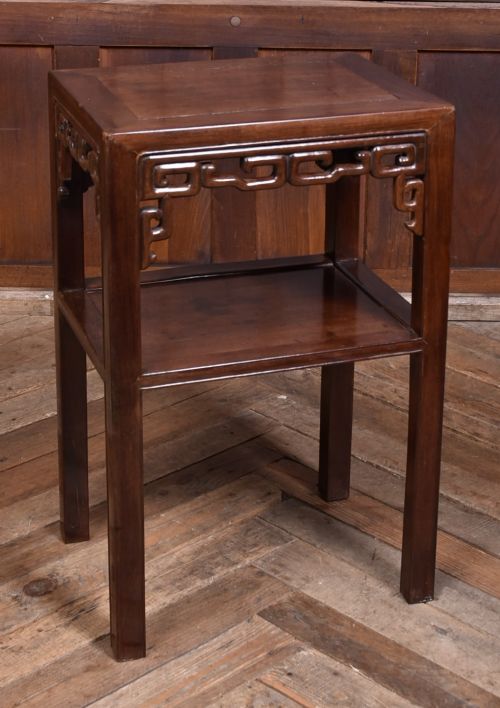
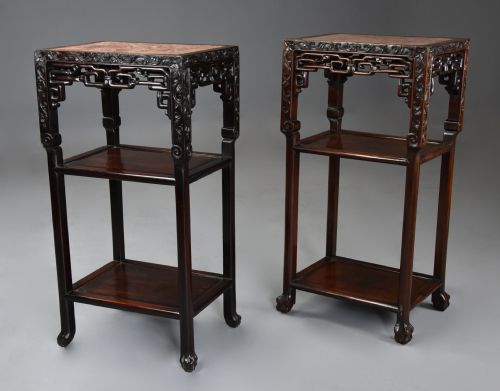
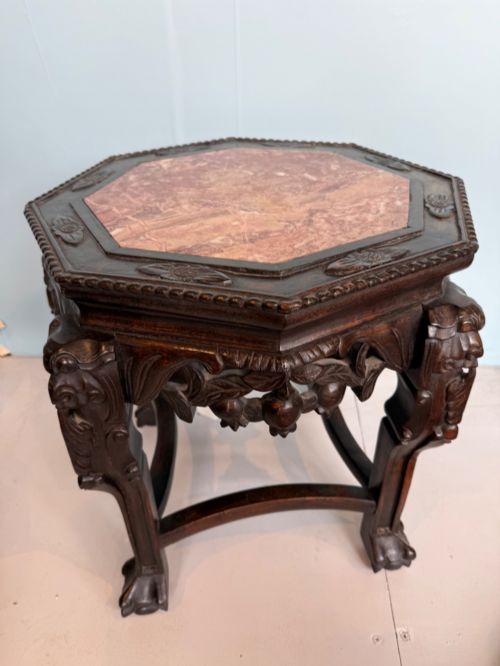
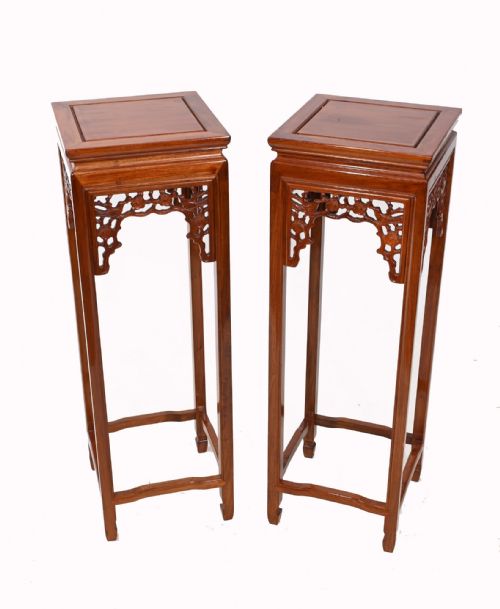
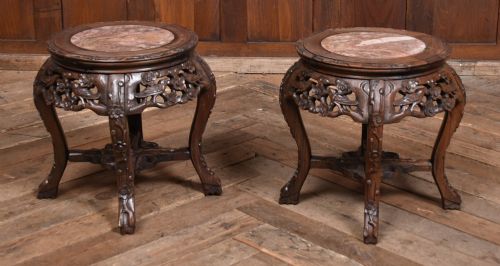
The forms vary from low tables and square jardiniere stands to taller pedestals, torchere stands, and occasional side tables. Many incorporate an inset top of variegated rouge or pink marble to safely support damp flower pots or heavy bronze and ceramic objects.
Materials and construction
The framing timbers rely on dense tropical hardwoods, specifically rosewood, padouk, and hongmu, alongside ebonised hardwood variants. These heavy timbers allow for intricate, deep-relief carving without compromising the structural integrity of the legs and apron.
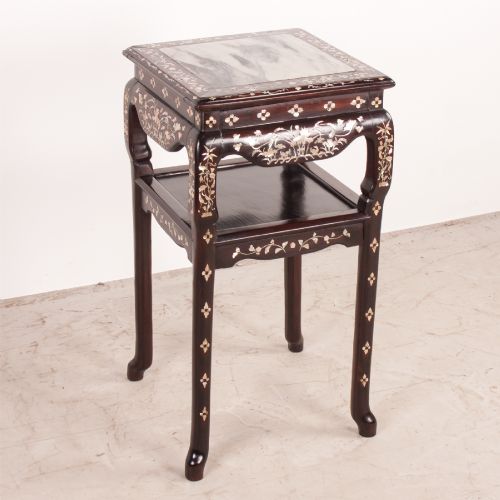
Inset marble panels feature centrally within the top surface, surrounded by tightly joined wooden frames that accommodate the natural expansion of the timber. Additional decorative detailing includes mother-of-pearl inlay and lacquered finishes applied across traditional Chinese structural forms.
Listings feature items built from rosewood, padouk, and hongmu, frequently paired with inset marble panels.
What separates the best from the rest
Quality rests in the crispness and depth of the hand-carving on the aprons and legs, where sharper detail and undercut work distinguish superior examples. The choice and figuring of the inset marble top, particularly uniform veining and secure fit within the wooden rebate, also separate standard pieces from finer ones.
Structural heft and the selection of dense timbers like padouk or hongmu indicate a higher grade of manufacture. Matching pairs display a greater consistency in timber colour and grain alignment across both items.
The Chinese Hardwood Urn Stand Glossary
- Hongmu
- A category of dense, dark Asian hardwoods prized for cabinetmaking and heavy stands. It translates literally as red wood.
- Jardiniere stand
- A specialised low table or pedestal intended to hold a large plant pot or ceramic bowl. These often feature marble inserts to protect the wood from moisture.
- Padouk
- A heavy, durable tropical timber with a reddish hue used in nineteenth-century Chinese furniture production. It resists warping and takes fine carved detail well.
- Torchere
- A tall stand originally designed to support a candle or lamp. In these listings, the term describes elevated display pedestals.
- Qing Dynasty
- The final imperial dynasty of China, spanning from sixteen-forty-four to nineteen-twelve. Many nineteenth-century export pieces date from its later decades.
Chinese Hardwood Urn Stand: Frequently Asked Questions
What were Chinese urn stands used for?
These tables served primarily to elevate heavy decorative objects, bronze censers, and large floral arrangements off the floor. Placing them on stands protected valuable vessels and highlighted them within reception rooms.
In western interiors later on, owners adapted them as lamp tables, side tables, or plant holders. Their sturdy construction easily supported the weight of heavy ceramic planters.
How do I date a Chinese hardwood stand?
Dating relies on timber choice, construction methods, and stylistic cues linked to the nineteenth and early twentieth centuries. Pieces marked by Victorian or Edwardian trade often show specific hardware or finish wear consistent with nineteenth-century export goods.
Documentation and archival records from past sales help confirm manufacturing windows like the eighteen-eighties or eighteen-nineties. The integration of Qing dynasty design motifs further narrows the production era.
Why do many stands have marble tops?
Marble inserts provided a cool, heat-resistant, and waterproof surface that could tolerate damp flower pots or hot metal vessels. This prevented water rings and staining on the polished hardwood frame.
Variegated pink and rouge marble varieties also added a contrasting decorative element to the dark wood. The stone plate sits securely in a recessed channel within the frame.
Are these stands suitable for modern homes?
Their compact footprints allow them to fit easily beside modern seating as lamp or occasional tables. The durable hardwood and stone surfaces handle daily use without delicate maintenance.
Matched pairs work well for symmetrical placement in hallways or living spaces. They blend effectively with various interior styles while offering practical display space.