
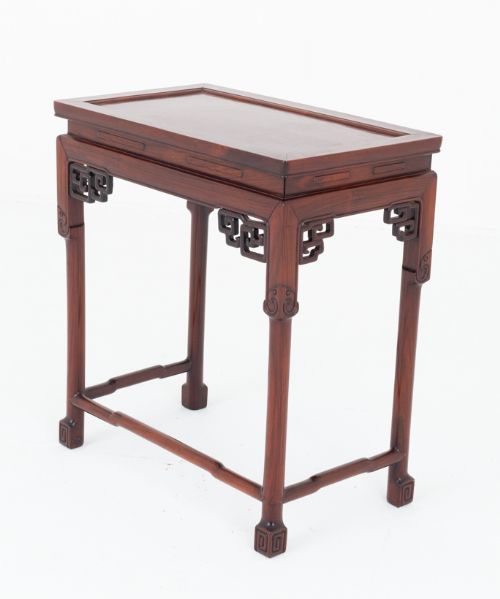

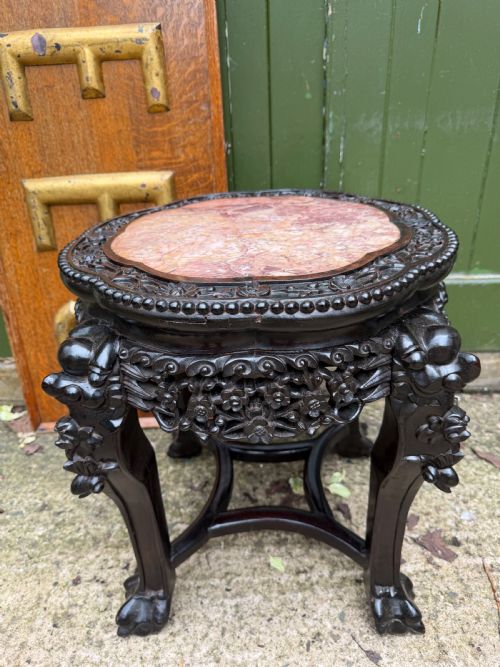


Oriental Hardwood Occasional Tables
These oriental hardwood occasional tables bring dense rosewood, hongmu, and intricate carving from the nineteenth century into modern rooms.
Oriental Hardwood Occasional Tables
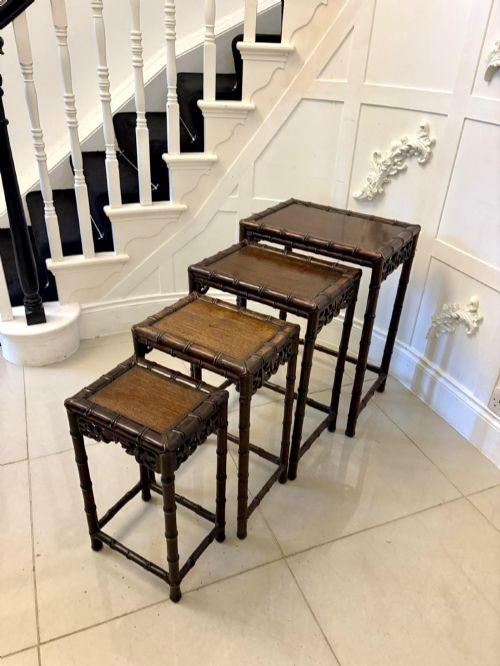
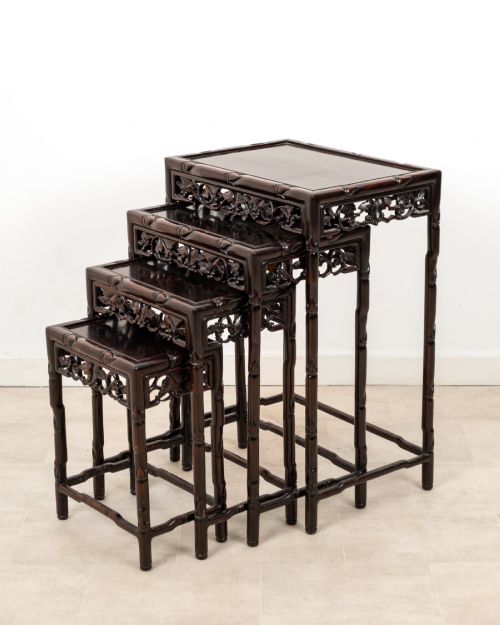
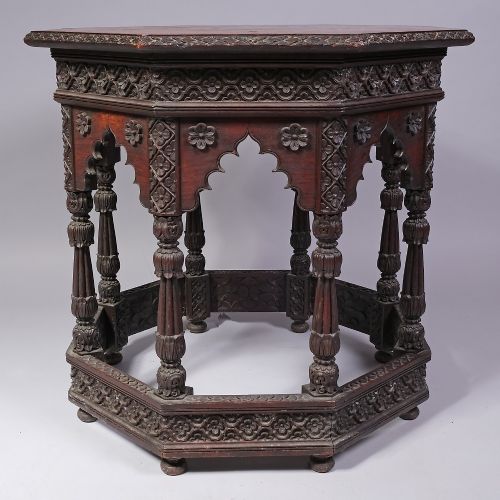
Oriental hardwood occasional tables encompass side tables, lamp tables, plant stands, and nests of four tables originating from China, India, and Anglo-Indian colonial workshops. These pieces frequently date from the nineteenth century, including Victorian and Edwardian periods, and serve practical functions as small surfaces for lamps or plants.
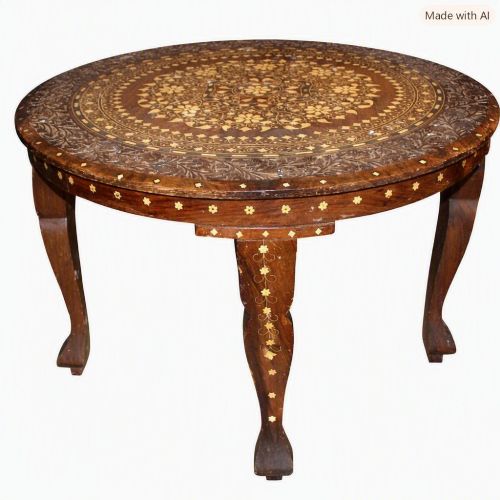
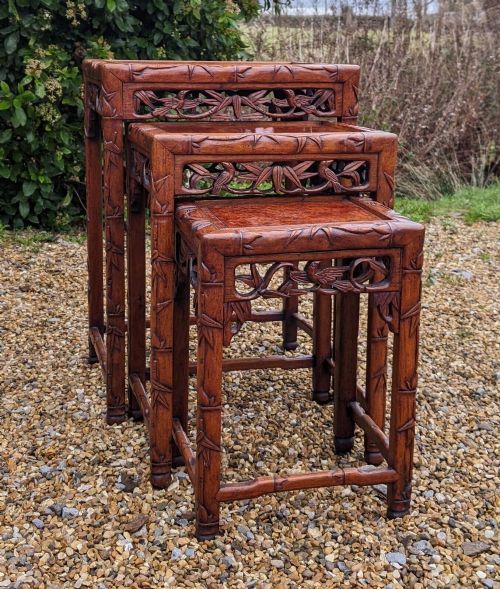
The buyer on this page meets forms ranging from octagonal tables and folding coffee tables to jardiniere stands and nested sets. Chinese examples span Qing Dynasty styles, Chinese Export, and huanghuali or rosewood constructions, while Anglo-Indian pieces introduce carved elephant designs and bone inlay.
How oriental hardwood occasional tables were made
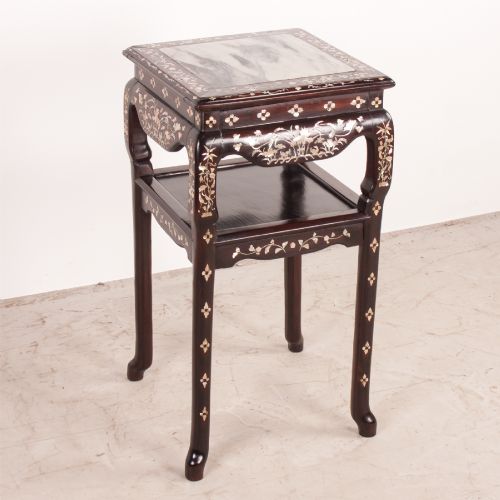
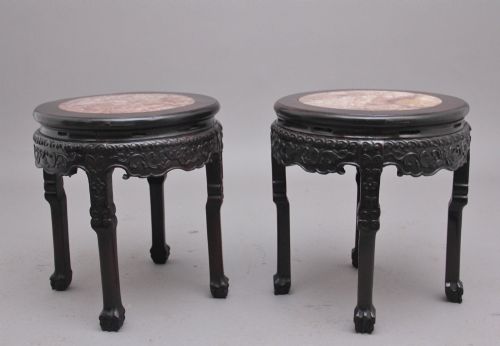
Carpenters utilised dense tropical hardwoods such as rosewood, hongmu, elm, and huanghuali, building frames designed to accommodate decorative elements. Surfaces incorporate inset variegated rouge marble tops, copper panels, or detailed carvings depicting dragons and foliate motifs.
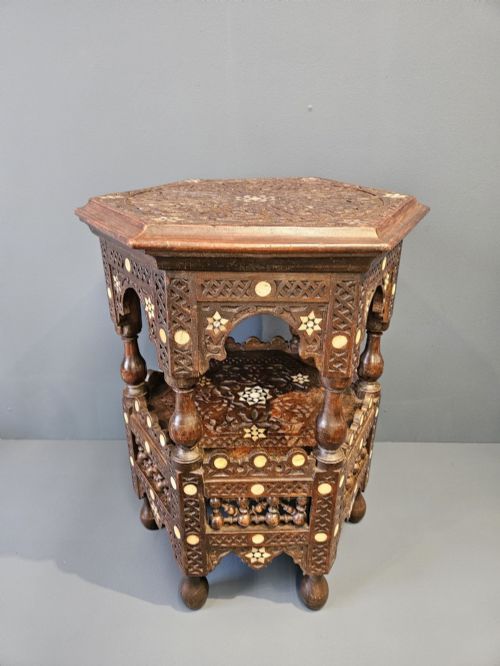
Workshops applied traditional joinery alongside intricate surface ornamentation, embedding mother-of-pearl inlay or bone into the timber. Skilled artisans executed deep relief carving across aprons, legs, and faux bamboo frameworks to define regional styles.
Carved wooden elephants support tabletops with upturned trunks, ready to hold afternoon tea.
What varies in quality
Quality rests upon the selection of timber and the precision of the joinery, where dense rosewood or huanghuali with exceptional grain commands attention. The depth, crispness, and proportion of the hand carving dictate the visual weight of each piece.
Integration of secondary materials dictates refinement, seen in the smooth setting of rouge marble slabs or the exact alignment of mother-of-pearl and bone inlay. Structural integrity across nested tables and folding mechanisms reveals the underlying standard of cabinetmaking.
Gabriel Viardot·Liberty and Co
The Oriental Hardwood Occasional Tables Glossary
- Hongmu
- A dense, dark tropical hardwood utilised extensively in Qing Dynasty furniture. It translates literally to red wood and develops a rich patina with age.
- Huanghuali
- A prized Chinese hardwood known for distinctive grain patterns and warm colour. Artisans valued it for high-status furniture during imperial periods.
- Jardiniere
- A decorative pot or stand for holding plants and flowers. In these tables, it refers to low stands designed specifically to support heavy planters.
- Chinoiserie
- European artistic styles reflecting Chinese motifs and decorative techniques. Makers applied these interpretations to furniture produced for Western markets.
- Japonisme
- A late nineteenth-century Western interest in Japanese aesthetics and design principles. This influence occasionally integrated with Chinese and colonial forms.
Oriental Hardwood Occasional Tables: Frequently Asked Questions
How do I use a nest of tables?
Nests of four tables fit neatly beneath one another to save floor space in compact rooms. Pull the smaller tables out individually when guests require extra surface space for drinks or books.
Arrange them together against a wall or beside a sofa as a lamp table when not in separate use. The graduated sizing allows the smaller pieces to slide completely into the main frame.
How do I care for a marble top table?
Wipe the marble surface regularly with a soft, damp cloth to remove dust and prevent grit from scratching the polished stone. Avoid acidic cleaning agents or harsh chemicals that etch the surface.
Use coasters under glasses and mats under plant pots to protect both the stone and the surrounding hardwood frame from moisture rings. Apply a specialised stone wax periodically if the polish requires maintenance.
Where were elephant tables made?
Elephant tables originated in India, particularly around the Bombay presidency during the late nineteenth and early twentieth centuries. Local carvers produced these pieces for the colonial and export markets.
Carpenters shaped the legs and supports to represent elephant heads and trunks, frequently incorporating bone inlay or brass elements. These tables reflect the Anglo-Indian aesthetic popular during the Victorian and Edwardian eras.
What is hongmu wood?
Hongmu is a category of dense, heavy tropical hardwoods used traditionally in Chinese furniture production. The timber ranges from deep red to dark brown and possesses a tight, durable grain.
Craftsmans utilised hongmu for carved side tables, low stands, and nested sets due to its ability to hold fine detail. The material naturally acquires a deep lustre through handling and polishing.