






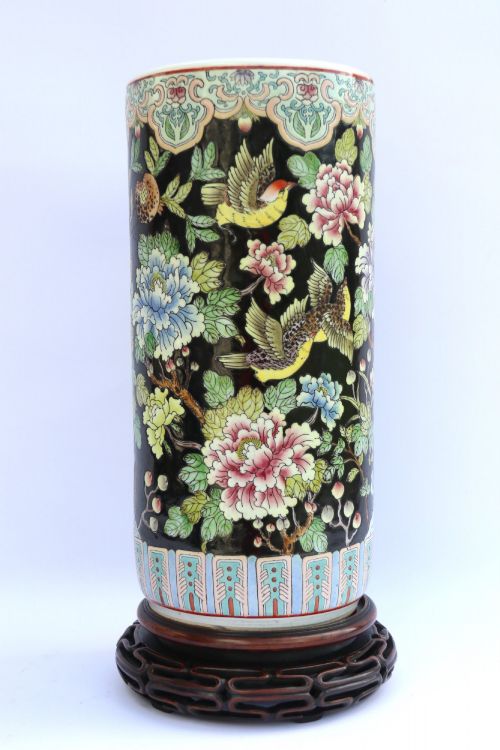
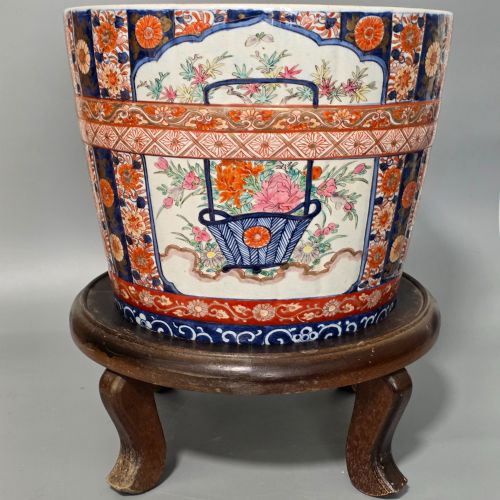
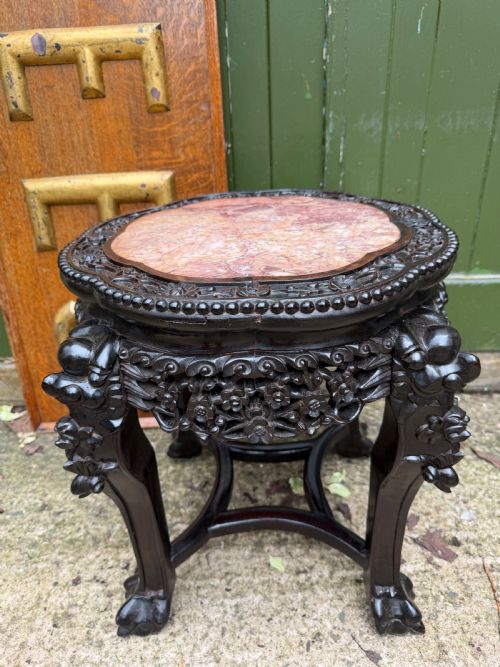


Oriental Hardwood Flower Stand
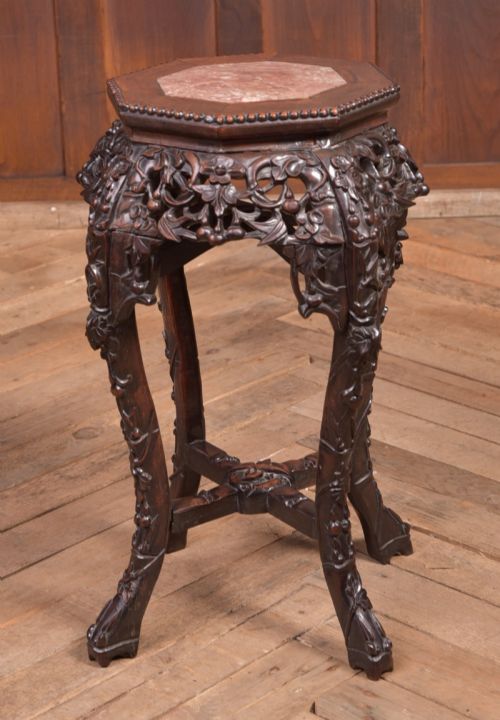
An oriental hardwood flower stand raises a porcelain bowl or vase to display a plant with proper architectural dignity in a room.
Oriental Hardwood Flower Stand
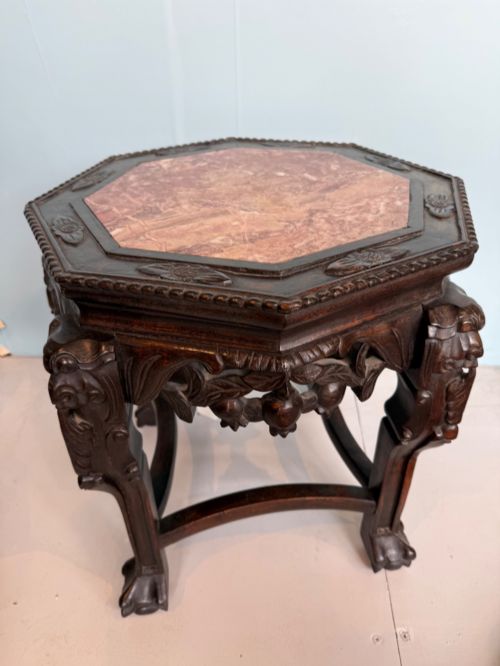
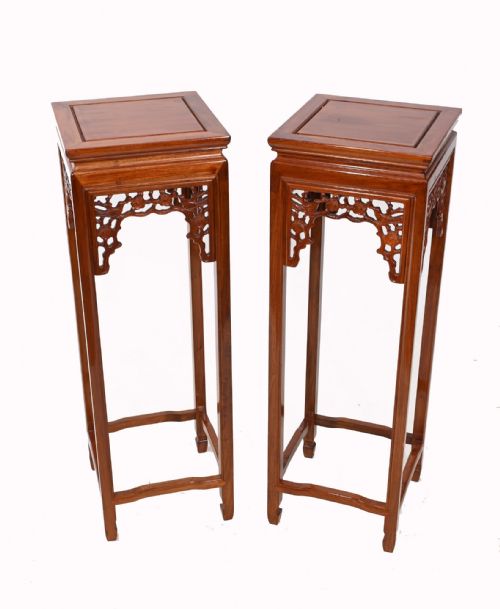
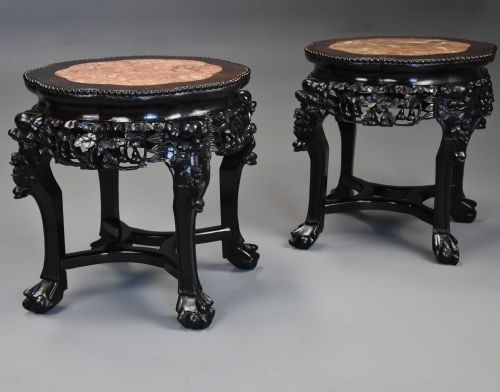
An oriental hardwood flower stand serves as a low table, jardiniere stand, or pedestal designed to elevate decorative vessels and plants within an interior space. The pieces appearing here span from the nineteenth century through the early decades of the twentieth century, with Victorian era production strongly represented.
Forms range widely from tall torchère columns and low rectangular pot stands to multi-tiered occasional tables and shaped side tables. Buyers frequently encounter examples featuring inset marble tops designed to protect the wood from moisture associated with potted plants.
Origins predominantly trace to Chinese workshops spanning the Qing Dynasty and export periods, alongside select Japanese examples utilising ebonised finishes. These objects function as practical display surfaces that integrate traditional carving with utilitarian interior design.
Distinguishing quality across examples
The standard of carving defines the distinction between standard production and exceptional examples, particularly where floral motifs and pierced aprons meet the legs. Crisp relief work that retains sharp edges demonstrates superior workshop skill.
Material selection and structural integrity separate individual pieces, notably the grain depth of rosewood or padouk and the tight fit of inset marble tops. The integration of specialised decorative details like mother-of-pearl inlay further elevates the standing of an individual table.
Oriental Hardwood Flower Stand Retail Price Guide 2026
Typical asking prices for oriental hardwood flower stand among the pieces listed under this phrase on Sellingantiques today, from the lower quarter to the upper quarter. They describe what is for sale here now, not the wider market.
Listings feature various timbers including rosewood, padouk, hongmu, and huali alongside inset marble panels.
Liberty of London
The Oriental Hardwood Flower Stand Glossary
- Hongmu
- A dense tropical hardwood utilised in traditional Chinese furniture making. It translates literally as red wood and develops a rich patina over time.
- Jardiniere
- A large ornamental pot or stand for holding plants or flowers. These items form the primary functional category for low display tables.
- Torchère
- A tall ornamental stand designed to hold a light or a vase. These pieces provide vertical emphasis in room layouts.
- Padouk
- A heavy, durable timber prized for its reddish hue and structural strength. Workshops employed this material for substantial pedestals.
- Qing Dynasty
- The final imperial dynasty of China, spanning from sixteen forty-four to nineteen twelve. Many surviving stands date from the later decades of this era.
Oriental Hardwood Flower Stand: Frequently Asked Questions
What is an oriental hardwood flower stand used for?
These pieces elevate plants, jardinieres, and porcelain vases to display them prominently within domestic interiors. They provide a stable, decorative surface designed to withstand the weight of heavy ceramic vessels.
Historically, placing potted plants or decorative arrangements upon carved stands kept them away from damp floors while adding architectural interest to corners and table groupings.
How do I identify a nineteenth century piece?
Nineteenth century examples typically display dense tropical hardwoods like rosewood or padouk combined with traditional Chinese joinery techniques. Look for hand-carved structural elements and patination appropriate to the period.
The inclusion of inset marble tops and specific Qing Dynasty stylistic details often points toward late nineteenth century production dates.
Why do many stands have marble tops?
Marble inserts provided a cool, waterproof surface that protected the underlying timber from water damage when watering potted plants. This practical addition became a defining aesthetic feature of traditional Chinese plant stands.
The stone panels, often rouge or grey variegated marble, were fitted precisely into the wooden frames during initial construction.
How should I care for a hardwood stand?
Maintain the wood by dusting regularly with a soft, dry cloth and avoiding placement near direct heat sources or strong sunlight. Proper humidity levels prevent the dense timbers from splitting.
Protect the surface from moisture by using coasters or pads under any heavy ceramic vessels placed on the wood or marble.