
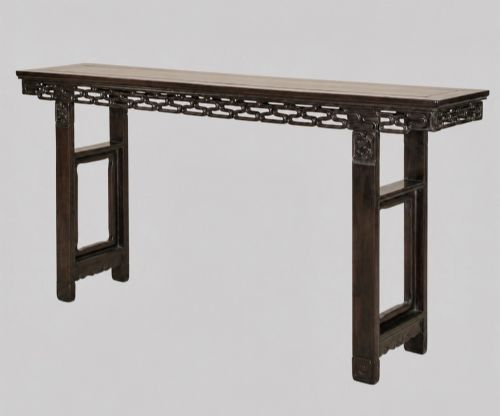
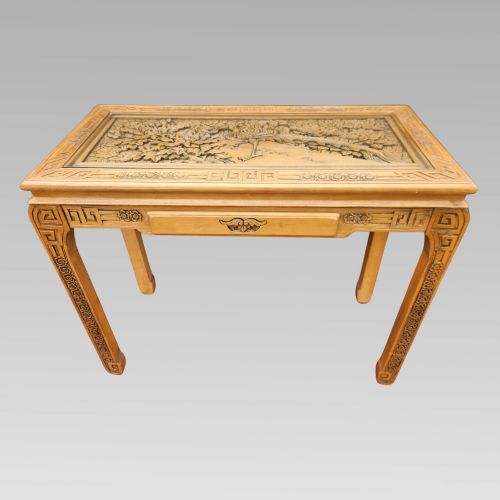
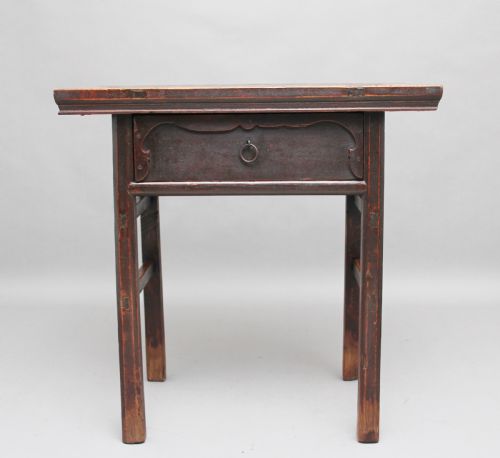
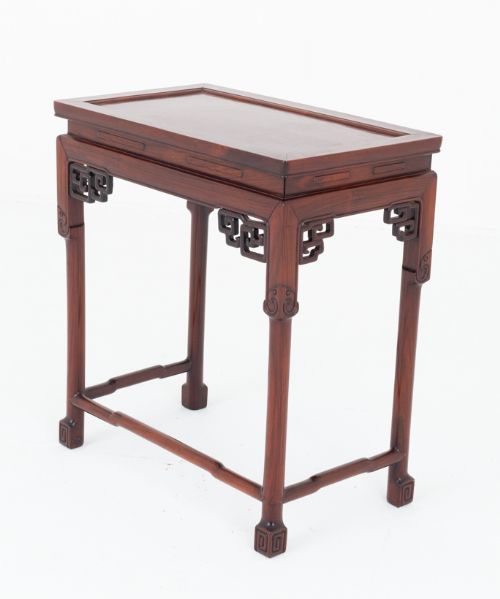


Oriental Hall Table
These oriental hall table pieces bring solid elm timber and vibrant lacquer work straight into your hallway, offering both practical surface space and distinct historical character.
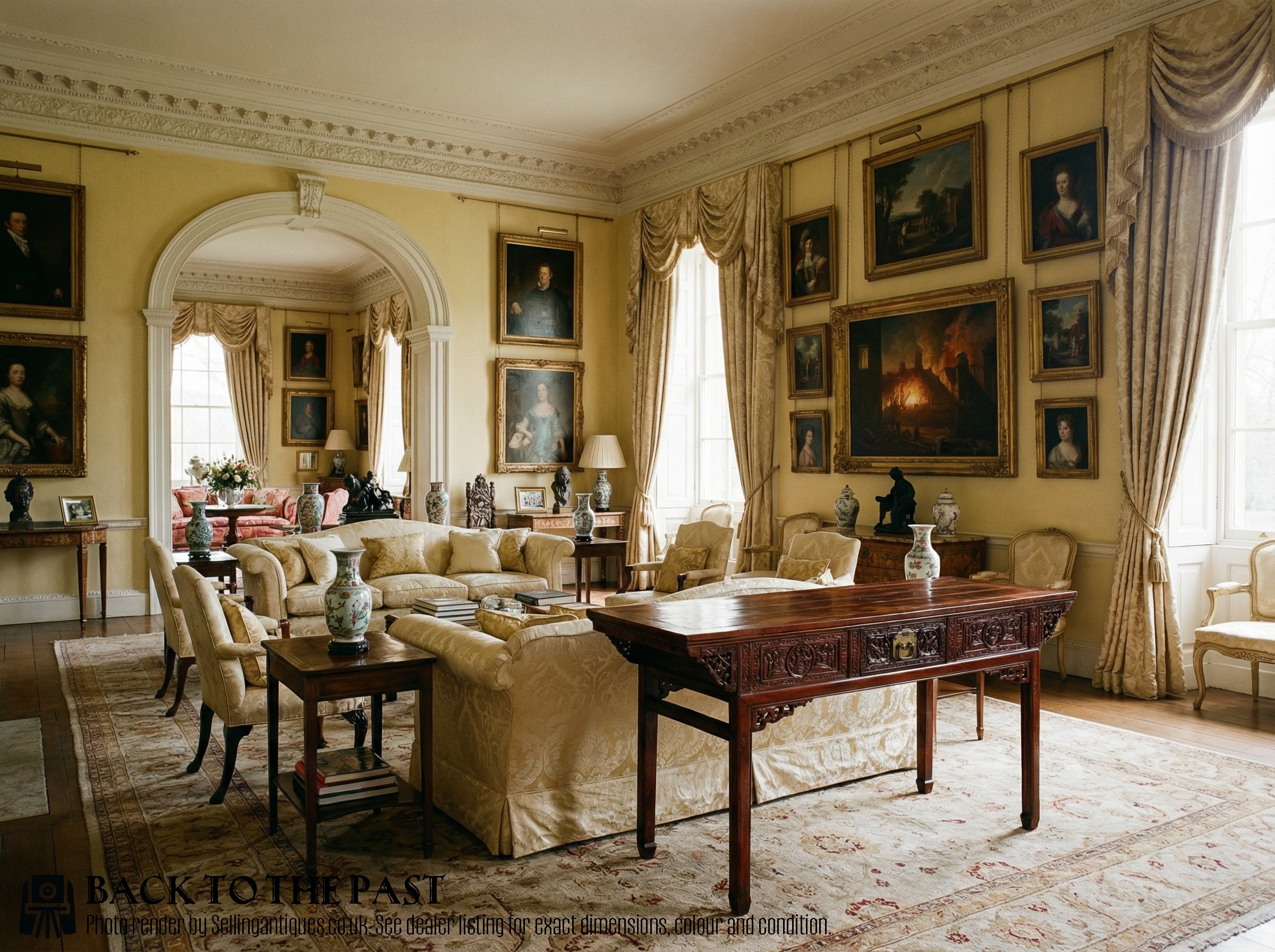
Understanding the oriental hall table
An oriental hall table encompasses console tables, altar tables, and side tables sourced from traditional Chinese contexts, predominantly dating to the nineteenth century and around nineteen hundred. These pieces span classic regional Chinese styles and the Qing Dynasty, functioning historically as sacred altar furniture or domestic side tables.
Buyers browsing this selection will most frequently encounter sturdy elm and hardwood timbers, alongside striking red lacquered finishes. The forms range from long altar surfaces suited for display to compact side and writing tables designed for narrow entrance spaces.
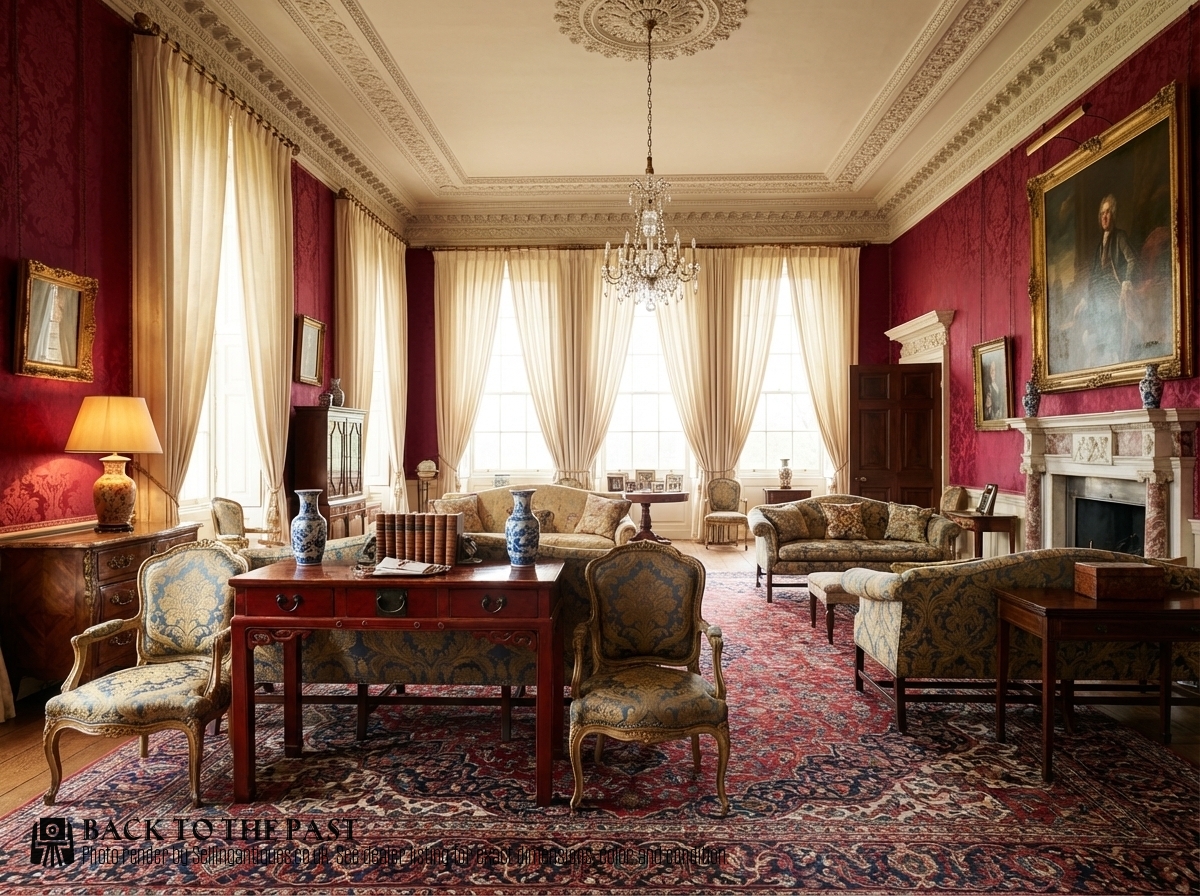
Materials and construction methods
Cabinet makers utilised dense hardwoods including elm and hongmu, building robust frames that have endured for centuries. These timbers provided the structural integrity required for heavy altar tables and long console surfaces.
Surfaces were frequently finished with layers of red lacquer, adding deep colour and a protective sheen to the wood. Brass fittings occasionally appear as decorative mounts or structural hardware.
Retail Price Guide 2026
Typical UK retail prices for oriental hall table, calculated from the Sellingantiques database of over a million retail prices indexed since 2003. This retail price guide relies exclusively on Sellingantiques data; no external sources or auction records are used, so the figures do not describe the wider market.
The listings combine nineteenth-century dates with traditional Chinese regional styles, featuring elm, hongmu, and red lacquer finishes.
Assessing craftsmanship and finish
Quality in these pieces rests upon the selection of timber and the preservation of the lacquer finish. Superior examples display rich grain patterns in the elm or hongmu, while lesser pieces may show heavier wear or less refined joinery.
The sophistication of the regional Chinese design and the depth of the red lacquer coat dictate the upper echelon of the range. Finer tables maintain their original proportions and structural rigidity without relying on modern timber replacements.
The Oriental Hall Table Glossary
- Altar table
- A long, narrow table traditionally used for ceremonial offerings in Chinese households, now repurposed as a striking console or display surface in domestic hallways.
- Elm
- A durable hardwood native to Asia and Europe, favoured by traditional makers for its interlocking grain and resistance to splitting.
- Hongmu
- A dense, dark Chinese hardwood prized for its weight, deep colour, and suitability for traditional joinery.
- Lacquer
- A durable resin finish applied in multiple coats to wood surfaces, yielding a smooth, coloured sheen that protects against moisture.
- Qing Dynasty
- The last imperial dynasty of China, spanning from sixteen forty-four to nineteen twelve, known for distinctive regional woodworking and furniture styles.
Frequently Asked Questions
How do I use an altar table in a hallway?
Altar tables are naturally narrow and long, making them ideal for placement against a hallway wall without blocking foot traffic. Their elevated surfaces suit the display of lamps, bowls, or decorative objects.
The sturdy construction of elm and hongmu supports daily use as a drop zone for keys and post while adding historical gravity to the interior.
What woods are used in these tables?
The primary timber found in these pieces is elm, alongside dense hardwoods such as hongmu. These materials provide the structural strength needed for long, narrow console designs.
Some examples also incorporate layers of red lacquer applied over the wood base, creating a vibrant coloured finish that contrasts with plain timber.
How do I date an antique Chinese table?
Dating relies on examining the timber grain, construction joints, and surface wear typical of nineteenth-century workshop practices. Characteristics align with Qing Dynasty and traditional Chinese regional styles.
Expertise involves recognising period-specific hand tools, traditional joinery without modern metal fasteners, and the natural patina developed on elm and lacquer over generations.